




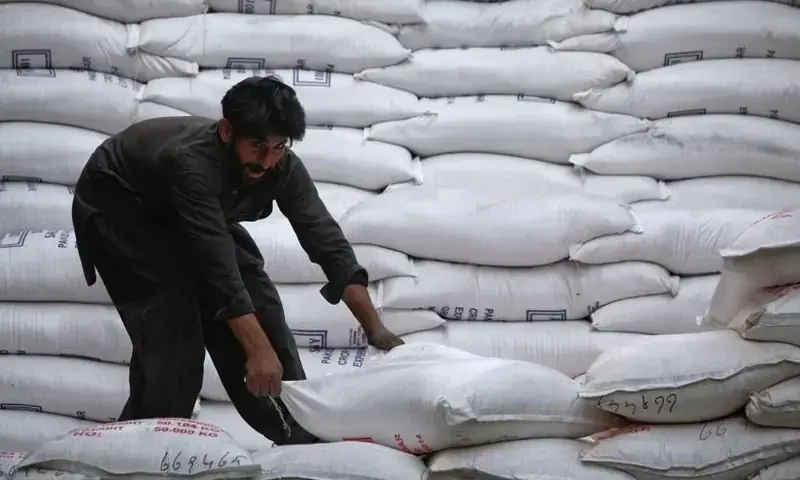
Pakistan’s sugar industry is once again asking the government to trust its calculations, accept its surplus claims, and let more of the country’s sugar leave the domestic market.
The argument is familiar: warehouses are full, millers need cash, farmers must be paid, and exports can earn foreign exchange. But Pakistan’s recent experience raises a more uncomfortable question.
Why does a country that exports sugar in the name of surplus repeatedly find itself confronting shortages, soaring retail prices and the prospect of importing the same commodity later at a higher cost?
The Pakistan Sugar Mills Association (PSMA) has claimed a surplus of approximately 1.03 million tonnes and sought permission to export around one million tonnes.
The government has stopped short of approving the entire demand. In September, the Economic Coordination Committee (ECC) approved exports of 200,000 tonnes, a decision the federal cabinet later ratified.
The State Bank of Pakistan issued implementation instructions on 2 October and revised mill-wise quotas on 13 October.
The decision has nevertheless revived concerns about whether the country has accurately established its domestic requirements before allowing sugar to be shipped abroad.
The surplus claim under scrutiny
The central dispute is not whether Pakistan produces sugar or whether exports can generate foreign exchange. It is whether the surplus claimed by the industry genuinely exists after accounting for domestic consumption, carry-over stocks, exports already made and the requirements of the next crushing season.
The PSMA has argued that surplus stocks are weighing on mill finances and that export proceeds would provide liquidity to purchase sugarcane from farmers.
The industry has also warned that delays in allowing exports could affect its ability to prepare for the new crushing season, expected to begin in November.
Yet the claimed surplus has not been accepted without reservations. In its September 8 editorial, Sugar trap, Dawn questioned the reliance on figures supplied by the same industry seeking export permission.
It called for an independent reconciliation of production, stocks, consumption, exports, expected output and payments to growers before further shipments were authorised.
The distinction is critical because an overstated surplus can have consequences well beyond the warehouses of sugar mills.
Once sugar leaves the country, it is no longer available to meet unexpected increases in demand or compensate for a shortfall in production. If domestic supplies subsequently prove inadequate, the government must confront higher prices, import costs or both.
The costly lesson of last year
Pakistan has already experienced this cycle. The government permitted the export of approximately 750,000 tonnes of sugar after assessing domestic supplies as sufficient.
Retail prices subsequently rose above Rs180 per kilogramme, forcing the authorities to arrange imports to stabilise the market.
A September 28 analysis published by Dawn noted that the government had later needed to import around 300,000 tonnes after the earlier export decision. The episode exposed the financial risks of treating an industry’s assessment of surplus as a reliable guarantee of future domestic availability.
The economics of the cycle are straightforward but damaging. Exporters receive revenue from overseas sales, while the government may initially benefit from the foreign exchange those transactions generate.
If supplies subsequently tighten, however, the country can be forced to buy sugar from international markets, potentially at prices higher than those received for earlier exports.
Consumers then face the effects of domestic scarcity, while the country must spend foreign exchange to replenish supplies.
This does not establish that every export decision will cause a shortage.
Prices also respond to production, seasonal demand, distribution costs and market conditions. But the previous episode demonstrates why a surplus calculation must account for more than the quantity physically held by mills at a particular moment.
A troubled record of market conduct
The industry’s history makes the dispute over stock figures particularly sensitive.
In 2020, the government published the findings of a Sugar Inquiry Commission that examined sharp price increases, export decisions, subsidies and the conduct of major mill owners.
The commission raised concerns about supply reporting, the distribution of benefits from subsidies and the way growers were treated in the purchasing process.
The Competition Commission of Pakistan (CCP) separately investigated suspected anti-competitive practices.
Its inquiry reported evidence suggesting that the PSMA and member mills had shared commercially sensitive information about stocks and production, coordinated export quantities and engaged in conduct that could restrict domestic supply.
In November 2020, the commission issued show-cause notices to the association and 84 sugar mills over alleged violations of the Competition Act, 2010. Those notices were allegations subject to legal proceedings, not criminal convictions.
The concerns have not disappeared.
In November 2025, the CCP issued show-cause notices to ten Punjab sugar mills over alleged coordination concerning the start of the crushing season and a jointly agreed sugarcane procurement price of Rs400 per maund.
The commission said the mills’ conduct could disrupt supply and affect prices. The allegations were not, by themselves, proof of guilt, but they showed that questions over coordination in the sector had resurfaced.
Against that background, the industry’s latest surplus estimate is not a routine accounting figure. It is the basis for a decision that can shift the balance between export earnings and domestic availability. That makes independent verification central to the credibility of the government’s policy.
The consumer pays for miscalculation
Sugar is a household staple, and a sharp increase in its price can put pressure on family budgets already affected by the cost of food, transport and other essentials.
The impact extends beyond consumers who buy sugar directly. Bakeries, confectionery businesses, restaurants and food manufacturers also use it as an input, meaning higher prices can spread through other goods and services.
When retail prices climbed towards or above Rs200 per kilogramme during the 2025 price crisis, the government publicly acknowledged concerns over artificial price increases and announced action against hoarding and disruption in the supply chain.
In July 2025, the Ministry of National Food Security and Research said prices in various markets had fallen from around Rs200 to Rs175–180 per kilogramme amid enforcement measures.
The latest export approval comes with an obvious public-interest concern: the cost of getting the supply calculation wrong is not borne exclusively by the companies that export the commodity.
Millers may receive export proceeds, but consumers have limited control over the timing and volume of those shipments. When domestic supplies tighten, households cannot simply switch to another staple without changing their spending or consumption.
The government has said that safeguards and monitoring would accompany the approved exports. The effectiveness of those safeguards, however, depends on reliable stock data and the ability to detect a developing shortage before retail prices surge.
A promise to monitor prices is not the same as a demonstrated capacity to prevent another cycle of exports, scarcity and imports.
Farmers caught in the middle
The dispute also affects sugarcane growers.
Millers argue that exports are necessary to release working capital, settle outstanding payments and finance purchases of the next crop. If those claims reflect genuine financial constraints, delays in payment can harm farmers who depend on the proceeds of their harvest.
But growers face a different risk when mills coordinate purchasing decisions or delay crushing.
The CCP’s November 2025 notices alleged that ten mills had agreed to delay the start of crushing and collectively fix the procurement price. The commission warned that such conduct could undermine competition and disrupt supplies.
This leaves farmers exposed to a market in which a relatively small number of powerful buyers can influence the timing of purchases and the prices offered.
The argument that exports will help growers cannot be evaluated solely by the industry’s claims about liquidity. It also depends on whether export earnings actually reach farmers through timely and fair payments.
The sugar debate involves more than a choice between domestic sales and foreign markets. It concerns the distribution of gains and risks across an industry in which mill owners, growers and consumers occupy very different positions.
Limits of export-led relief
The government has a legitimate interest in earning foreign exchange, particularly when external financing remains a persistent economic concern.
Sugar exports can generate revenue when domestic supplies genuinely exceed consumption and the expected needs of the next season. But the value of those earnings depends on the price at which sugar is sold and the cost of any later imports.
A policy that authorises exports based on an overstated surplus can turn a short-term foreign-exchange gain into a more expensive future obligation. It can also weaken public confidence when official assurances of sufficient supply are followed by price increases and emergency market intervention.
The current decision is limited to 200,000 tonnes, considerably below the approximately one million tonnes sought by millers.
That distinction matters, but it does not remove the underlying question about how the government determined the permissible quantity and how it will assess stocks as the new crushing season approaches.
The State Bank’s revised instructions on mill-wise quotas set out the mechanics of authorised exports; they do not, by themselves, settle the broader question of whether the underlying surplus estimate is sound.
Another test of government credibility
Pakistan’s sugar industry has repeatedly presented export permission as the answer to surplus stocks, financial pressure and farmers’ needs. The public has also seen what can happen when those decisions are followed by rising prices and the need for imports.
The record of official inquiries and competition investigations has further complicated the relationship between millers and the authorities responsible for regulating the market.
The latest approval does not prove that a shortage will follow. Nor does the industry’s surplus claim, on its own, establish that Pakistan has enough sugar to meet every domestic requirement.
The issue is precisely that neither outcome should depend on assumptions that cannot be independently verified.
For consumers, the stakes are immediate: a commodity sold abroad today may become more expensive at home tomorrow if the supply calculation proves wrong.
For farmers, the question is whether export proceeds translate into timely payments or remain concentrated elsewhere in the supply chain.
For the government, the test is whether it can distinguish a genuine surplus from a claim advanced by businesses with a direct financial interest in exporting it.
Pakistan’s sugar gamble is not simply about whether 200,000 tonnes, one million tonnes or some other quantity should be allowed to leave the country. It is about whether public policy can prevent private gains from becoming a public cost.
The experience of the previous year shows what is at stake when the calculation fails: sugar is exported in the name of abundance, prices rise at home, and the country is left paying to bring the commodity back.






Comment