




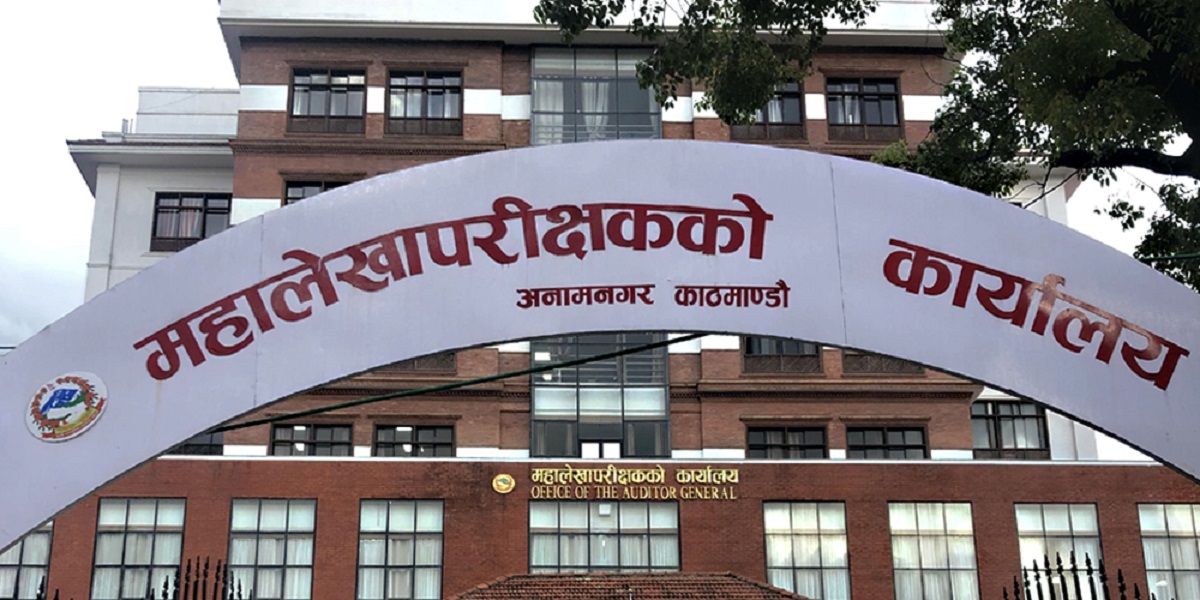
KATHMANDU: The Office of the Auditor General has called for the resolution of longstanding land ownership disputes involving some of the Kathmandu Valley’s UNESCO World Heritage sites.
According to the performance audit section of the Auditor General’s 63rd Annual Report, disputes over land ownership persist between the Guthi Sansthan and the trusts and management committees overseeing key heritage sites, including Pashupatinath Temple, Boudhanath Stupa and Swayambhunath.
The report recommends harmonizing the provisions of the Guthi Sansthan Act, the Ancient Monument Preservation Act, and the laws governing the respective development trusts and committees. It stresses the need to clearly determine ownership of both tangible and intangible heritage assets to ensure their effective protection and management.
The report notes that Guthi Sansthan finances and manages numerous cultural and religious activities through income generated from guthi lands. In the Kathmandu Valley alone, it supports 2,013 intangible heritage practices, including festivals, rituals, and religious ceremonies—1,282 in Kathmandu, 309 in Bhaktapur, and 422 in Lalitpur.
Local governments, heritage management offices, trusts, and development committees also contribute to the preservation and operation of these cultural traditions.
Nationwide, the report states that income from guthi lands is used to support festivals, religious observances, and the upkeep of 717 monasteries, temples, and other heritage sites. Under 2,082 Raj Guthi trusts across 68 districts, there are approximately 561,990 ropani of guthi land in the hills and 66,330 bigha in the Tarai.
The Auditor General has emphasized that clarifying ownership and management responsibilities is essential for safeguarding Nepal’s cultural heritage and improving its long-term conservation.






Comment