




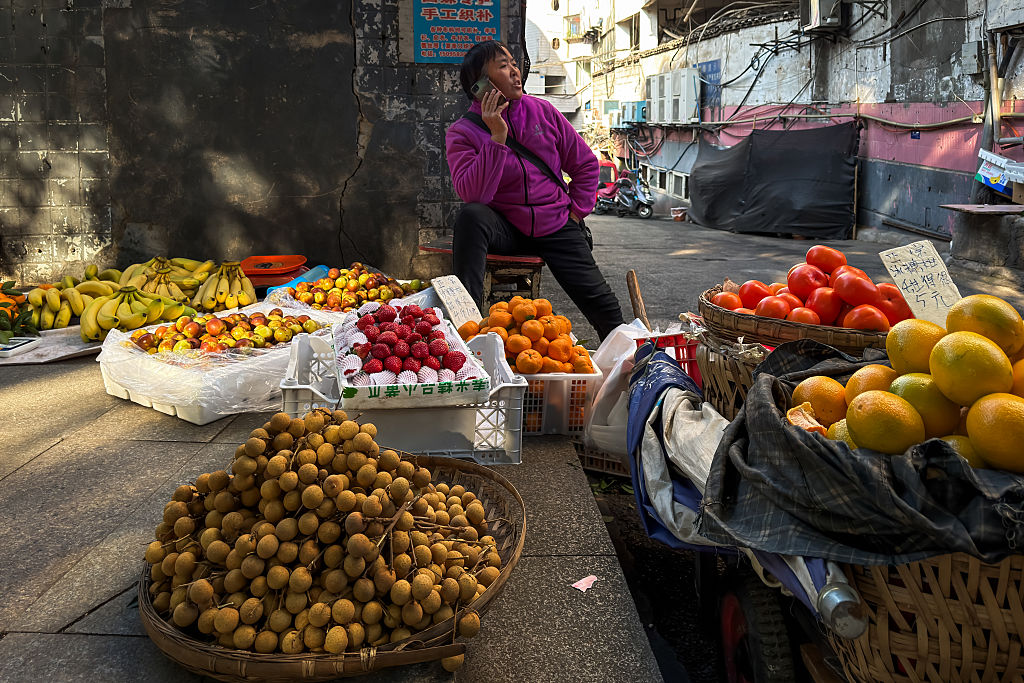
China’s fruit markets, once vibrant symbols of abundance and prosperity, now stand as stark reminders of deeper economic and social fractures.
The transcript describing farmers dumping grapes, mangoes, and blueberries into trash bins is not merely about agricultural misfortune it is a metaphor for a society where trust, demand, and ethics have collapsed simultaneously.
The Chinese Communist Party (CCP) has long projected an image of stability and growth, but the reality unfolding in these markets suggests otherwise. Beneath the surface of overflowing stalls lies paralysis, deception, and despair.
At first glance, the sheer volume of fruit suggests prosperity. Grapes, apples, and mangoes pile high, yet they remain unsold. Farmers face a cruel paradox: selling cheaply deepens losses, selling at higher prices is impossible, and not selling at all means ruin.
Buckets of grapes are poured into trash bins, mangoes dumped by the ton, blueberries fed to livestock. What once symbolized harvest and hope now becomes waste.
This collapse is not due to poor quality but to collapsing demand. Ordinary citizens, squeezed by stagnant wages and rising costs, no longer see fruit as affordable.
Nutrition becomes optional when survival dominates household budgets. The CCP’s narrative of “common prosperity” rings hollow when farmers lose half a million dollars in a season while consumers cannot afford basic food.
The crisis is worsened by deception within the food industry. Strawberries arrive mouldy, peaches leak chemicals, grapes appear unnaturally glossy. Merchants rebrand cracked peaches as “exploding peaches,” deformed mangoes as premium varieties, and fake wild kiwis flood tourist sites. Additives and growth accelerators make fruit bigger and sweeter but erode consumer trust.
Once doubts spread, demand collapses entirely. Online comments reflect fear: “Who dares to eat this? I wouldn’t touch it even if it were free.” Hospitals fill with patients, and whispers grow that every economic depression begins when even food cannot be sold.
This erosion of trust extends beyond fruit. Beef is injected with substances to fake marbling, chickens raised unnaturally fast, pork preserved with additives, and even fake eggs circulate.
Waste cooking oil is scooped from trash bins and resold. Diseased carcasses enter the food chain, pathogens spread silently, and even animal feed becomes toxic. Profit has become the only god, survival justifies everything, and harming others is no longer accidental but strategic.
The silence of the authorities is chilling. No official announcements explain the collapse no emergency measures protect farmers. This silence is not accidentalit reflects the CCP’s deeper motives. By suppressing acknowledgment of systemic failure, the government maintains the illusion of stability. Farmers’ despair is treated as collateral damage in the pursuit of political control.
The CCP’s economic model thrives on overproduction, subsidies, and hype. Livestream promotions of “miracle fruits” fuel blind expansion, while consumption weakens.
When collapse comes, the system learns nothing. Instead, new miracle fruits are promoted, promising high returns and fast money. The cycle repeats: exaggeration, speculation, saturation, collapse. Each round leaves deeper scars.
The ulterior motive is clear: the CCP prioritizes appearances over sustainability. By encouraging overproduction, it inflates short-term statistics that project growth. By ignoring collapse, it avoids admitting structural weakness. Farmers and consumers are pawns in a larger game of political legitimacy.
The most chilling image is not the fruit itself but the faces behind itfarmers who no longer complain because complaining changes nothing, sellers who laugh bitterly while dumping produce, consumers who refuse to buy not because they dislike fruit but because they no longer trust food.
An economy can survive slow growth or low profits, but it cannot survive the loss of confidence at every level. When people stop believing effort leads to reward, the foundation cracks.
The fruit crisis is not a side story but the ground truth, spoken without slogans or propaganda. It reveals that something essential has failed, and the cost will be measured not only in money but in lives forced to start over with nothing.
China’s fruit market collapse is more than an agricultural disasterit is a mirror reflecting the decay of trust, ethics, and governance. The CCP’s silence and manipulation reveal ulterior motives: preserving political legitimacy at the expense of farmers’ livelihoods and consumers’ health.
The rotting fruit is not just wasted food; it is a warning of systemic collapse. When farmers cry and fruit feeds animals instead of people, the crisis transcends agricultureit signals a civilization in peril.
The transcript’s imagery of abundance turned to waste captures the essence of China’s broader crisis. Behind every discarded crate is a household on the brink, behind every unsold truckload is a decade of effort erased.
The CCP’s pursuit of appearances has created a system where deception is cheaper than honesty, where collapse is normalized, and where survival itself is poisoned. The fruit markets are not isolated they are the frontline of a society unravelling under the weight of its own contradictions.
(Source/international media)





Comment