




Nepal’s elections have once again delivered a democratic mandate. But beyond the political arithmetic of coalition-building lies a more pressing question: can the new government translate that mandate into jobs, investment, and economic opportunity? For many Nepalis, especially the young, the answer will determine whether the country’s future lies at home or abroad.
Over the past decade, Nepal has made significant political strides. The adoption of the constitution and the transition to a federal system marked historic milestones. Yet translating political transition into economic transformation has proven more difficult. Growth has remained modest, averaging around 4-5 percent in recent years, while investment has lagged behind its potential. At the same time, large numbers of young Nepalis continue to seek opportunities overseas.
The challenge before the new government is therefore not simply to govern, but to govern effectively. Nepal’s development agenda now requires a decisive shift from political transition to economic transformation.
First, Nepal must move beyond a remittance-driven economy. Nepal’s economy is sustained to a remarkable degree by remittances. These flows account for roughly 26-27 percent of GDP, placing Nepal among the most remittance-dependent economies in the world. Each year, hundreds of thousands, often more than 600,000, Nepalis leave for overseas employment, primarily in the Gulf and Malaysia.
Administrative bottlenecks, procurement delays, and coordination challenges continue to slow implementation. As a result, infrastructure that could stimulate economic activity takes longer than necessary to deliver benefits.
These remittances have supported household incomes and macroeconomic stability. But they also reflect a deeper structural challenge: the limited availability of productive employment within the country.
The growing instability in parts of the Middle East further underscores this vulnerability. Nepal’s economic fortunes are closely tied to labour markets in the Gulf. Any slowdown in those economies, whether due to geopolitical tensions, oil market disruptions, or regional conflict, could directly affect employment opportunities and remittance flows.
Remittances cannot be the foundation of long-term prosperity. Nepal must gradually transition toward a domestic economy that generates jobs at scale. This requires expanding investment in productive sectors such as tourism, agricultural modernization, information technology services, and small and medium enterprises, while reducing regulatory barriers that discourage private investment.
Nepal’s young population is a powerful asset. But without sufficient job creation, this demographic advantage risks becoming a missed opportunity.
Second, unlock the hydropower opportunity. If remittances sustain Nepal’s present, hydropower can shape its future.
Nepal possesses an estimated 83,000 megawatts of hydropower potential, of which more than 40,000 MW is economically feasible. Yet only a small fraction has been developed.
Hydropower is central to Nepal’s economic transformation. Reliable electricity can support industrial growth, while cross-border energy exports can generate significant revenues.
Encouragingly, recent progress has been made in expanding generation capacity and strengthening regional energy cooperation. However, further reforms are needed to accelerate project implementation, expand transmission infrastructure, and ensure a stable and predictable investment framework.
If managed effectively, hydropower could become the engine of Nepal’s next phase of growth.
Third, make federalism deliver. Nepal’s transition to federal governance has created new opportunities for decentralized decision-making and regional development. Yet implementation remains uneven.
Responsibilities among federal, provincial, and local governments are still evolving, and coordination challenges persist. For federalism to succeed, the focus must now shift from constitutional design to institutional effectiveness.
Clearer assignment of responsibilities, improved fiscal coordination, and stronger administrative capacity at the provincial and local levels will be critical. Local governments, which are closest to citizens, must be empowered with the resources and institutional support needed to deliver services effectively.
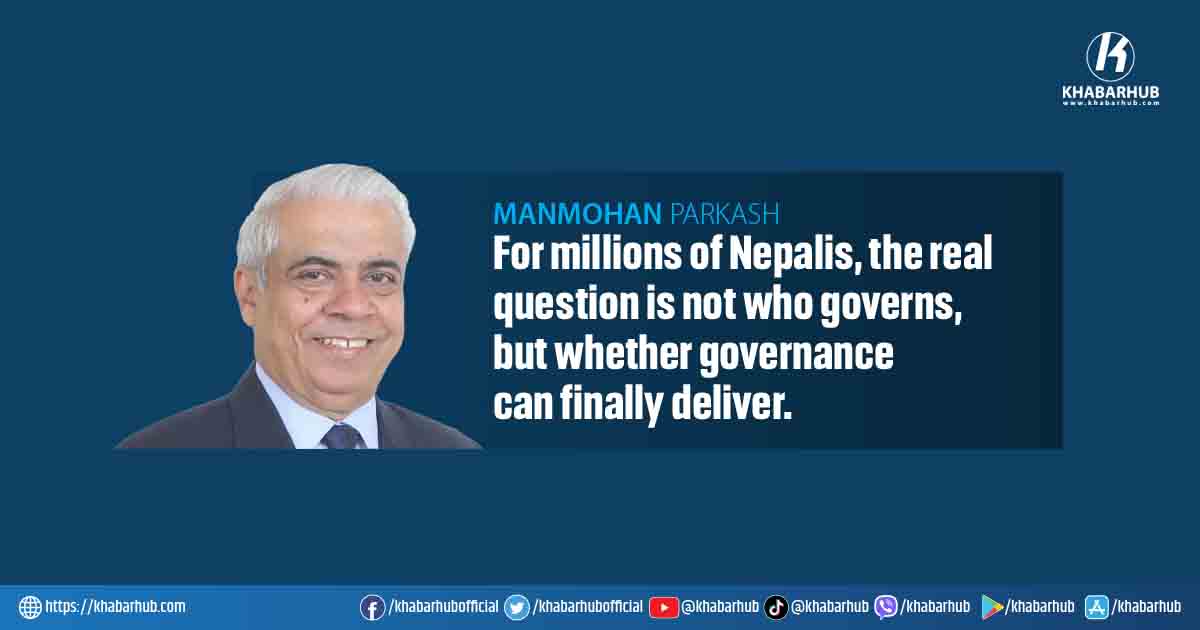
Political mandates come and go. What will matter is whether this government can create jobs at home, reduce external vulnerabilities, and restore confidence in institutions and markets. For millions of Nepalis, the real question is not who governs, but whether governance can finally deliver.
Fourth, turn public investments into results. Nepal has invested significantly in infrastructure in recent years—from roads and airports to energy and urban development. Yet project execution has often lagged behind expectations.
Administrative bottlenecks, procurement delays, and coordination challenges continue to slow implementation. As a result, infrastructure that could stimulate economic activity takes longer than necessary to deliver benefits.
Improving execution must therefore become a priority. Streamlining procurement processes, strengthening project management, and enhancing accountability can significantly improve the effectiveness of public investment.
When projects are delivered on time and within budget, they create jobs, attract private investment, and improve productivity.
Fifth, restore investor confidence. Sustained economic growth will require a stronger role for the private sector. Public investment alone cannot generate the scale of transformation needed.
Investors seek predictable policies, transparent regulations, and credible institutions. Simplifying business procedures, ensuring policy consistency, and improving dispute resolution mechanisms can help create a more supportive investment climate.
Sectors such as tourism, digital services, renewable energy, and agro-processing offer significant potential. Unlocking these opportunities will require closer partnership between government and business.
This is a historic opportunity to turn political mandate into economic momentum. Nepal has many advantages that countries at similar income levels would envy: abundant hydropower resources, a young workforce, a vibrant tourism sector, and a strategic location between two of the world’s largest economies. Yet potential alone does not generate prosperity. It must be matched by effective policies and capable institutions.
The new government now has a narrow but important window to demonstrate that Nepal can move beyond cycles of political transition toward sustained economic progress.
Political mandates come and go. What will matter is whether this government can create jobs at home, reduce external vulnerabilities, and restore confidence in institutions and markets. For millions of Nepalis, the real question is not who governs, but whether governance can finally deliver.
(Manmohan Parkash served as Senior Advisor in the Office of the President and Deputy Director General for South Asia at the Asian Development Bank (ADB). The views expressed are personal.)






Comment