





KATHMANDU: The Living Goddess Kumari was taken to Taleju Bhawani Temple at Hanumandhoka in Kathmandu on Tuesday night to participate in a traditional ritual believed to bestow divine strength and blessings.
The ceremony was performed in accordance with Tantric and Vedic traditions, reflecting the longstanding religious and cultural practices of the Kathmandu Valley.
Gautam Shakya, manager of Kumari Ghar, said Kumari was escorted from her residence to the Taleju Temple complex in a ceremonial chariot procession to perform the ritual.
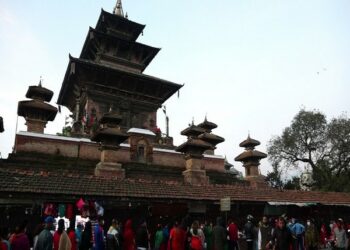
For the occasion, the idol of Goddess Taleju Bhawani was brought from the temple to the Mul Chowk courtyard of Hanumandhoka Palace, where the ceremony took place, Shakya said.
Located within the historic Hanumandhoka Durbar Square, a UNESCO World Heritage Site, Taleju Bhawani Temple is one of Kathmandu’s important religious and cultural landmarks. The temple traditionally opens to the general public only once a year, on Maha Nawami, the ninth day of the Dashain festival.
Taleju Bhawani has long been revered as the tutelary deity of the Malla kings of the Kathmandu Valley, and her worship remains an integral part of the region’s religious heritage.
Kumari, worshipped as a living goddess and regarded as an embodiment of divine feminine power associated with Taleju Bhawani, also holds a special place in Nepal’s religious traditions. The Kumari tradition is rooted in the belief that the goddess manifests herself in a young girl selected according to established religious and cultural criteria.
The ritual visit reflects the longstanding spiritual connection between the Living Goddess and Taleju Bhawani. Devotees believe the ceremony enables Kumari to receive divine blessings and strength, preserving a centuries-old tradition that continues to shape Kathmandu’s religious and cultural life.




Comment