




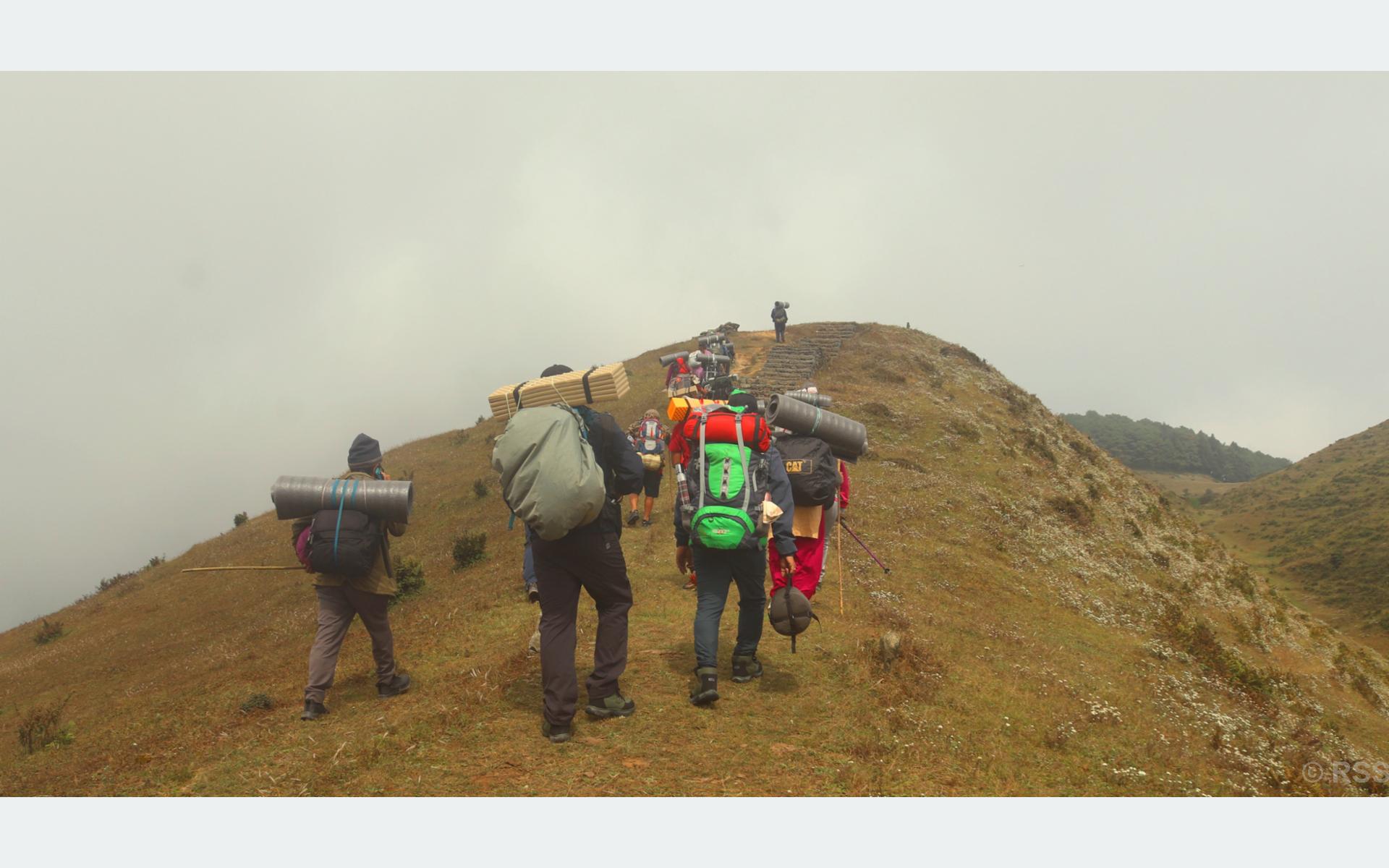
BHOJPUR: The Mundum Trail is emerging as a scenic and accessible tourist destination in eastern Nepal, attracting a growing number of domestic and international visitors.
Known for its natural beauty, the trail offers breathtaking views of towering Himalayan peaks, shimmering glaciers and the plains of the Terai, all within a single journey. Along the route, visitors can experience elements of Kirant culture, expansive grasslands, traditional sheep herding settlements and grazing pastures, making the trek both culturally rich and visually rewarding.
Saroj Basnet, Chairperson of Temkemaiyung Rural Municipality, said the Mundum Trail is being developed as a safe and easy travel destination. He noted that the rural municipality is actively investing in infrastructure development and management to ensure secure and comfortable travel for tourists. Expansion of the trail is also underway.
Vice Chairperson Rama Devi Rai stated that tourism and agriculture have been prioritized in local development plans, given the area’s natural beauty. To facilitate visitors, resting spots, water facilities and other basic infrastructure have been constructed along the trail.
A tourism information center has also been established to provide visitors with details about the trail’s features, geography, travel duration, accommodation options and safety guidelines.
Tourists can also enjoy traditional dishes representing the cultural identity of the Kirant Rai, Sherpa, Tamang and other communities, along with organic food products from local shepherds. The presence of diverse plants and medicinal herbs further enhances the attraction of the area.
The trail, which features moderate ascents and descents, offers views of more than two dozen Himalayan peaks, including Sagarmatha, Makalu, Kanchenjunga, Kumbhakarna, Chamlang and Nuptse, among others.
Named after the Kirant Rai community’s sacred religious text “Mundum,” the trail symbolizes a blend of natural, cultural and adventure tourism. As such, the Mundum Trail is carving out a new identity as a key tourism destination in eastern Nepal.


Comment