




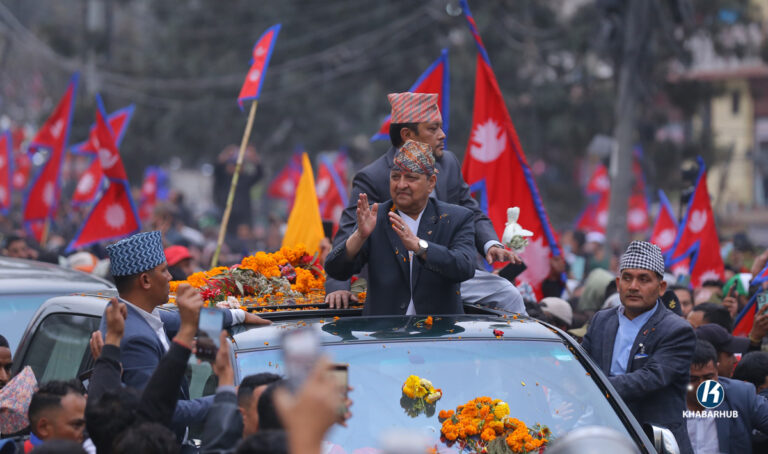
KATHMANDU: Former king Gyanendra Shah has once again begun issuing public messages using the royal title, reversing his earlier use of the designation ‘former king’.
A notice released on Wednesday by Shah’s Secretariat of Communication ahead of his scheduled visit to Janakpur refers to him in full royal honorifics, effectively presenting him as ‘king’. The statement announces that Gyanendra Shah and Queen Komal will visit Janaki Temple in Janakpur on January 26.
This marks a departure from Shah’s Dashain message last year, in which he had identified himself as ‘former king’, a first since the monarchy was abolished in 2008.
The latest notice, signed by Secretariat spokesperson Phaniraj Pathak, describes Shah as “Shree 5 Maharajadhiraj Gyanendra Bir Bikram Shah Dev,” a title no longer recognized by Nepal’s constitution.
The shift comes as the country heads toward House of Representatives elections, lending political significance to the renewed use of royal terminology.
Following the violent pro-monarchy protest led by Durga Prasai on March 28, 2025, last year, pressure had mounted to hold Shah accountable for encouraging royalist sentiment. During the investigation into the Tinkune violence, police summoned Pathak and obtained a written commitment that all future public communications would refer to Shah strictly as ‘former king’.
Since then, official statements from Nirmal Niwas had consistently used the ‘former king’ designation. Police had earlier warned that using constitutionally unrecognized royal titles amounted to a violation of law.
Despite this, similar royal honorifics reappeared in messages issued on Shah’s 79th birthday and in statements condemning extremist attacks abroad, prompting objections in Parliament. CPN-UML lawmaker Thakur Gaire had demanded legal action, calling the continued use of royal titles a mockery of the rule of law.
Royalist groups and Rastriya Prajatantra Party leaders have long opposed the use of the prefix ‘former’, arguing that a king can never be ‘ex’. This pressure appears to have resurfaced in the latest communication.




Comment