




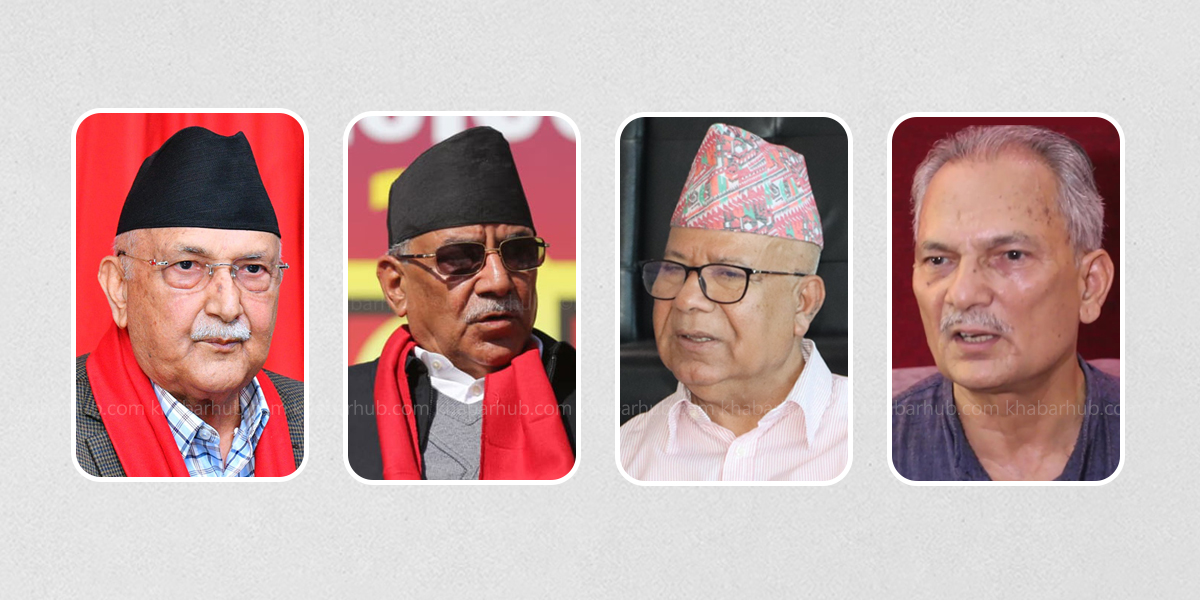
KATHMANDU: Four former prime ministers have entered the House of Representatives race scheduled for March 5, placing their political legacies under direct electoral scrutiny at a time when Nepal’s traditional power structures are visibly under strain.
The former prime ministers contesting the election are CPN-UML Chair KP Sharma Oli, Nepali Communist Party (NCP) Coordinator Pushpa Kamal Dahal ‘Prachanda’, NCP Co-coordinator Madhav Kumar Nepal, and Pragatisheel Loktantrik Party leader Dr Baburam Bhattarai. Their candidacies reflect contrasting strategies—ranging from reliance on entrenched party machinery to calculated retreats into ideological strongholds—as voter behavior shows signs of realignment.
KP Sharma Oli: Incumbent weight versus protest politics
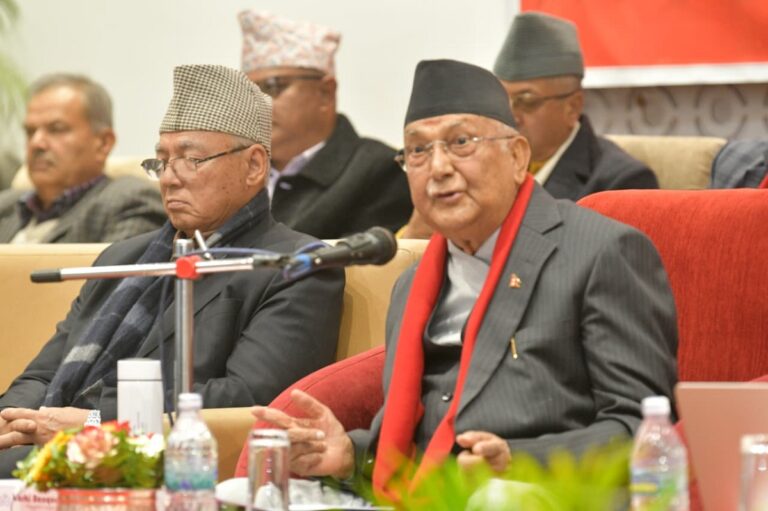
KP Sharma Oli’s candidacy from Jhapa-5, a constituency he has long dominated, now faces an unprecedented test. The entry of Rastriya Swatantra Party (RSP) candidate Balen Shah has transformed the race from a predictable contest into a referendum on establishment politics.
Oli’s earlier victories were bolstered by electoral alliances, particularly with the Rastriya Prajatantra Party. This time, the absence of coalition support, coupled with visible defections from UML-affiliated youth and local leaders, has weakened his traditional advantage. Balen’s campaign, rooted in anti-establishment sentiment and amplified by youth mobilization, has eroded the perception of Oli’s electoral invincibility.
Prachanda: Consolidation over contestation
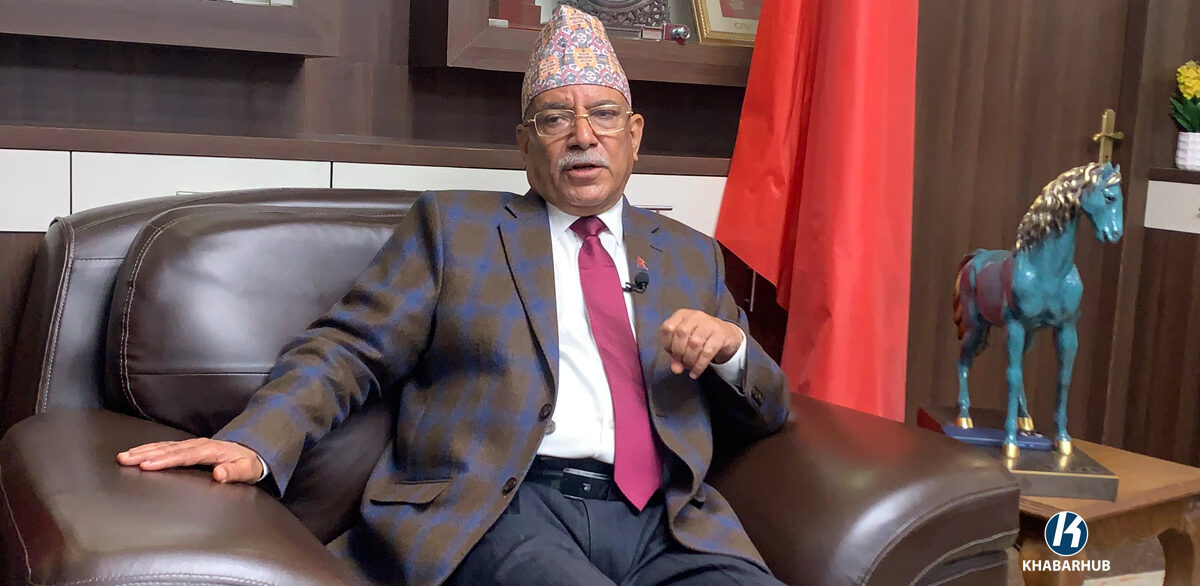
Unlike his counterparts, Prachanda has opted for consolidation rather than confrontation. By contesting from Rukum East, a Maoist stronghold with deep historical and emotional resonance, he has minimized electoral risk.
The constituency’s consistent Maoist victories since 2008, combined with the limited voter base and disciplined organizational structure, position Prachanda as the most electorally secure among the four. His strategy underscores a broader shift from national outreach to controlled political terrain, prioritizing certainty over symbolic battles.
Baburam Bhattarai: Challenging odds in Gorkha-2
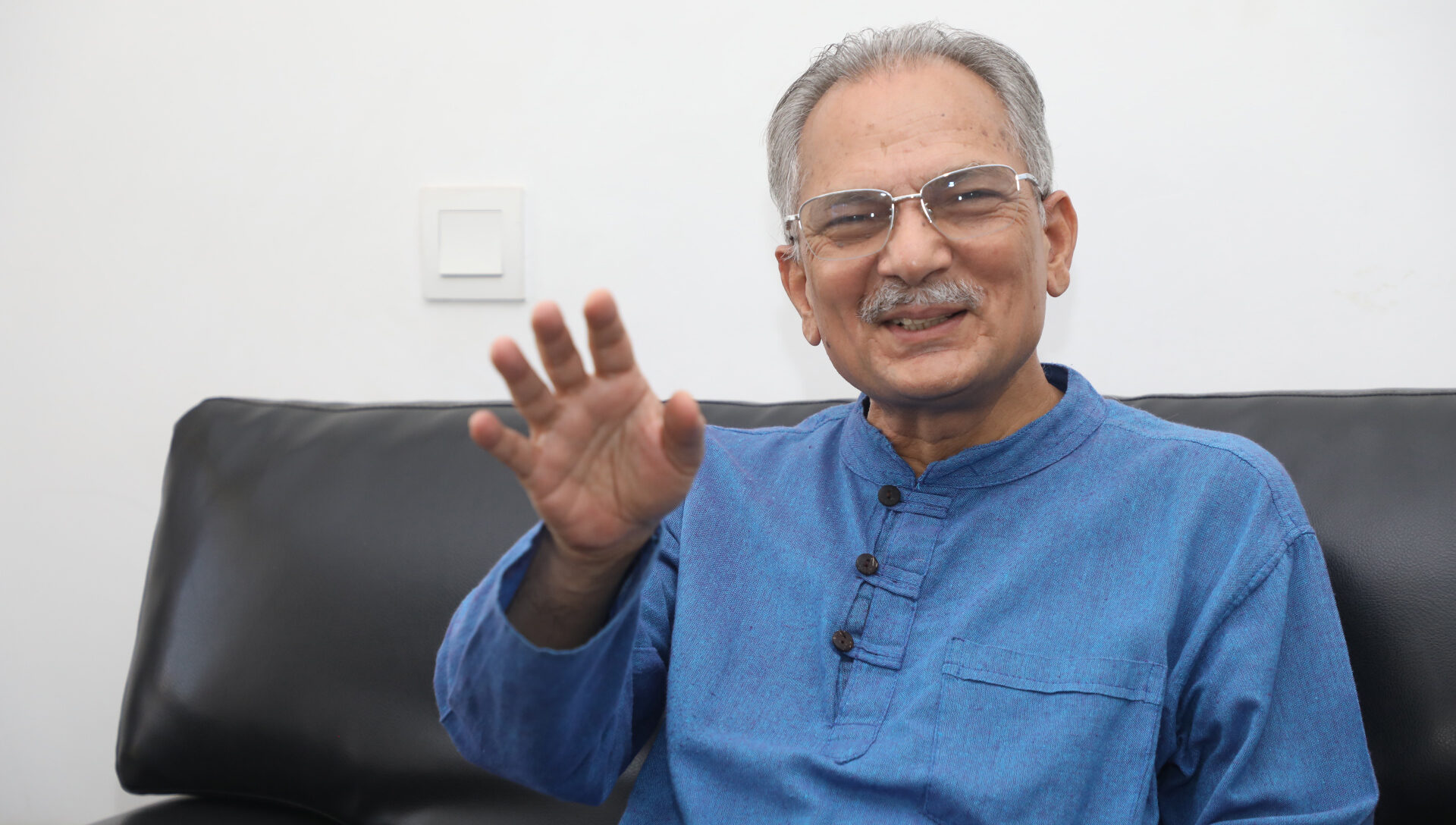
Dr Baburam Bhattarai’s return to Gorkha-2 highlights the limits of personal stature in the absence of organizational strength. Once a dominant force in the constituency, Bhattarai now faces a fragmented vote base, with strong challengers from UML, RSP, and other parties.
While Bhattarai retains intellectual credibility and name recognition, political observers note that his party lacks the grassroots depth required to translate prestige into votes. The contest in Gorkha-2 is shaping up less as a revival of Bhattarai’s influence and more as a test of whether reputation alone can withstand multipolar competition.
Madhav Kumar Nepal: Alliance politics undone
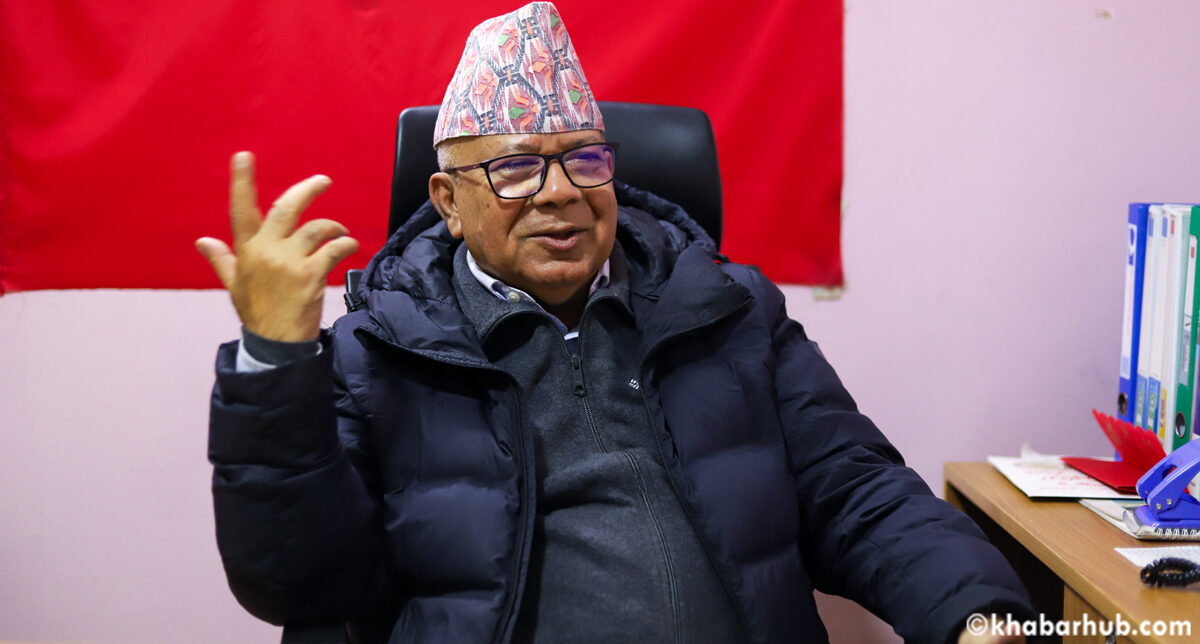
Madhav Kumar Nepal’s candidacy from Rautahat-1 reflects the vulnerabilities of leaders accustomed to coalition politics. His 2079 victory depended heavily on support from the Nepali Congress and Maoist Centre—an advantage absent this time.
With UML regaining organizational strength in the constituency and multiple parties dividing the vote, Nepal faces a more hostile electoral environment. The race underscores the risks of overreliance on alliances in an increasingly fragmented political system.
Analysts argue that this election is less about individual wins and losses and more about political relevance. The rise of alternative forces, voter fatigue with traditional leadership, and the collapse of predictable alliances have created an electoral environment where seniority no longer guarantees security.
For Nepal’s former prime ministers, Falgun 21 may serve as a decisive moment—testing not just their ability to win seats, but their capacity to remain central figures in a political order that is rapidly redefining itself.





Comment