




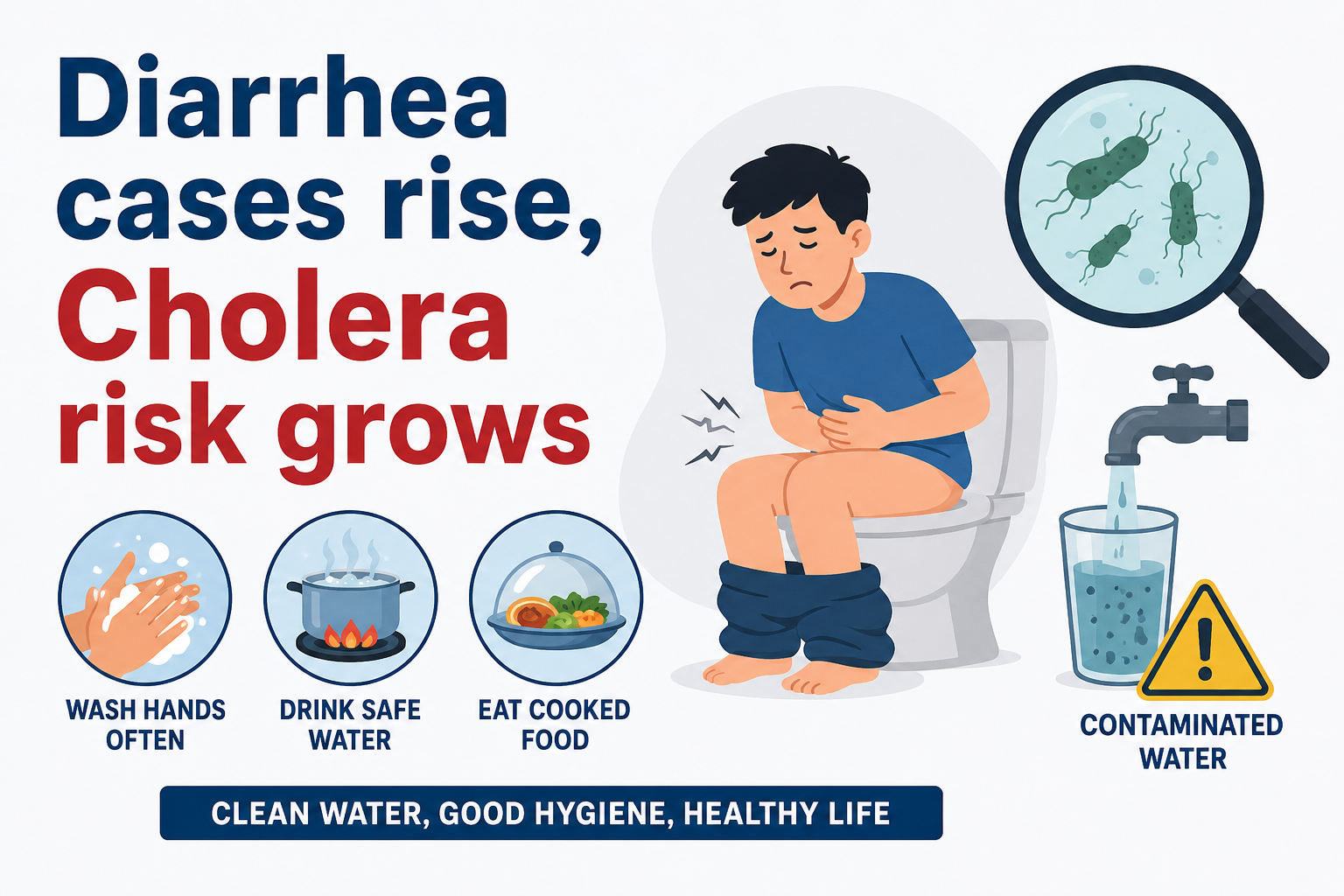
KATHMANDU: With the onset of the monsoon season, the risk of waterborne and other infectious diseases has increased across the country due to continuous rainfall.
The Ministry of Health and Population and health officials have urged the public to remain alert, citing a rise in cases of diarrhea, cholera, typhoid, dengue, and respiratory infections.
According to the latest report from the Epidemiology and Disease Control Division (EDCD), the number of infectious disease cases that could potentially develop into outbreaks is increasing nationwide.
Diarrhea cases on the rise
The EDCD reported that 785 cases of acute diarrhea were recorded across the country in the past week alone. The Division stated that 720, 762, and 718 additional diarrhea cases were reported during the previous three weeks of surveillance, respectively.
The report also showed 500 cases of influenza-like illness, 436 respiratory infection cases, 113 dengue cases, 37 scrub typhus cases, and 33 cases of fever with vomiting.
Bagmati Province recorded the highest number of diarrhea cases, with 380 patients. Similarly, Sudurpaschim Province reported the highest number of influenza-like illness cases (198) and respiratory infection cases (107).
Koshi Province recorded the highest number of dengue cases, with 43 infections, while scrub typhus cases were reported more frequently in Gandaki and Sudurpaschim provinces.
Cholera concern rises in Kathmandu Valley
The risk of cholera has increased in the Kathmandu Valley with the arrival of the rainy season. Following disruptions in the Melamchi Drinking Water Project due to heavy rainfall, water is currently being supplied through tankers in several areas of the valley.
Health experts have warned people to avoid consuming untreated water from tankers and other sources, recalling that contaminated drinking water was identified as the main cause of previous cholera outbreaks in Kathmandu, Lalitpur, Kailali, Rupandehi, and Pyuthan.
According to Dr Sher Bahadur Pun, an infectious disease specialist at Shukraraj Tropical and Infectious Disease Hospital in Teku, cholera is an acute diarrheal disease caused by the bacterium Vibrio cholerae. The infection can lead to severe dehydration, excessive loss of body fluids and salts, and a drop in blood pressure, which may result in death within hours if treatment is delayed.
However, most patients can recover quickly with timely medical care, adequate fluid intake, and proper treatment.
Prevention measures
The Ministry of Health has intensified disease surveillance, drinking water testing, and public awareness campaigns in high-risk areas. Health experts have advised the public to follow these preventive measures:
Safe water and food: Drink only purified water, either boiled or treated with chlorine. Consume properly cooked food, wash fruits and vegetables with clean water, and avoid unhygienic food from open areas.
Hand hygiene: Wash hands with soap and water for at least 20 seconds after using the toilet, before preparing food, and before feeding children.
Extra care for vulnerable groups: Pay special attention to children, elderly people, pregnant women, and individuals with chronic illnesses, as they are more vulnerable to infections.
Health workers have advised people experiencing symptoms such as frequent watery diarrhea, vomiting, excessive thirst, sunken eyes, severe weakness, or reduced urination to seek medical attention immediately rather than relying only on home treatment.
Maintaining safe drinking water, consuming clean food, practicing personal hygiene, and seeking timely treatment remain the most effective measures to prevent disease outbreaks during the monsoon season.





Comment