




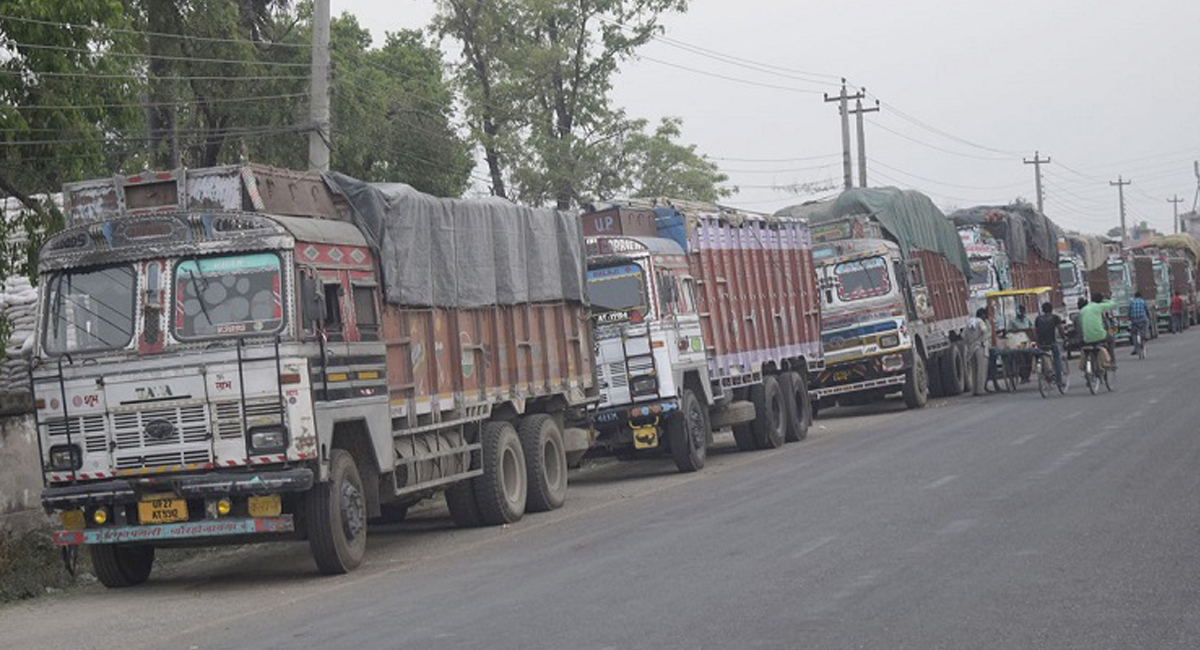
KATHMANDU: Nepal’s imports have reached nearly Rs 1.5 trillion in the first nine months of the current fiscal year, while exports have also increased by 18 percent, according to the Department of Customs.
The department said that goods worth Rs 1.49 trillion were imported by the end of Chaitra, marking a 13.82 percent increase compared to the same period of the previous fiscal year. During the corresponding period last year, imports stood at Rs 1.309 trillion.
Similarly, exports during the review period reached Rs 222 billion, reflecting an 18.46 percent rise year-on-year. In the same period of the previous fiscal year, Nepal had exported goods worth Rs 188 billion.
Diesel, soybean oil and fuel imports dominate
The data shows that diesel remained the most imported commodity during the review period, with imports worth Rs 103.31 billion.
Likewise, crude soybean oil worth Rs 96.72 billion was imported, followed by petrol valued at Rs 50.39 billion and liquefied petroleum gas (LPG) worth Rs 41.64 billion.
Officials say the import structure continues to be dominated by petroleum products and industrial raw materials, while exports are gradually increasing but remain relatively small compared to imports.
Economists note that although export growth is encouraging, the widening trade gap remains a major challenge for Nepal’s external sector stability.






Comment