




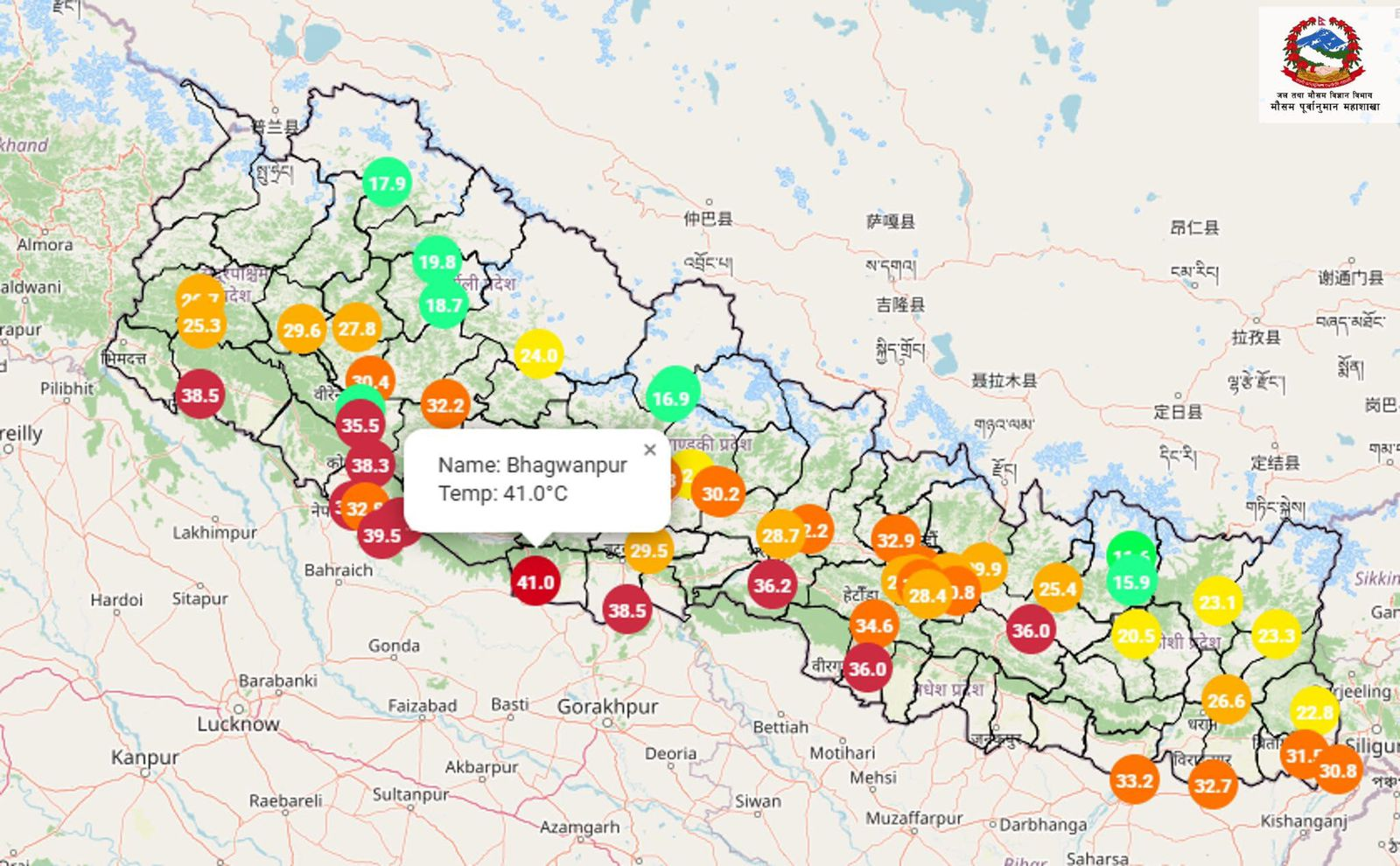
KATHMANDU: Extreme heat conditions have intensified across most parts of the country as temperatures continue to rise, with the Department of Hydrology and Meteorology warning of possible heatwave conditions, commonly known as “loo,” in the Tarai region.
According to data released by the department on Monday afternoon, temperatures reached 41°C in Kapilvastu and 39°C in Banke, indicating severe heat stress in the western plains.
The department said hot conditions have been recorded across the Tarai regions of Madhesh, Bagmati, Gandaki, Lumbini, and Sudurpaschim provinces, as well as in valleys and low-lying areas. It warned that western Tarai districts in Lumbini and Sudurpaschim provinces are particularly at risk of heatwave conditions.
Meteorologist Sanjiv Adhikari said the extreme heat is expected to persist until Wednesday, especially in the Tarai, valleys, and lowland areas.
“From today until Wednesday, there is a high possibility of heatwave conditions in the Tarai, valley, and lowland regions,” he said. “In Koshi Province, cloud cover may reduce the likelihood of a heatwave. However, western Lumbini and Sudurpaschim districts such as Nepalgunj and Dhangadhi are at higher risk.”
He added that temperatures in Dipayal reached nearly 40°C, which is considered unusually high for the region.
Public health warning and preparedness
Senior hydrologist at the National Disaster Risk Reduction and Management Authority Rajendra Sharma said heatwave events are likely to increase due to climate change, urging early preparedness and awareness.
He said a guideline for heatwave response has already been prepared and sent to relevant intergovernmental agencies for implementation.
“We need to ensure cool environments, access to safe drinking water, and special care for children, elderly people, pregnant women, and the sick,” he said. “Hospitals, schools, and public places must also be prepared with preventive measures.”
Health impacts
Public health expert Sameer Adhikari warned that heatwaves can cause rapid heartbeat, low blood pressure, breathing difficulties, severe headaches, dizziness, and even loss of consciousness.
“Heatwaves can also have long-term effects on the brain and circulatory system,” he said, adding that children and elderly people are most vulnerable.
He advised drinking enough water, staying in shaded or cool places, and avoiding alcohol and smoking.
The Ministry of Health and Population also warned that body temperature may exceed 104°F in severe cases, with symptoms including dry, red, and hot skin.
Pediatric specialist Ramhari Chapagain also urged special precautions for children during extreme heat conditions.
A World Health Organization study on heatwave trends in Nepal has found that climate change, rapid urbanization, and air pollution are contributing to rising temperatures and associated health risks.
The study, based on data from 33 meteorological stations between 1987 and 2016, shows an increasing number of hot days and changes in rainfall patterns, especially in the southern plains.
Agriculture and livestock at risk
Agricultural expert Dilliram Sharma warned that excessive heat could significantly affect crop production and livestock.
He said heat stress can cause crops to dry out, flowers to fall prematurely, and reduce fruit formation, leading to economic losses for farmers.
“If heatwaves occur during flowering or fruiting stages, crop growth is affected and yield declines,” he said.
He recommended the use of plastic tunnel farming and improved irrigation and shading systems to reduce risk.
How to stay safe
Authorities have advised people to avoid going outside during peak daytime hours, drink plenty of fluids, consume fruit juices, and use oral rehydration solutions if excessive sweating occurs.
People are also advised to wear protective clothing, use umbrellas, bathe with cool water, and work outdoors only during early morning or evening hours.
The Ministry of Health further urged people to avoid alcohol, reduce caffeine intake, and limit sugary beverages.
What is a heatwave?
According to national guidelines on disaster preparedness, a heatwave (loo) refers to extreme hot weather conditions caused by unusually high temperatures.
In Nepal, days with temperatures above the 90th percentile of the past 30 years are classified as hot days. Continuous hot days for three or more days are categorized as heatwaves, ranging from mild to severe depending on intensity and duration.
Officials have urged the public to remain alert and follow safety measures as extreme heat conditions are expected to persist in the coming days.






Comment