




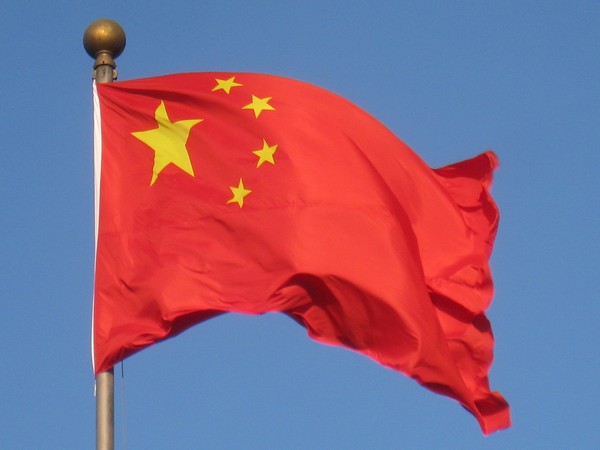
Beijing’s silence over a Pentagon report that Taiwan, Senkaku Islands and Arunachal Pradesh are core interests of China is a sign of its acquiescence with the assertion of the US Department of War. Recent Chinese actions have underscored the veracity of the Pentagon assessment.
China has been quick to deny the part of the recent Pentagon assessment which says that Beijing is keen to put a spanner in the process of improvements in Indo – US ties. Beijing’s silence on the other part of the assessment on the core Chinese interests is of significance.
Recent Chinese actions like warlike manoeuvres by its armed forces around the island of Taiwan, threats to Japan and repeated claims that Arunachal Pradesh is Chinese territory must serve as a wake-up call to countries on the receiving end of aggressive Chinese designs.
“China probably seeks to capitalise on decreased tension along the Line of Actual Control with India to stabilize bilateral relations and prevent the deepening of the US-India ties,” the US Department of War has said to the US Congress in its report on ‘Military and Security Developments Involving the People’s Republic of China 2025.’
The assessment was part of a broader review of China’s defence policy and regional strategy. Not surprisingly, China has rejected the suggestion that it has been seeking to use easing border tensions with India to blunt the growth of US-India relations.
Chinese Foreign Ministry spokesperson Lin Jian, while denying one part of the US Department of War report, was silent on another part which referred to three “core interests” of China. These, according to the Pentagon report, included control of the Chinese Communist Party, promotion of China’s economic development and expansion of China’s sovereignty and territorial claims. “China’s leadership has extended the term ‘core interest’ to cover Taiwan and China’s sovereignty claims and territorial disputes in the South China Sea, the Senkaku Islands, and the north-eastern Indian state of Arunachal Pradesh,” the Pentagon report has said.
The Global Times report has also accused Indian troops of trespassing into China’s territory on May 6, 2020. There is historical evidence, however, that these territories belonged to the ancient kingdom of Ladakh and continued to be under the kingdom of Ladakh when Ladakh came under Dogra rule.
Clearly, the omission of the Chinese authorities to deny these assertions of the US is a tacit admission on the part of them that these have substance. And that betrays the expansionist designs of the Chinese Communist Party leadership.
Recent military exercises by the Chinese armed forces in the Taiwan Strait go to reinforce the apprehension that Beijing is planning an attack on the self-ruled island of Taiwan. In the latest of these, the Chinese armed forces on December 29 and 30 simulated a blockade around Taiwan and rehearsed counter-intervention operations that would be required in case of a Chinese invasion of Taiwan.
The aim of the exercise could have been to build psychological and political pressure on Taiwan and its allies to fall in line. US President Donald Trump has said he is not worried about the exercise. The US has a commitment to help Taiwan with military intervention in case of an invasion by China.
Meanwhile, a mere hint from Prime Minister of Japan Sanae Takaichi that Japan will not rule out military intervention if China attacks Taiwan has drawn a sharp reaction from the communist rulers of China, with Beijing imposing export control on items of dual use that can be potentially used by the Japanese military to make weapons.
Tokyo has also revealed a plan to install missiles on the Japanese island of Yonaguni, close to Taiwan. The plan is a justified one, as a Chinese invasion of Taiwan will bring the war too close to Japan which is entitled to its own defence. The Japan government has also approved a record defence budget plan exceeding US $58 billion for the coming year, aiming to fortify strike-back capability and coastal defence with cruise missiles.
The Japanese defensive measures are also justified because of the claims of China over the Senkaku Islands which were incorporated in Japan in1895. Post- World War II, the US administered the island till 1972, using it as a firing range, and then returned it to Japan. Since then, Japanese civilians have settled on the island and have been using it for processing dried bonito, a kind of fish, and for feather collection. While the islands have been under the administrative control of Japan, China never had a permanent settlement in these islands.
Beijing has been eyeing the islands since the discovery of oil reserves in the area. “The Chinese government did not contest Japan’s sovereignty over the Senkaku Islands for about 75 years following its incorporation in Japan in 1895,” the Japanese Ministry of Foreign Affairs has said. “This changed in the 1970s when significant attention was drawn to the island due to the existence of oil reserves in the East China Sea.”
Beijing has given several indications recently, even after the beginning of the process of normalization of relations between China and India, that the possession of Arunachal Pradesh, a full-fledged Indian state, is one of the core Chinese interests. Last November, Prema Thongdok, a woman holding an Indian passport, was detained at Shanghai airport for several hours as her place of birth was Arunachal Pradesh.
She was told her passport was invalid and she was asked to apply for a Chinese passport. On December 15, an Indian travel vlogger alleged that he was detained at Guangzhou in China for nearly 15 hours for his comments he had made online about Arunachal Pradesh.
China has also tried to justify its untenable claims over disputed areas between the claim lines of India and China in eastern Ladakh. In a critique of Bollywood movie ‘Battle of Galwan,’ rushes of which have recently been released, Global Times, mouthpiece of the Chinese Communist Party, has quoted a Chinese Foreign Ministry spokesperson that “Galwan valley is located on the Chinese side of the Line of Actual Control in the west section of the China – India boundary.”
The truth, however, is that in April 2020 Chinese troops occupied these disputed areas in violation of a series of bilateral protocols signed between India and China for the management of disputed territories along the international border.
The Global Times report has also accused Indian troops of trespassing into China’s territory on May 6, 2020. There is historical evidence, however, that these territories belonged to the ancient kingdom of Ladakh and continued to be under the kingdom of Ladakh when Ladakh came under Dogra rule.
Analysts say that the Indo-US ties, spanning from military to business, cultural and educational, are too deep and multi-dimensional to be derailed by the future of Sino-Indian ties. On the other hand, the recently stated Chinese positions on Arunachal Pradesh and Galwan pose a question on the sincerity of Chinese intentions to improve ties with India. Besides, a free and open Indo-Pacific is also important for India’s outreach to the ASEAN nations and this does not gel with Chinese military manoeuvres around Taiwan.






Comment