




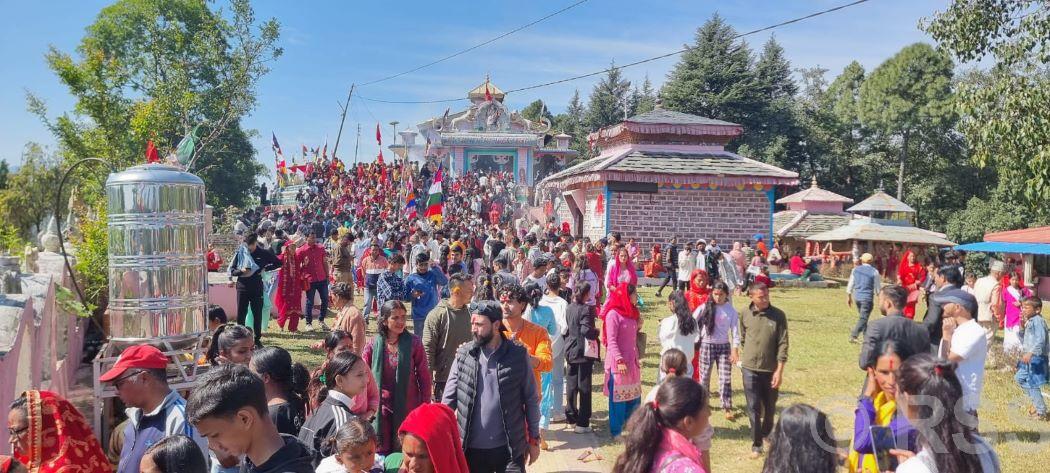
DADELDHURA: Ugratara Bhagwati Temple, one of the prominent Shaktipeeths in Nepal’s far-western region, has drawn large crowds of devotees for the Maha Ashtami festival, with a religious fair being held on the temple premises.
Located about four kilometres north of the Dadeldhura district headquarters, the temple has become a major gathering place for devotees observing the Dashain festival.
Tej Bahadur Sanki, chairperson of the Ugratara Area Development Committee, said special worship rituals, including animal sacrifices, are performed during the Ashtami fair. Grand worship ceremonies are also held at the temple during Dashain. Devotees from all nine districts of Sudurpaschim Province and other parts of the country visit the temple to offer prayers.
Ugratara Bhagwati is regarded as one of the nine Bhagwati temples in Nepal’s far-western region and holds considerable religious significance among local communities.
According to local legend, the temple’s history dates back around 2,500 years. At the time, people from the Sanki community living in Latauli village, in present-day Amargadhi Municipality–8, were ploughing their fields when the blade of a plough struck a rock. Blood is said to have flowed from the rock, revealing the manifestation of the goddess.
Since then, Ugratara Bhagwati has been worshipped in the forms of Mahagauri Durga and Kali. Priests from the Sanki and Bhatta communities of Latauli village continue to perform the temple’s religious rituals.
The temple stands on an elevated site overlooking an expansive plain. According to Sanki, its distinctive location and accessibility have also contributed to its prominence as a religious destination.
A major worship ceremony and a large fair are also held at the temple on Kartik Shukla Purnima, the full-moon day in the lunar month of Kartik. The traditional fair, known as the Deijat fair, is among the temple’s notable annual religious events.
Local folklore associated with the fair recounts ancient battles in which warriors fought valiantly, resulting in a river of blood flowing from Garkha. The stream now known as Nwa Khola is linked to this legend.




Comment