




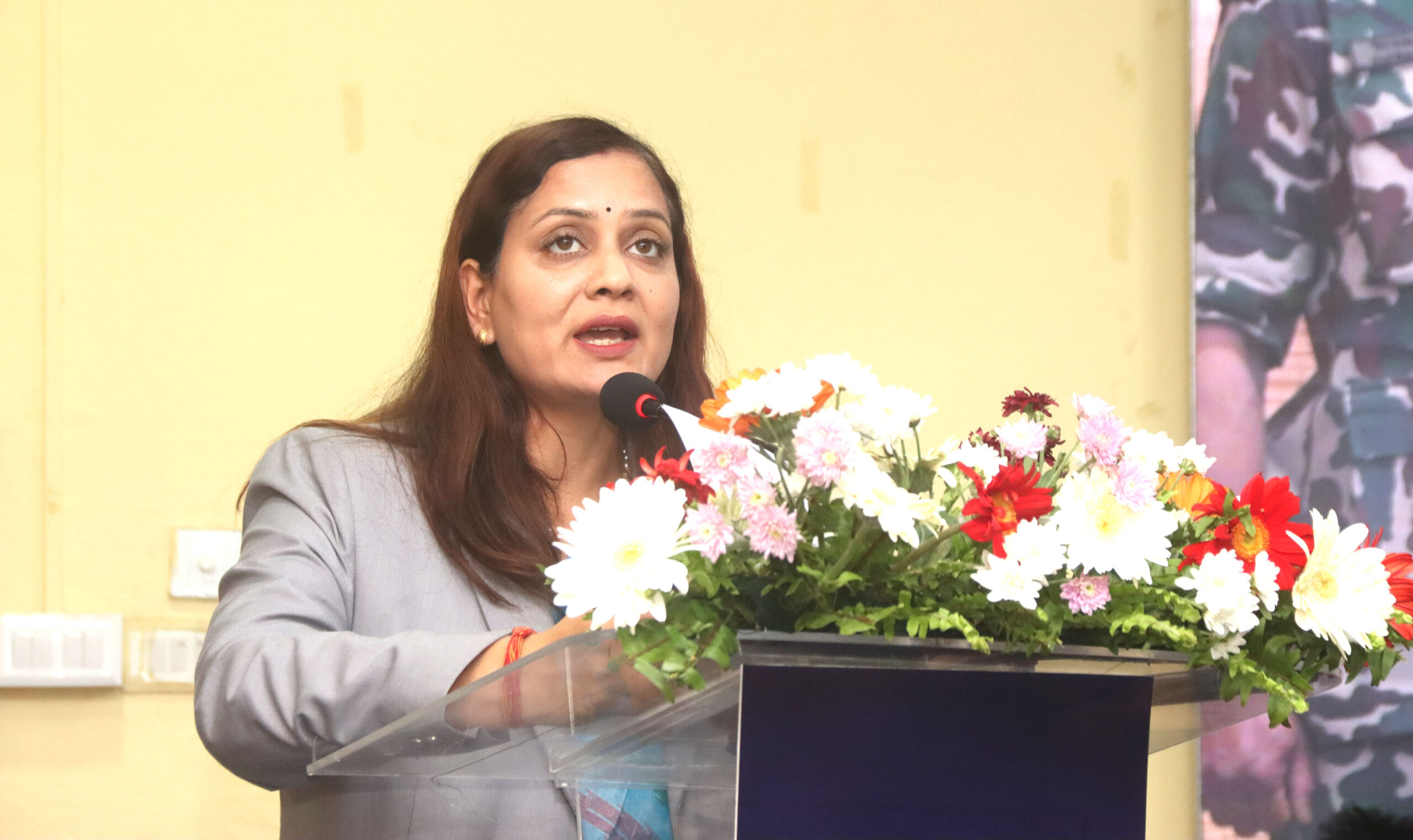
KATHMANDU: Minister for Health and Food Hygiene Nisha Mehta has said the government will introduce necessary legislation to effectively regulate Assisted Reproductive Technology (ART) and surrogacy.
Responding to queries on a resolution motion regarding legislation to regulate the use of ART at today’s meeting of the National Assembly, Mehta described the expansion, access, regulation and management of infertility treatment, Intrauterine Insemination (IUI), In Vitro Fertilization (IVF) and other ART services as sensitive and important issues.
Citing the Constitution’s guarantees of every citizen’s right to basic health services and every woman’s right to safe motherhood and reproductive health, she said the government has a responsibility to protect reproductive health rights, provide safe and quality health services, and ensure equal access to such services.
Noting that the Public Health Service Regulations, 2020, recognize IVF as a specialized service, Mehta said the government has been making policy and institutional arrangements for infertility management services.
“The government has prepared and implemented the ‘Standards for Operating Infertility Management Services, 2025’,” she said.
According to Mehta, the standards provide a basis for the screening, diagnosis, prevention, counselling and referral of infertility cases, as well as medication, necessary surgeries, and the provision of IUI and IVF services at health facilities that meet prescribed standards.
“Health facilities providing IUI services need to have maternity and gynaecology services, an endocrinology laboratory, cold-chain facilities, a pharmacy, essential laboratory facilities and emergency care,” she said.
Although Nepal has some legal and policy provisions governing IVF and surrogacy, Mehta said a separate legal framework is needed to clearly, comprehensively and effectively address all aspects of modern assisted reproductive technologies.
She also stressed the need to make the existing legal framework clearer and more organized by incorporating various Supreme Court orders and directives, advances in medical technology, reproductive rights, medical ethics, the rights of service users, the management of reproductive materials, regulation of service-provider institutions and issues related to surrogacy.
Meanwhile, the National Assembly today unanimously passed a resolution on “drafting a law to regulate the use of assisted reproductive technology.”
The resolution, presented by National Assembly member Madan Kumari Shah (Garima), was discussed before being unanimously approved following Minister Mehta’s response.
Mehta expressed the government’s commitment to introduce the necessary legislation within the current fiscal year.
Following passage of the resolution, National Assembly Chair Narayan Prasad Dahal instructed the government to enact the law in line with its commitment. He also directed the relevant committees of the Assembly to monitor its implementation as necessary.
On behalf of Prime Minister Balendra Shah, Minister for Law, Justice and Parliamentary Affairs Sobita Gautam presented the annual reports of the Judicial Council and the Judicial Service Commission for fiscal years 2080/81 and 2081/82. The next meeting of the National Assembly will be held on September 21 at 1:15 pm.





Comment