




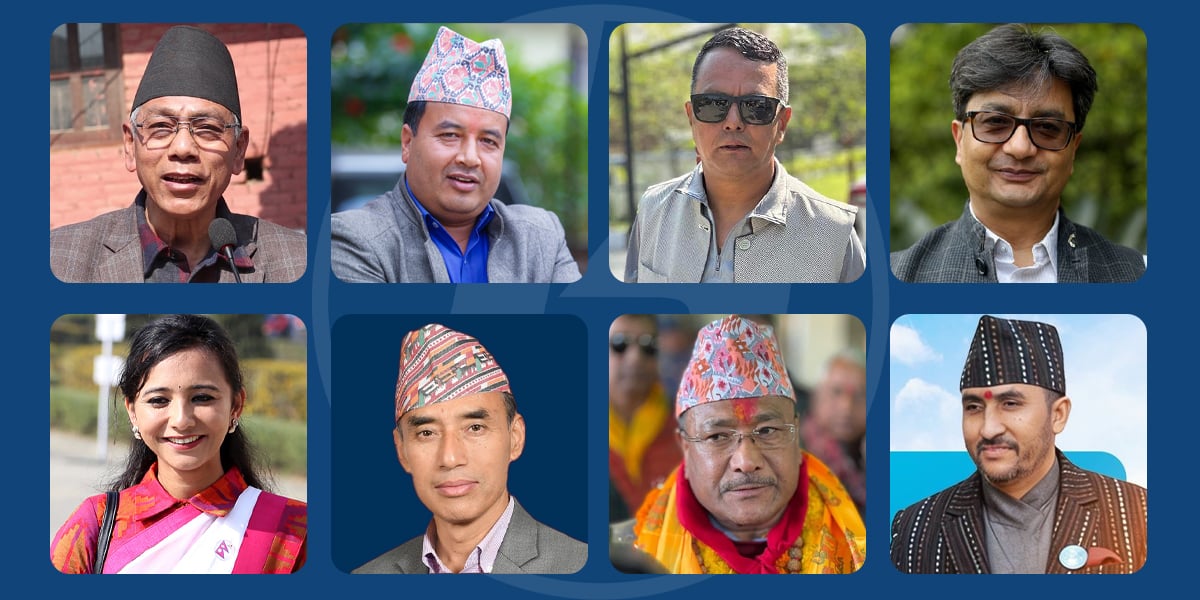
KATHMANDU: As the country gears up for the upcoming House of Representatives election, political parties have stepped up campaign activities across the Kathmandu Valley following the Election Commission’s green signal for door-to-door canvassing from February 16.
From early morning to late evening, party cadres can be seen visiting neighborhoods, local tea shops, and street corners seeking votes. Small groups representing both major and fringe parties are actively engaging voters, often over cups of tea, making political promises and pitching their agendas.
Valley’s voters lean toward new faces
Past electoral trends show that urban voters in the Valley have favored new and alternative political forces. In the 2017 election, Bibeksheel Sajha emerged as a new force, while in 2022, the Rastriya Swatantra Party (RSP) made significant gains, reflecting the electorate’s appetite for change.
In the 2022 polls, the Nepali Congress secured seven of the 15 seats in the Valley, emerging as the largest party. The newly formed RSP won five constituencies, while CPN-UML managed to win only two seats.
This time, Lalitpur and Bhaktapur districts are witnessing renewed competition, particularly between the Nepali Congress and RSP, with UML attempting to regain lost ground.
Bhaktapur-1: Uphill battle against Nepal Workers and Peasants Party
Bhaktapur-1 has long been a stronghold of the Nepal Workers and Peasants Party (NWPP). Its candidate Prem Suwal has consistently won the seat in both 2017 and 2022 elections, securing over 42,000 votes in the last poll. Local observers believe Suwal remains a formidable candidate, as other major parties have historically struggled to cross even 10,000 votes in this constituency.
Bhaktapur-2: Tight race amid controversy
Bhaktapur-2 is shaping up to be one of the most competitive battlegrounds. UML’s Mahesh Basnet, a close ally of party chair KP Sharma Oli, is seeking to reclaim the seat. However, he faces stiff competition from Nepali Congress candidate Kabir Rana and RSP’s Rajiv Khatri.
In 2017, Basnet won with over 36,000 votes, but in 2022, Congress candidate Durlabh Thapa defeated him. Voters appear divided, with many suggesting this election will be a critical test for Basnet.
Lalitpur-1: Uday Rana vs. Buddharatna Maharjan
In Lalitpur-1, Nepali Congress leader Udaya Shumsher Rana is seeking re-election. He faces a strong challenge from RSP’s Buddharatna Maharjan, whose candidacy has generated significant local discussion.
While UML has fielded Chetanath Sanjel, local analysts suggest the primary contest is between Rana and Maharjan. In 2022 proportional representation votes, Congress led in this constituency, followed closely by UML.
Lalitpur-2: UML’s stronghold under test
Lalitpur-2 has traditionally been a UML bastion. Incumbent lawmaker Prem Bahadur Maharjan is contesting again, and party insiders express confidence in retaining the seat.
However, RSP has fielded Jagadish Kharel, aiming to capitalize on its strong proportional vote performance in 2022. Congress candidate Prem Krishna Maharjan also poses a challenge, making the race closely watched.
Lalitpur-3: Tosima Karki remains front runner
In Lalitpur-3, RSP’s Tosima Karki, who secured over 31,000 votes in 2022 defeating former minister Pampha Bhusal, is again seen as a strong contender.
Although some critics question her political maturity, local sentiment suggests her popularity remains intact. UML has fielded Sandhya Thapa, while Congress candidate Jitendra Kumar Shrestha is also in the fray. However, observers note that no heavyweight challenger has emerged to seriously threaten Karki’s position.
Urban voters in the Valley increasingly appear to prioritize individual candidates over party affiliation. Conversations in tea shops and neighborhoods indicate that voters are weighing personal credibility, leadership style, and performance rather than solely party loyalty.
With competition intensifying between Nepali Congress and RSP in most constituencies, and UML striving for a comeback, the Kathmandu Valley is poised to play a decisive role in shaping the electoral outcome.

Comment