




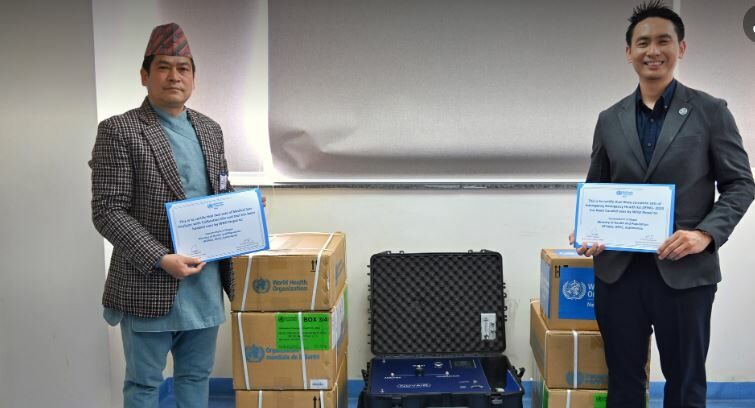
KATHMANDU: The World Health Organization (WHO) has handed over two medical gas analyzers to Nepal’s Ministry of Health and Population.
The donation is considered a significant step in reinforcing Nepal’s National Oxygen Roadmap, which aims to ensure the availability and quality of oxygen in health facilities. The COVID-19 pandemic had revealed serious gaps in oxygen supply and quality across hospitals and health centers.
Ensuring that oxygen delivered through cylinders, concentrators, or PSA plants meets international quality standards is crucial for patient safety. High-quality oxygen is particularly critical in intensive care units (ICUs), neonatal care, emergency services, and surgical procedures.
The newly donated medical gas analyzers will enable health facilities to measure the quality of oxygen and detect potential contaminants. They will assist in testing oxygen according to pharmacopeia standards and are expected to support evidence-based policymaking and strengthen regulatory systems.
Many health facilities currently lack standardized equipment to test oxygen quality and identify impurities. Experts warn that without regular quality checks, the use of substandard oxygen in treatments poses significant risks.
The analyzers can measure several key parameters related to oxygen, including oxygen concentration, carbon dioxide, carbon monoxide, nitric oxide, nitrogen dioxide, sulfur dioxide, water vapor, and oil mist.
These parameters align with WHO’s oxygen monograph requirements, ensuring that oxygen provided to patients is safe, effective, and meets international standards.






Comment