




Geopolitical discussions in Nepal are generally framed through two perspectives: an ‘Indo-centric’ approach and a ‘Sino-centric’ approach. Judging by the current government’s conduct, foreign visits and international engagements, however, its approach appears to prioritize relations with neighbouring countries.
In this context, Nepal’s diplomatic reality is that its relationship with India is indispensable—an inevitable and essential partnership that cannot be separated from the country’s strategic interests. Nepal’s relationship with China, meanwhile, is imperative—a vital and strategic partnership in an evolving geopolitical environment.
Nepal’s national security and geopolitical position should be examined from five key perspectives. The first concerns the capacity of our domestic institutions to manage bilateral diplomatic engagements. The second is the direct bilateral relationship between Nepal and its partners. The third involves trilateral dynamics among Nepal, India and China. The fourth encompasses subregional and regional intergovernmental organizations, including BIMSTEC and SAARC. The fifth concerns Nepal’s engagement and standing in broader international forums.
Nepal also needs specialized agencies dedicated to disaster management. The country’s domestic security architecture must be reviewed to establish clear lines of responsibility and accountability.
The scope of national security has expanded considerably. Political stability, economic security and energy security are all integral to it. Nevertheless, the core of Nepal-India relations should remain focused on security cooperation, border management and effective bilateral mechanisms.
At present, the two countries have more bilateral mechanisms than may be necessary, creating confusion rather than delivering practical solutions. The proliferation of mechanisms has, in some cases, complicated implementation and weakened accountability.
Rather than becoming preoccupied with short-term horizons of one, two or three years, or with superficial changes brought about by successive governments, Nepal and India should redefine their relationship through the lens of century diplomacy—a long-term vision of the partnership they wish to build over the next hundred years.
Four stages of political and security dynamics: The need for a breakthrough
An analysis of Nepal’s political and security cycle suggests that the country is moving through four distinct stages.
In the first stage, whenever a government changes—whether after three months, six months or a year, or following a popular movement—public expectations rise sharply. Yet these heightened expectations are often accompanied by anxiety and apprehension among the political leaders who assume office.
In the second stage, this tension develops into strategic resistance at the personal, interparty and geopolitical levels. In the third stage, widespread resistance generates policy confusion and uncertainty. Finally, in the fourth stage, the country risks moving towards collapse or a complete breakdown.
Nepal has now reached a point where the message of ‘enough is enough’ has become unmistakable. The country cannot afford another breakdown. The only viable way forward is a breakthrough that responds to public aspirations. In this regard, the Prime Minister’s forthcoming visit to New Delhi presents a historic opportunity to articulate the expectations of the Nepali people and translate them into a constructive diplomatic agenda.
The first proposal Nepal should advance to make this opportunity productive is the institutionalization of an annual bilateral meeting between the prime ministers of Nepal and India. Rather than allowing bilateral relations to become entangled in numerous lower-level mechanisms, the two countries should establish a mandatory annual meeting at the highest political level.
A flight from Kathmandu to Delhi takes approximately an hour and a half, making direct engagement relatively convenient. The first pillar of century diplomacy should therefore be a top-down approach: resolving outstanding issues through substantive discussions between the two prime ministers, followed by implementation through the relevant institutions. A focused, three-hour meeting at the highest level could provide the political direction needed to resolve long-standing problems and improve coordination.
The second proposal requires acknowledging that the circumstances that once made an open border convenient for both countries have changed. Given the realities of terrorism and the broader South Asian security environment, Nepal cannot afford to maintain an open border without adequate safeguards or remain isolated from regional security cooperation.
The growing presence of foreign nationals in Kathmandu, which has become a subject of public concern, must also be examined in this broader context. Rather than relying on assumptions, the issue calls for evidence-based assessment, effective immigration management and appropriate security measures. Nepal must strike a balance between preserving the historical and economic benefits of its open border with India and addressing contemporary security challenges.
The relationship between Nepal and India has deep historical roots and holds considerable potential for the future.
Our internal security institutions remain weak, highly politicized and vulnerable to corruption, yet these problems have not been adequately addressed. The upcoming visit should therefore prioritize air security, land security and border regulation, with a strong emphasis on establishing a robust, technology-driven and ‘smart’ border management system suited to the digital age.
Specializing internal security institutions and strengthening the Prime Minister’s Office
As a third proposal, Nepal must move beyond its outdated security framework. The outcomes of the unified command structure employed during the Maoist conflict are already well known. Today, security agencies need clearly defined and specialized roles: the army should focus on national defence, the police on law enforcement, and intelligence agencies on effective and targeted information gathering.
Nepal also needs specialized agencies dedicated to disaster management. The country’s domestic security architecture must be reviewed to establish clear lines of responsibility and accountability.
More importantly, despite the establishment of various divisions and institutional structures within the Prime Minister’s Office, the absence of a dedicated, specialized security unit remains a serious institutional weakness. Addressing this gap and making security coordination a priority should be an immediate task.
In conclusion: ‘Revisit’, not ‘reset’
Nepal’s younger generation has moved beyond the traditional transactional approach of asking what India can offer Nepal or what Nepal can offer India. Instead, it increasingly emphasizes a more constructive question: how can both countries benefit from their relationship? The Prime Minister should use the upcoming visit to initiate a new phase of bilateral relations that reflects this public aspiration.
Some have advocated a ‘reset’ in Nepal-India relations, but I prefer the term ‘revisit’.
The relationship between Nepal and India has deep historical roots and holds considerable potential for the future. There is no need to reset it to zero. What is necessary, however, is to revisit the relationship in light of changing geopolitical realities, address the shortcomings of the past and adapt bilateral cooperation to the demands of the present era.
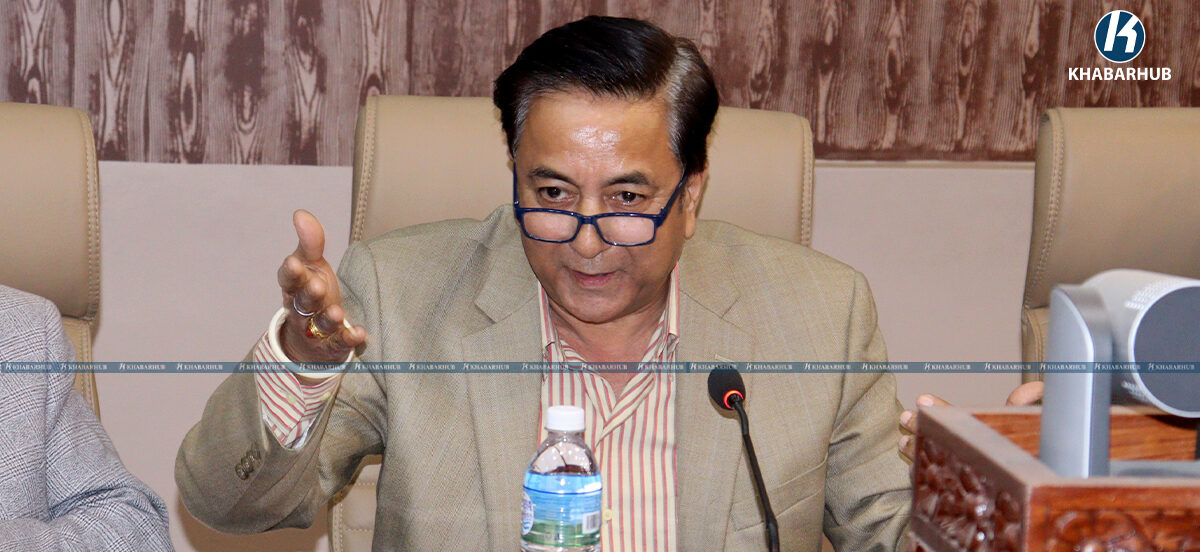
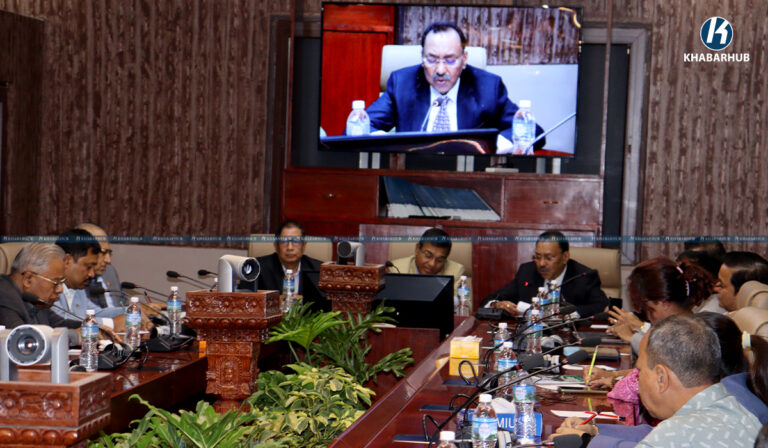
(Edited excerpt of remarks by security and geopolitical analyst and former Vice President Basnyat at a programme organized by the Institute for Strategic and Socio-Economic Research Center)





Comment