




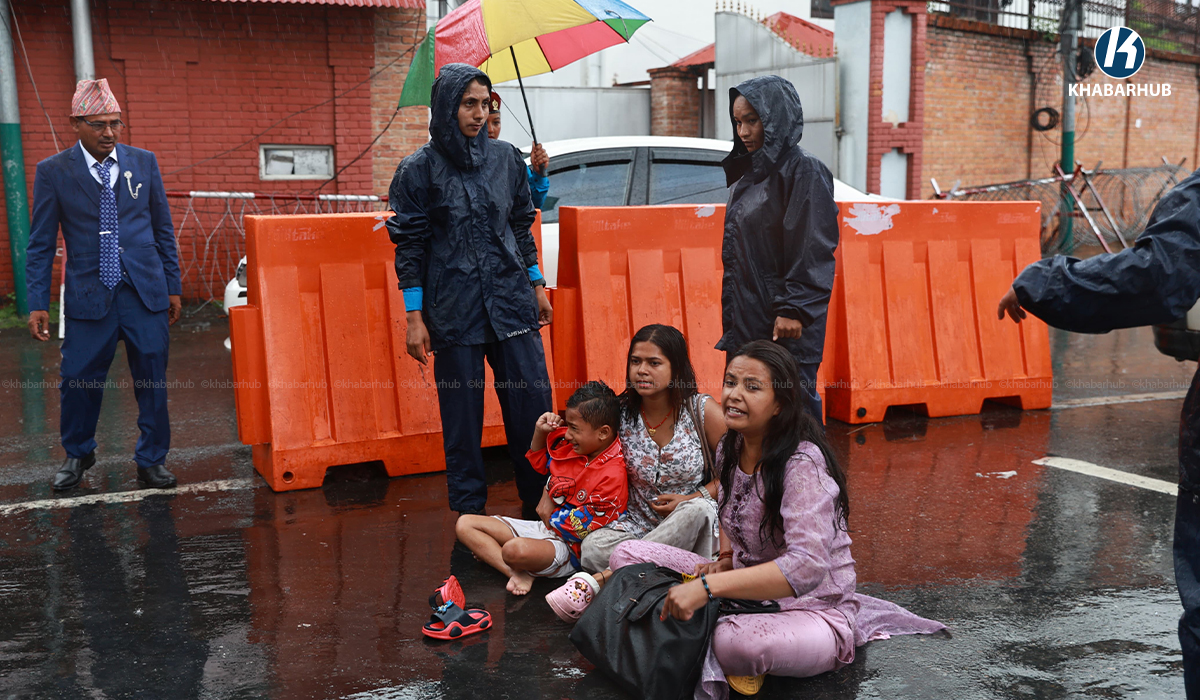
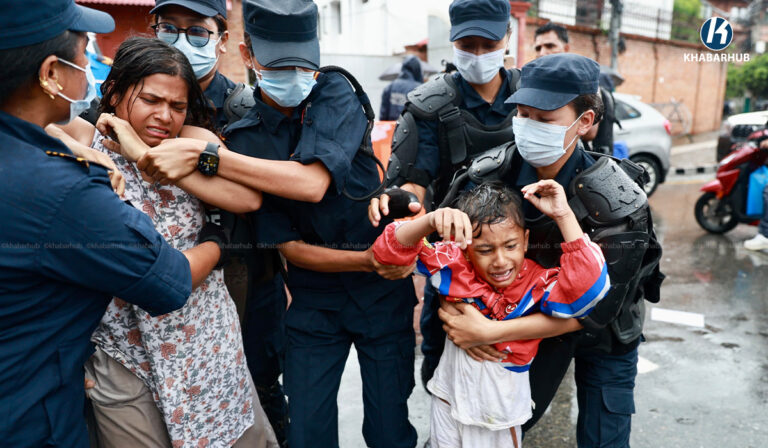
KATHMANDU: As heavy monsoon rain lashed Kathmandu on Monday, a distressing image unfolded outside Singha Durbar. Niharika Rajput, demanding justice, lay down on the road in front of the government’s main administrative complex before security personnel dragged her away.
The images quickly spread across social media, triggering widespread debate over both her demand for justice and the state’s response. But another image struck an even deeper chord: Rajput’s five-year-old son, crying as he watched security personnel pull his mother away.
For many, the incident raised a difficult question: while citizens have the right to seek justice, should young children be exposed to such traumatic situations?
A growing pattern
The incident involving Rajput is not an isolated one.
In recent days, several incidents involving children have drawn public attention, raising concerns over whether children’s rights and well-being are receiving adequate protection.
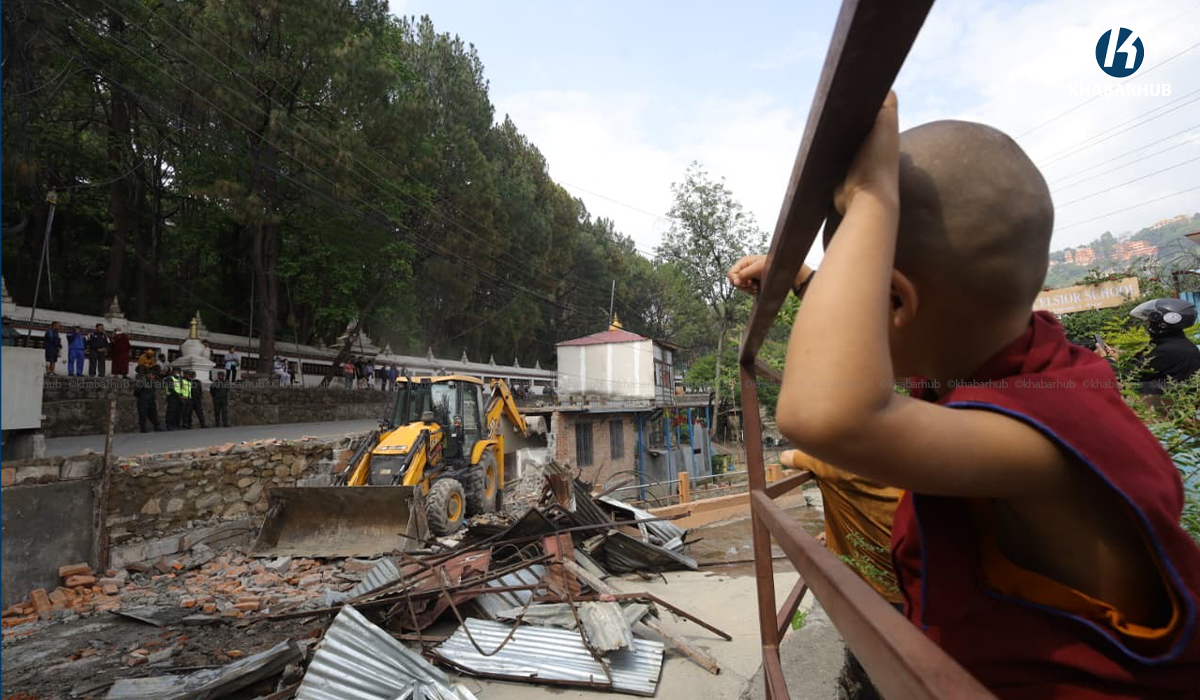
On the same day, a video surfaced showing a school teacher striking a young Buddhist monk with a stick inside a classroom. The footage sparked outrage on social media, with many demanding action against those responsible.
Earlier, children displaced from informal settlements along Kathmandu Valley’s riverbanks found themselves living in temporary holding centres after eviction drives.
The situation worsened last Friday night when floodwaters inundated a holding centre operating at the Radhaswami Satsang building in Kirtipur. Images and videos from the site showed children wearing mud-soaked clothes, barefoot and lacking access to basic necessities. Parents reported that many children had gone hungry and that their education had been disrupted.
Meanwhile, infants and young children continue to be seen regularly at demonstrations in Maitighar Mandala and other protest sites, often remaining outdoors late into the night or spending extended periods in potentially unsafe environments.
Lasting psychological impact
Child rights advocates and psychologists warn that such experiences can have lasting physical and psychological consequences.
According to mental health experts, witnessing violence, confrontations, arrests, public distress or prolonged insecurity at a young age can leave deep emotional scars.
Children exposed to such situations may develop anxiety, fear, insecurity, sleep disturbances, behavioural changes and reduced self-confidence.
Experts say children under five are particularly vulnerable. Although they may not fully understand what they are witnessing, the emotional impact of frightening experiences can remain with them long after the event itself.
What the law says
Nepal’s Constitution guarantees every child the right to protection, education, health, development and participation under Article 39.
The Constitution also explicitly prohibits physical, mental or any other form of abuse against children and places responsibility on the state, families and society to protect them from violence, exploitation and harm.
Similarly, the Children’s Act, 2018 requires that the “best interests of the child” be the primary consideration in all decisions affecting children.
The principle is also enshrined in the UN Convention on the Rights of the Child, to which Nepal is a party.
Many countries, including Canada, Australia, the United States and several European nations, also maintain strict child protection mechanisms. Authorities in those countries can intervene if children are exposed to unsafe protest environments, abuse, neglect or violence, while schools and child-care institutions face legal consequences for physical or psychological abuse.
Children cannot be used for political purposes
According to the National Child Rights Council, Nepal’s Children’s Act prohibits the use of children in political activities such as strikes, demonstrations, road blockades and protest rallies.
The council considers such acts a form of violence against children.
Ram Bahadur Chand, Information Officer at the National Child Rights Council, said political parties have repeatedly been urged not to involve children in political activities, including during election campaigns.
He said complaints can be filed with the police if children are used in prohibited political activities, although enforcement of existing laws remains weak.
The council also maintains a zero-tolerance approach towards corporal punishment in schools, stating that physical or mental punishment of children—whether at home, in school or elsewhere—constitutes violence under the law and can result in fines or imprisonment.
Although every school is legally required to implement child protection standards, Chand acknowledged that many institutions have yet to do so effectively.
Regarding children living in temporary holding centres following recent evictions, Chand said local governments are working to facilitate school enrolment and continued education. However, he admitted that displacement and temporary living arrangements have disrupted regular schooling for many children.
Child welfare often sidelined
Chand said debates in Nepal often focus on politics, administrative decisions or the demands of protesters, while the experiences of children caught in such situations receive comparatively little attention.
“Children are often the direct victims, yet they are unable to raise their own voices effectively,” he said. “That makes the responsibility of the state, civil society, the media and parents even greater.”
He added that while parents may be forced into difficult circumstances that leave children exposed to risk, addressing those underlying conditions remains the responsibility of the state.
Ultimately, child rights advocates argue that regardless of the circumstances, the best interests of children must remain the foremost consideration in every decision affecting them.





Comment