




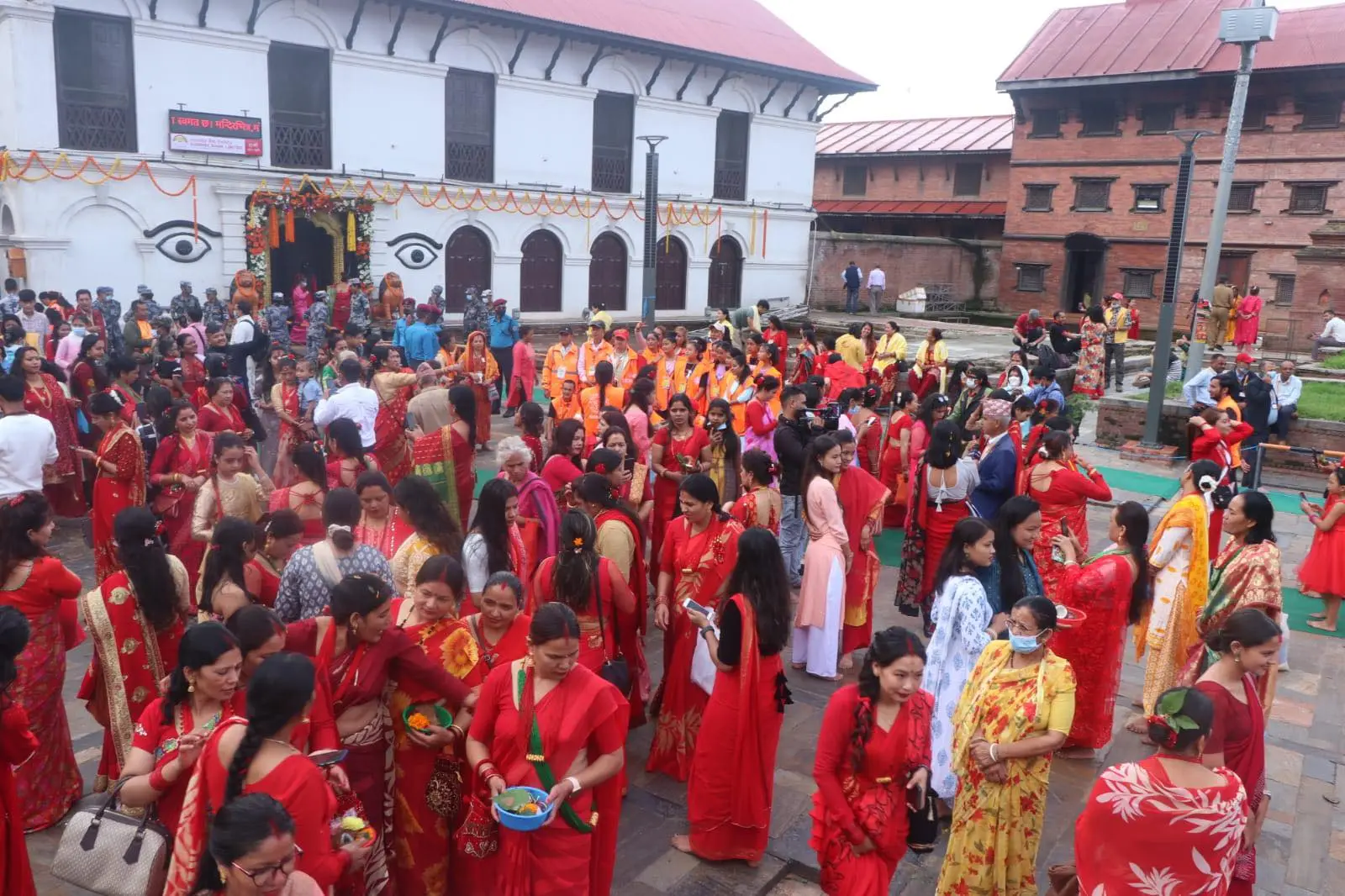
KATHMANDU: The Teej festival, one of the most significant festivals observed by Hindu women in Nepal, is being celebrated across the country today with great devotion and festivity.
Women nationwide are marking the occasion by fasting and praying for prosperity, marital bliss, and the well-being of their families.
Teej falls on the third day of the dark fortnight of the lunar month of Bhadra and is also known as Haritalika Teej. According to the Skanda Purana, the festival is associated with a legend from the Satya Yuga, in which Goddess Parvati was hidden in a forest by her friends to prevent her marriage to Lord Vishnu, as she wished to marry Lord Shiva.
A day before Teej, women gather at their parental homes to enjoy a special feast known as Dar, which includes a variety of traditional dishes. On the day of the festival, women observe a strict fast—some without even drinking water—and engage in singing and dancing in a celebratory and devotional atmosphere.
Dressed in red saris and adorned with traditional ornaments such as bangles, pote (glass-bead necklaces), tilahari, and sindur (vermillion), women flock to temples dedicated to Lord Shiva, particularly the Pashupatinath Temple in Kathmandu, to offer prayers.
The rituals begin with early-morning baths and continue throughout the day with worship and other religious observances. In the evening, devotees light oil lamps and remain awake through the night in devotion to Lord Shiva and Goddess Parvati.
The third and final day of the festival involves ritual bathing with 108 stems of Datiwan, a sacred plant, followed by the worship of the Saptarishis (seven sages) and the offering of alms, bringing the fasting rituals to an end.
Both married and unmarried women participate in Teej. Married women pray for the long life and well-being of their husbands, while unmarried women seek blessings for a suitable life partner.
Teej is not only a religious observance but also a vibrant expression of womanhood, culture, and tradition in Nepal.



Comment