




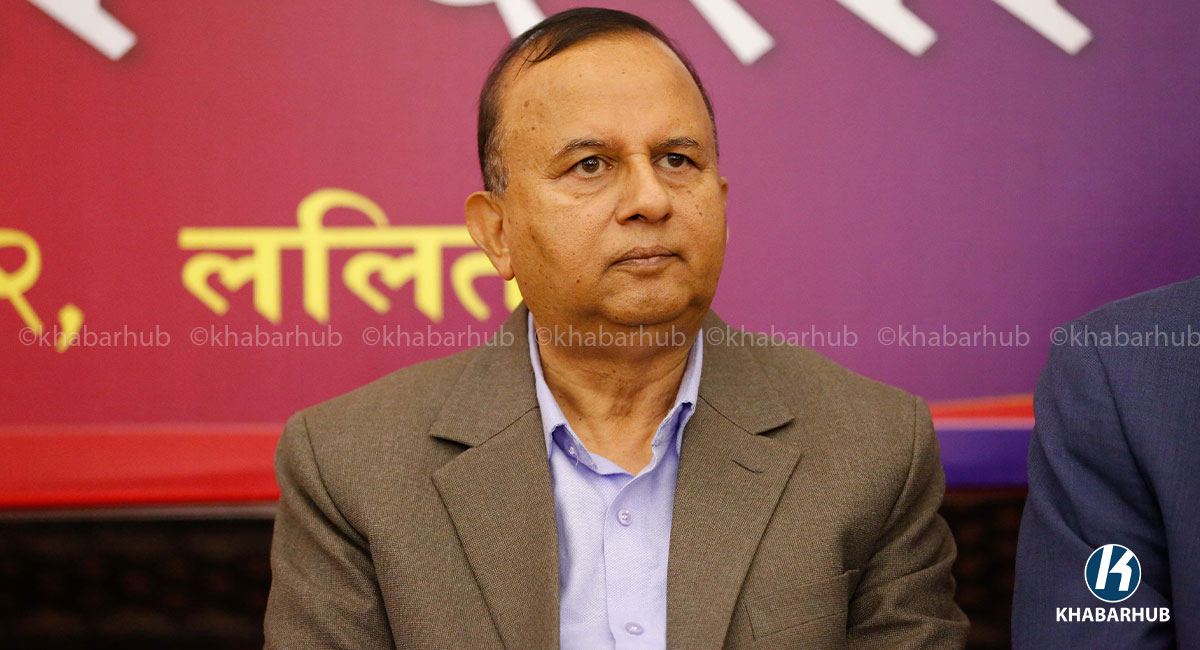
KATHMANDU: CPN-UML General Secretary Shankar Pokharel has said that Nepal’s transformation cannot be achieved through “fiery speeches and cheap popularity,” arguing that only clear ideology, concrete plans and sustained commitment can bring meaningful change.
Sharing his views on Facebook, Pokharel said political leadership must have a clear vision and a consistent commitment to address the country’s challenges.
He argued that entrusting the responsibility of ending corruption, disorder and institutional weaknesses to leaders who have failed to correct their own shortcomings has been one of Nepal’s biggest mistakes.
“The working style of those who make loud speeches appears completely contradictory, and the reality has become clear that the country cannot be transformed by such approaches,” Pokharel wrote.
Pokharel also rejected the narrative that “nothing happened in Nepal in the past,” saying that the country has witnessed significant progress in infrastructure development and information technology, which has improved access to goods and services.
However, he said economic growth has not kept pace with rising public expectations.
“Development has rapidly increased people’s expectations and aspirations, but citizens’ legitimate income has not increased at the same pace,” Pokharel wrote. “This imbalance between expectations and income has encouraged people to adopt both legal and illegal means to meet their needs.”
According to Pokharel, this situation has contributed to growing problems such as corruption, criminalization, social disorder, depletion of family assets and increasing migration abroad.
He claimed that some groups have been able to channel public dissatisfaction against the state and political parties through social media and populist politics.
Pokharel said complex structural problems cannot be solved through populism or temporary emotional appeals.
He argued that lasting solutions require ideological clarity, political honesty and long-term commitment.
According to him, Nepal’s current challenges can be addressed only through serious political efforts based on these principles.






Comment