




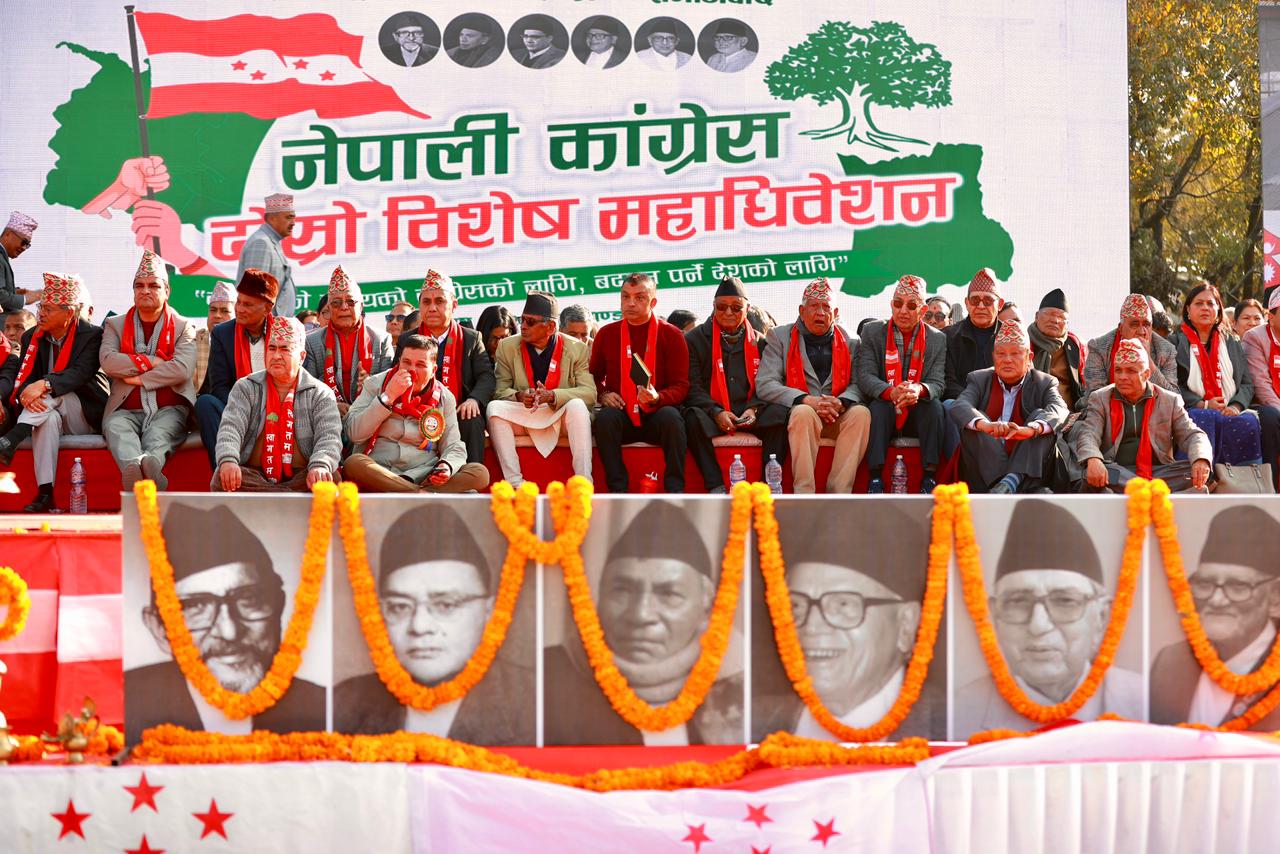
KATHMANDU: Young leaders aligned with the Nepali Congress, popularly known as Gen-Z, have called for a radical transformation in the party’s leadership and in national politics.
As the party’s special general convention entered its third day at Bhrikuti Mandap, Gen-Z representatives unveiled a declaration demanding sweeping reforms within the party and the broader political system.
The declaration is built around what they call the “7Ds” — democracy, discipline, dignity, dedication, development, delivery and digital transformation — and seeks structural changes to make the party more accountable, inclusive and future-oriented.
The document reflects the spirit and demands of the Gen-Z movement held on September 8 and 9, arguing that the voice of the younger generation must be strengthened within the Nepali Congress. The group has stressed the need to increase youth representation in decision-making bodies, curb corruption and establish good governance suited to the digital age.
Among its core demands, the Gen-Z group has proposed mandatory internal quotas to ensure that 40 percent of positions in the party’s central structure are reserved for those under 40 years of age and 20 percent for those under 30. They have also called for a scientific scorecard-based system for distributing election tickets, based on merit, popularity and contribution, instead of discretion and favoritism.
The declaration further calls for constitutional provisions for transparent state financing of political parties to free them from the influence of vested interest groups. It also proposes a reformed mechanism for appointing the chief of the anti-corruption body through an electoral college that includes civil society and respected public figures, along with stronger laws on conflict of interest in the judiciary and public administration.
Gen-Z representatives have also demanded major reforms in public service delivery, arguing that services should be treated as citizens’ rights rather than political favors. They have proposed a ten-year delivery roadmap and an integrated action plan to improve governance outcomes.
In the digital sphere, the declaration seeks automatic voter registration, a digital-first governance policy and the development of an integrated digital platform to ensure voting access for people living far from their constituencies. Internally, the group has proposed the formation of a party governance commission, online-based active membership, and the removal of rigid hierarchy-based restrictions.
The declaration also emphasizes meaningful participation of youth, women and marginalized communities in policy-making, live broadcasting of parliamentary debates, merit-based appointments and recognition of basic needs as constitutional rights.
Handing over the declaration to the party leadership, Gen-Z representatives said the younger generation has both big dreams and serious responsibilities. “We have submitted this declaration for decision. The entire Gen-Z generation stands with you,” the statement said.
The move has increased pressure within the special general convention to address demands for youth leadership and reform. Gen-Z leaders say they want the Nepali Congress to become a vehicle for good governance, transparency and digital-era development, a shift they believe could significantly shape the party’s future strategy and structure.





Comment