




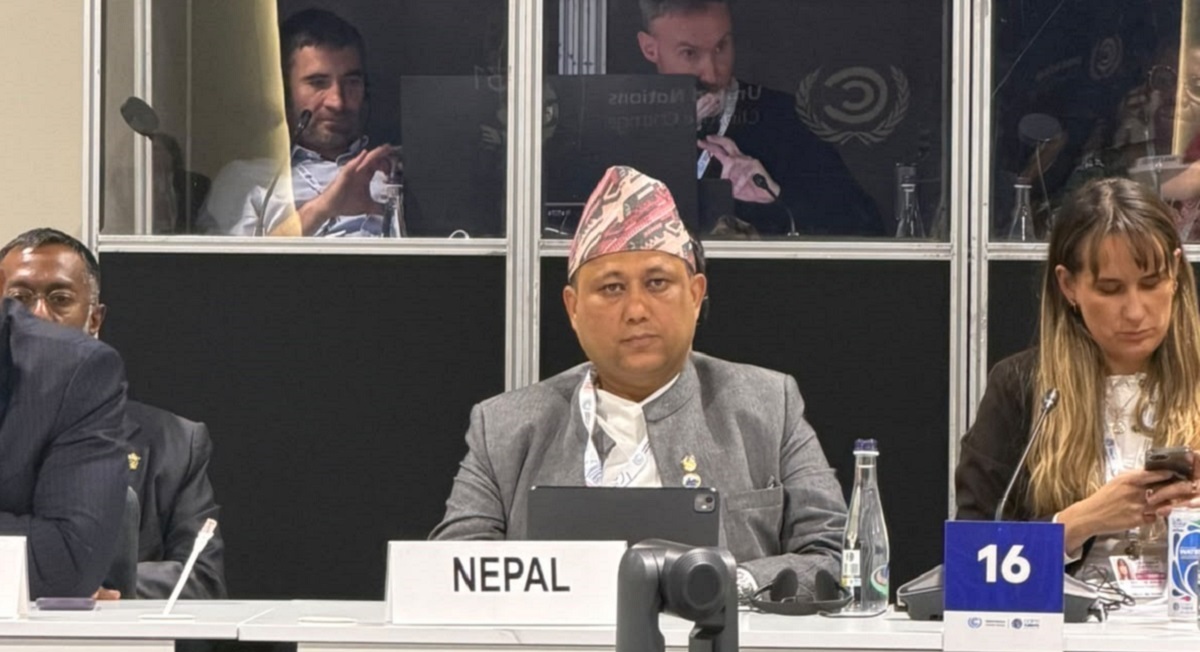
ANTALYA (TÜRKİYE): Foreign Minister Shisir Khanal has stressed the need to make early warning systems more effective, reliable and community-centred to minimize human casualties and economic losses caused by climate-related disasters.
Addressing a high-level programme titled ‘Early Warnings for All: Delivering on Our Promise to Protect Everyone’ held on the sidelines of the 31st United Nations Climate Change Conference (COP31) in Antalya, Türkiye, Khanal described early warning systems as a crucial line of defence between life and risk for communities in the Himalayan region.
Sharing Nepal’s experiences of recent climate-induced disasters, he said the country’s early warning system had sent millions of SMS alerts during the initial stages of the disaster, while communities in vulnerable low-lying areas had also received locally issued warnings. However, he acknowledged that these measures alone were insufficient to prevent losses.
Khanal highlighted gaps in high-altitude weather and climate observation systems, particularly in mountainous regions with complex geographical terrain. He called for expanding real-time data collection and transmission technologies, satellite-based monitoring systems and observation of the cryosphere.
Emphasizing the importance of timely and accessible information, he said early warnings should be disseminated in local languages through user-friendly communication channels. He also stressed that communities must be adequately prepared and response mechanisms activated before disasters strike.
Similarly, Khanal called for stronger cross-border data sharing and regional cooperation in line with Nepal’s ‘Esagera to Sea’ concept.
He urged the international community to ensure predictable, easily accessible and grant-based climate finance to protect vulnerable communities from the growing impacts of climate change.
The foreign minister also emphasized the need to strengthen global solidarity, international cooperation and collective action to address the cascading impacts of climate-induced disasters.





Comment