





KATHMANDU: Economic Digest presents a brief yet comprehensive roundup of major business developments in Nepal, delivered in clear and accessible summaries.
Nepal’s current economic landscape reflects a combination of infrastructure disruptions, rising living costs, subdued credit growth and challenges facing domestic industries. Floods and landslides have damaged four hydropower projects in Gorkha and disrupted all three major Nepal–China trade routes, threatening energy investment, supply chains and the availability of festive goods. Although repair work and the installation of a new Bailey bridge at Betrawati demonstrate efforts to restore connectivity, prolonged disruptions could increase transportation costs and domestic prices.
Financial indicators also reveal mixed conditions. Gold and silver prices have risen, while commercial bank lending increased by only Rs 38 billion in the first 18 days of the reported period, indicating cautious borrowing amid weak private-sector confidence. Meanwhile, Nepal’s jute industry faces significant export-market losses due to additional Indian import duties, and independent power producers have raised concerns over high transmission charges that could undermine electricity-sector competitiveness.
Social pressures remain equally significant. A Habitat for Humanity International study highlights widespread housing insecurity, with 72 percent of Nepali respondents reporting that housing costs complicate family-planning decisions. Government initiatives to revise provincial budgets, expand vocational training and improve cooperative deposit refunds offer potential avenues for addressing economic and social challenges. The Non-Resident Nepali Association’s commitment to flood reconstruction could also support recovery efforts.
Overall, Nepal needs coordinated disaster recovery, resilient infrastructure, affordable housing, stronger domestic industries and policies that restore private-sector confidence and sustainable economic growth.
Gold rises to Rs 296,500 per tola, silver reaches Rs 4,440
Gold and silver prices increased in Nepal’s domestic market on Sunday, according to the Federation of Nepal Gold and Silver Dealers’ Association. The price of gold rose by Rs 800 per tola (11.66 grams) to Rs 296,500. Gold was traded at Rs 295,700 per tola on Friday. Silver prices also increased, climbing Rs 35 per tola to Rs 4,440. The metal was priced at Rs 4,405 per tola on Friday. The latest increases reflect a rise in both precious metals in the domestic market at the start of the week.
Budhi Gandaki floods damage four hydropower projects in Gorkha
Flash floods along the Budhi Gandaki River on Sunday morning, October 11, damaged four hydropower projects under construction in Gorkha district, according to preliminary assessments released by the Independent Power Producers’ Association, Nepal (IPPAN). The flood swept away the main campsite of the 341-megawatt Budhi Gandaki Hydropower Project, promoted by Times Energy Private Limited, destroying construction equipment and site offices. At the 24.5-megawatt Dohan Khola Hydropower Project, floodwaters damaged campsite structures and swept away a Bailey bridge. The 30.59-megawatt Yaru Khola Hydropower Project also suffered damage to its Bailey bridge and construction materials. Meanwhile, the 16-megawatt Machha Khola Hydropower Project sustained damage to access roads and approach bridges. The extent of the financial losses has yet to be fully assessed.
Commercial banks extend Rs 38 billion in credit in first 18 days
Commercial banks expanded lending by Rs 38 billion during the first 18 days of the period from September 17 to October 4, averaging Rs 2.11 billion in credit disbursements per day. The lending pace was slower than in comparable festive periods. Banks had expanded credit by Rs 56 billion during September–October 2024 and Rs 41 billion during the corresponding period in 2025. Bankers and industrial representatives attributed the slowdown to weak private-sector confidence, infrastructure damage caused by flooding in the Bhote Koshi River basin and persistent heavy rainfall from September 24 to 27. According to the reported figures, total commercial bank credit rose from Rs 5.351 trillion at the end of Bhadra to Rs 5.389 trillion by October 4. The subdued growth suggests that borrowing activity remained relatively weak despite the festive season, when demand for business and household financing typically increases.
LP Gas Association begins cylinder exchange at six Kathmandu Valley locations
The Nepal LP Gas Industry Association has launched special cooking gas distribution and cylinder exchange services at six locations across the Kathmandu Valley to address localized shortages. The service will operate daily from 9:30 am to 4:30 pm through Saturday, October 17, in coordination with the Nepal Oil Corporation (NOC) and the Gas Dealers Federation. According to the association, authorized distribution points have been established at Siphal, Pepsicola, Balaju Industrial Estate, Sukedhara, Kalanki and Harisiddhi in Lalitpur. The centers will exchange cylinders belonging to designated member companies to help maintain a steady supply of cooking gas to households during the festive season.
High housing costs complicate family planning for 72% of Nepalis
High housing costs are making it increasingly difficult for Nepalis to make family-planning decisions and provide better opportunities for their children, according to a global study by Habitat for Humanity International. The report, Home at What Cost?, found that 72 percent of Nepali respondents said housing expenses complicated decisions about family planning, compared with the global average of 56 percent. Among respondents with children, 73 percent said housing costs limited the opportunities they could offer their children. Similarly, 71 percent reported having to sacrifice some of their dreams and aspirations to remain in their current homes. The findings highlight how housing affordability affects more than household finances, influencing family decisions, children’s prospects and people’s long-term aspirations.
Sudurpaschim presents revised budget of Rs 37.70 billion for FY 2026/27
The Sudurpaschim Province government has presented a revised budget of Rs 37.703 billion for the current fiscal year 2026/27, replacing its earlier budget estimates. Presenting the revised budget at the provincial assembly on Sunday, October 11, Minister for Economic Affairs Chakra Bahadur Malla outlined the province’s projected revenue sources and federal transfers. The budget includes Rs 1.72 billion in internal revenue, Rs 10.24 billion from federal revenue sharing, Rs 9.06 billion in fiscal equalization grants and Rs 6.03 billion in conditional grants. It also includes Rs 388 million in supplementary grants and Rs 527 million in special grants. The revised budget comes after a two-month impasse over the province’s fiscal arrangements.
Labour minister stresses skilled workforce development to tackle unemployment
Minister for Labour, Employment and Social Security Ramjee Yadav has stressed the need to produce skilled workers who can meet the changing demands of domestic and international labour markets. Inaugurating Everest Multi-Skill Private Limited in Dadhikot, Bhaktapur, Yadav said vocational training institutions must bridge the gap between training programmes and actual employment opportunities. He said the government was prioritizing technical training and certification for migrant workers while seeking to expand decent employment opportunities for young people within Nepal. The minister also emphasized the importance of cooperation among government agencies, private companies, training providers and local governments in developing a skilled workforce and addressing unemployment.
Problematic Cooperatives Management Committee asks depositors to update online claims
The Office of the Problematic Cooperatives Management Committee has urged depositors of troubled cooperatives to verify and update their financial claims through its official online system. According to the committee, verified refund amounts are now being transferred directly to depositors’ bank accounts through the National Payment Gateway as part of efforts to streamline repayments. Depositors can correct errors in their registered details, including misspelled names, unverified mobile numbers and missing identification documents. The process requires authentication through a single designated mobile number using a one-time password (OTP). For duplicate claims registered under the same mobile number, depositors must submit a formal application with supporting documents by email by November 16, 2026. The committee has urged affected depositors to ensure their information is accurate to facilitate the refund process.
NRNA president pledges support for flood reconstruction
Non-Resident Nepali Association (NRNA) President Hem Raj Sharma has expressed the association’s readiness to work with the Nepal government on reconstruction and rehabilitation in areas affected by recent devastating floods. In a message marking the 23rd anniversary of the association’s establishment in 2003, Sharma reiterated its guiding motto, “Nepalis for Nepalis,” and highlighted its expanding network across more than 90 countries. He stressed the need to implement provisions related to non-resident Nepali citizenship fully, saying this would help strengthen investor confidence and engagement with Nepal. Sharma also referred to the launch of the Rs 10 billion NRNA Development Fund as an opportunity to mobilize resources for national development and recovery efforts.
Nepal-China border trade grinds to a halt amid highway disruptions
Overland trade between Nepal and China has come to a standstill ahead of Dashain, with the three main northern trade routes—Rasuwagadhi, Tatopani and Korala—remaining disrupted by flood and landslide damage. Severe flooding in the Bhote Koshi River on August 26 damaged roads, bridges and customs infrastructure along the Rasuwagadhi and Tatopani corridors. Heavy rainfall during the second week of September subsequently obstructed the Beni-Jomsom-Korala highway. Ram Hari Karki, president of the Nepal Himalayan Border Commerce Association, said the simultaneous disruption of all three routes had affected the supply of festive goods, including ready-made garments, footwear, electronic products, fruits and industrial machinery. The prolonged closures have raised concerns about shortages and upward pressure on domestic prices as businesses struggle to replenish stocks ahead of the major festival.
More than 1.2 million Nepalis lack secure land or housing, study finds
More than 1.2 million people in Nepal lack secure access to land or housing, while approximately 1.3 million families live in informal housing or land arrangements, according to a report by Habitat for Humanity International. The report, Home at What Cost?, highlights widespread concerns about housing affordability and the availability of government support for homeownership. About 72 percent of Nepali respondents said the country’s housing system was broken or not functioning properly. Similarly, 78 percent said affordable homes were insufficient, while 74 percent believed government policies did not adequately support first-time homebuyers. The findings point to persistent barriers to safe and affordable housing, particularly for people living in informal settlements and households unable to access formal land or housing arrangements. The report also highlights the financial pressure associated with housing costs and the broader effects of residential insecurity on households across the country.
Himalaya Airlines cancels Kathmandu-Dammam flights over regional tensions
Himalaya Airlines has cancelled its scheduled flights between Kathmandu and Dammam, Saudi Arabia, citing passenger safety amid rising regional tensions. In a statement, the airline said flights in both directions scheduled for Sunday, October 11, had been cancelled as a precautionary measure. The airline said the decision was made to prioritize passenger safety but did not provide a timeline for the resumption of services. Passengers travelling on the affected route have been advised to follow the airline’s official updates for further information.
Nepali jute industries lose 95% of market share amid Indian import duties
Nepal’s jute industry has lost approximately 95 percent of its traditional export market share following India’s imposition of additional import duties, according to domestic industrialists. The issue was discussed at a consultative workshop organized by South Asian Watch on Trade, Economics and Environment, with support from the International Labour Organization and facilitation by the Federation of Nepalese Chambers of Commerce and Industry (FNCCI), Koshi Province. The workshop brought together around 30 industrialists to discuss the challenges facing domestic jute mills and possible measures to protect the sector. Presided over by the FNCCI Koshi Province president, the meeting focused on policy adjustments, regulatory reforms and institutional support needed to sustain the country’s long-established jute manufacturing industry. Industrialists warned that continued pressure on exports could threaten the sector’s long-term viability and affect employment and industrial activity in the region.
IPPAN says transmission grid wheeling charges are too high
The Independent Power Producers’ Association, Nepal (IPPAN), has called for a review of transmission grid wheeling charges published by the Electricity Regulatory Commission on October 1, arguing that the rates could place an excessive financial burden on power producers. While welcoming the introduction of the National Transmission Grid Transmission Fee Standards, 2026, IPPAN raised concerns about the prescribed charges of Rs 0.57 per kilowatt-hour for short-term open access and Rs 413,000 per megawatt per month for medium- and long-term open access. The association said that, at average plant load factors of 60 to 65 percent, the effective transmission costs would rise to Rs 0.95 per unit and Rs 687,925 per megawatt per month, respectively. According to IPPAN, the charges could undermine the competitiveness of electricity trading. It has urged regulators to adopt transparent, cost-reflective and scientifically determined tariffs that account for regional market conditions.
Army installs 40-ton Bailey bridge at Betrawati to restore transport links
The Nepali Army has completed the installation of a Bailey bridge with a load capacity of 40 tons over the Phalaku River at Betrawati, along the boundary between Nuwakot and Rasuwa districts. The bridge was formally inaugurated on Sunday, October 11, restoring a vital transport connection disrupted by the severe flooding of August 26 along the Bhote Koshi corridor. The new structure re-establishes direct vehicular access between Nuwakot and Rasuwa, facilitating passenger movement and the transportation of essential supplies to flood-affected communities. The bridge’s completion comes 45 days after the destructive flooding damaged key roads and bridge infrastructure in the region.
Road Division speeds up repairs on Beni-Jomsom-Korala highway
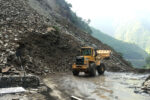
Authorities have intensified repair work on the Beni-Jomsom-Korala highway to restore transportation along the important northern trade corridor. The work includes clearing debris, cutting new tracks through eroded sections and constructing bridge approaches to reopen damaged stretches. With the Rasuwagadhi and Tatopani border crossings still closed because of flood damage in the Bhote Koshi River basin, the Korala route has become an important alternative for Nepal-China trade. Infrastructure Development Minister Sunil Lamsal said diplomatic coordination with China was continuing to expedite the reopening of the Tatopani and Rasuwagadhi crossings. However, formal clearance from Chinese authorities was still awaited. Transport officials expect some sections of the Beni-Jomsom-Korala highway to reopen within the week, potentially easing supply-chain disruptions ahead of the festive season.



Comment