




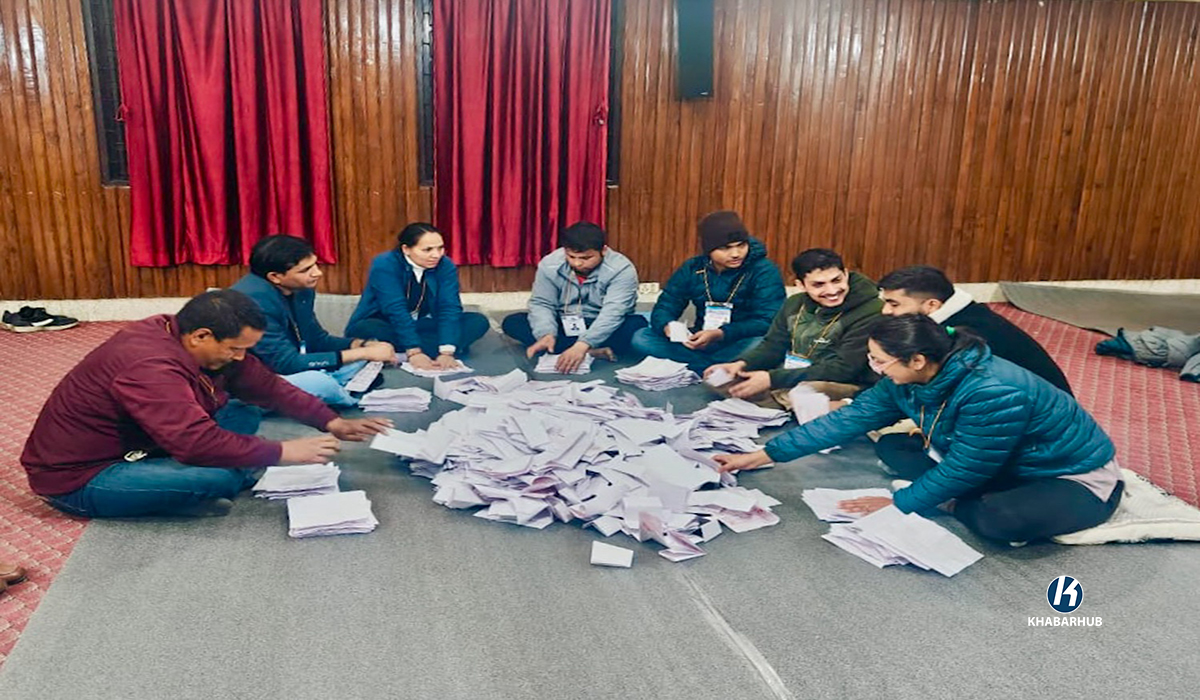
KATHMANDU: The results of the March 5 election to the House of Representatives have been announced under both the first-past-the-post (FPTP) and proportional representation (PR) electoral systems.
According to the results, the Rastriya Swatantra Party emerged as the largest party, followed by the Nepali Congress in second place, the Communist Party of Nepal (UML) in third, and the Nepali Communist Party in fourth.
However, the results indicate weak representation of marginalized communities in the directly elected seats. Out of the 165 constituencies under the FPTP system, only 14 candidates from marginalized groups were elected, accounting for just 8.48 percent.
Among those elected through the FPTP system, 26 are from indigenous communities (15.76 percent), 28 from the Madhesi community (16.97 percent), five from the Tharu community (3.3 percent), four Muslims (2.42 percent), and only one Dalit (0.61 percent).
Regarding Dalit representation, the Nepali Congress had fielded only one Dalit candidate—its Joint General Secretary Prakash Rasaili—from Bajhang District. The CPN (UML) nominated Chakra Snehi from Dadeldhura District and Bimala BK from Bardiya District (constituency 2).
Similarly, the Communist Party of Nepal (Maoist Centre) fielded Padam Bishwakarma from Syangja District (constituency 2) and Man Bahadur Sunar from Kanchanpur District (constituency 3). The Rastriya Swatantra Party nominated Khagendra Sunar from Banke District (constituency 3). Among them, only Khagendra Sunar secured victory in the election.


Comment