




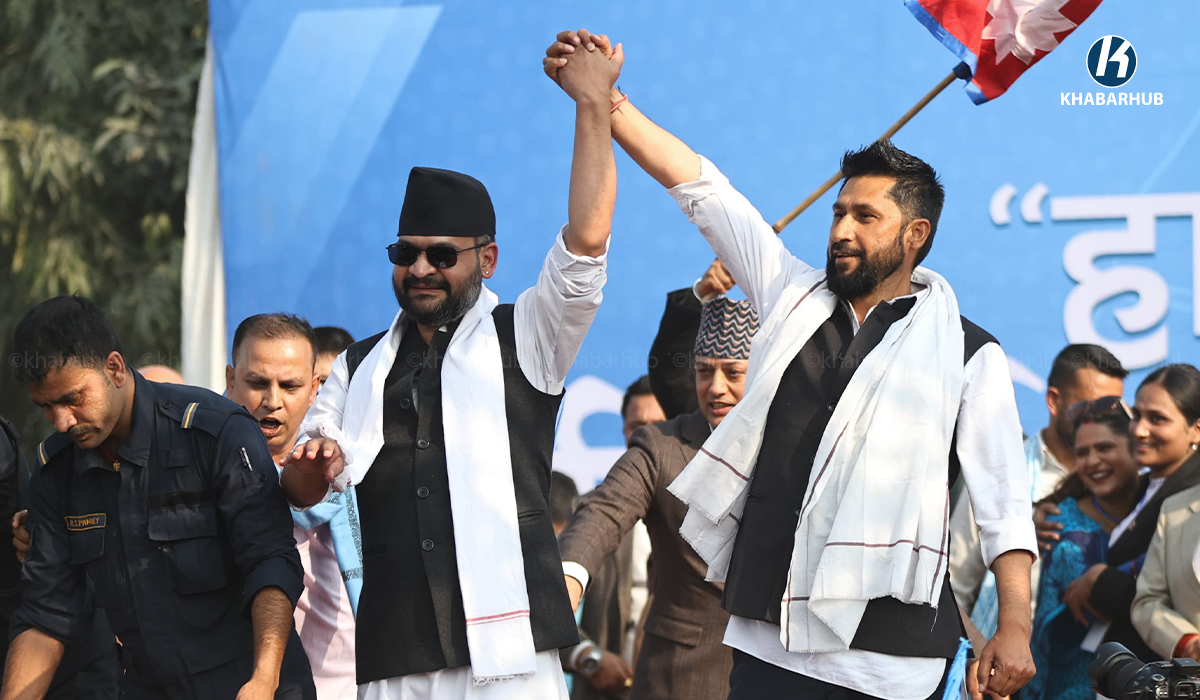
KATHMANDU: The counting of proportional representation (PR) votes for the House of Representatives election held on March 5 concluded on Wednesday afternoon.
According to the Election Commission’s data entry system, a total of 10,789,078 votes were counted nationwide under the PR category.
The highest number of votes went to the Rastriya Swatantra Party (RSP) led by Rabi Lamichhane, which secured 5,158,810 votes, accounting for 47.82 percent, maintaining a clear lead.
At this stage, RSP is two seats short of the two-thirds majority. Having won 125 seats in the direct elections, the party is set to secure 57 seats under the proportional representation system, although the final allocation may vary slightly once the commission completes its official seat distribution.
The Nepali Congress follows with 1,756,043 votes (16.28 percent). With 18 direct seats, the party is expected to win an additional 20 PR seats, bringing its total to 38, making it the second-largest party in the House.
The Communist Party of Nepal (Unified Marxist–Leninist) obtained 1,452,939 votes (13.47 percent). With 9 direct seats, it will gain 16 PR seats, totaling 25 seats and becoming the third-largest party.
The Nepali Communist Party (NCP) led by Pushpa Kamal Dahal ‘Prachanda’ received 809,641 votes (7.5 percent). With 7 direct seats, it will gain 9 PR seats, bringing its total to 16.
The Shram Sanskriti Party, which became a national party in its first election, secured 385,748 votes (3.58 percent). With 3 direct and 4 proportional seats, it will have a total of 7 seats, making it the fifth-largest party.
Similarly, the Rastriya Prajatantra Party (RPP) cleared the 3 percent threshold with 330,281 votes (3.06 percent), winning 1 direct seat and 3 PR seats for a total of 4. In the previous election of 2079, RPP had 14 seats but is now limited to 5. Its chairman, Rajendra Lingden, lost in Jhapa-3.
Estimated seat tally
Rastriya Swatantra Party – 182 seats
Nepali Congress – 38 seats
CPN (UML) – 25 seats
NCP – 16 seats
Shram Sanskriti Party – 7 seats
Rastriya Prajatantra Party – 5 seats
Independents – 1 seat
A total of 138 seats is required to form a government, while 184 seats are needed for a two-thirds majority. Currently, RSP is two seats short of this mark. If Mahabir Pun, who won in Myagdi, joins, RSP would reach 183 seats, but he has stated he will remain independent.
In Dhanusha-1, RSP candidate Kishori Sah Kamal’s candidacy was canceled, although over 23,000 votes were cast for her. Following the cancellation, the Election Commission issued the certificate to NCP candidate Matrika Yadav. The Supreme Court is scheduled to review the case on March 13. If the court overturns the cancellation, RSP could achieve a two-thirds majority.

Comment