




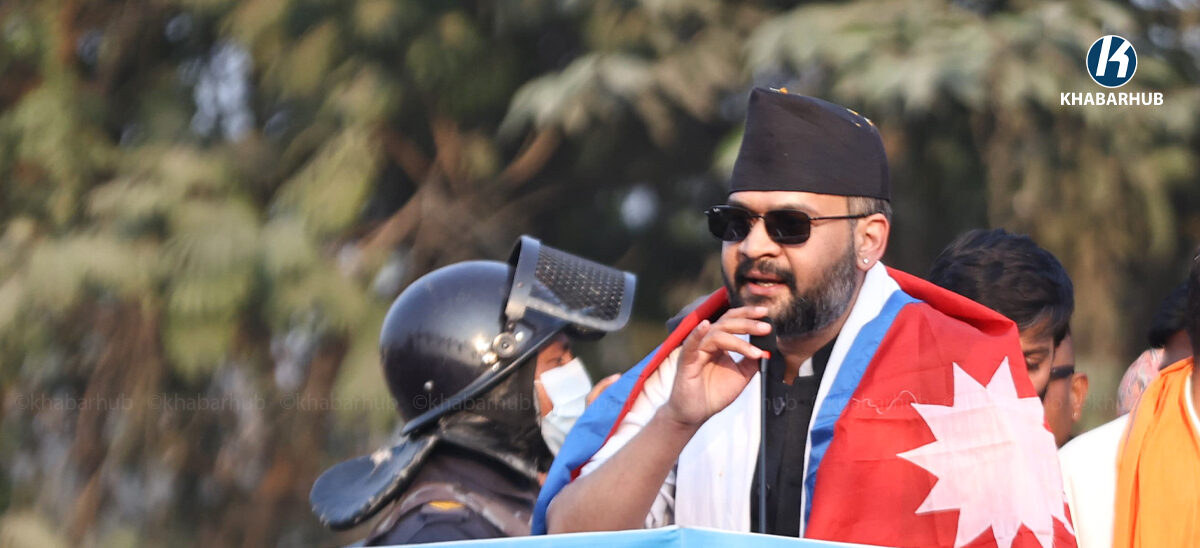
KATHMANDU: With the results of the First-Past-The-Post (FPTP) election held on March 5 already announced and vote counting under the proportional representation (PR) system nearing completion, the Rastriya Swatantra Party (RSP) appears set to secure nearly a two-thirds majority in the House of Representatives.
If the current vote trends continue, RSP will be able to form the next government on its own. The party had already projected its senior leader Balen Shah as its candidate for prime minister during the election campaign. Political observers believe Shah’s leadership appeal helped the party attract voters beyond its traditional support base, including those who were not previously aligned with party president Rabi Lamichhane.
Constitutional process
Nepal’s constitution outlines a clear procedure for forming a government following parliamentary elections.
As RSP is poised to command a majority in the House of Representatives, the new government can be formed under Article 76 (1) of the Constitution of Nepal. The provision states that the president appoints the leader of the parliamentary party that holds a majority in the House as the prime minister, who then forms the Council of Ministers.
The Election Commission of Nepal has said it will distribute certificates for proportional representation lawmakers by March 19. After receiving the certificates, political parties must form their federal parliamentary parties as required by Section 21 of the Political Parties Act 2017.
Once RSP lawmakers elect their parliamentary party leader, the president will appoint that leader as prime minister. Since the party has already announced Shah as its prime ministerial candidate, he is widely expected to be chosen as the parliamentary leader.
Cabinet formation
After parliamentary parties are formally constituted, the House of Representatives is likely to convene by March 31. A new Council of Ministers led by Shah could be formed within the same week.
In its election manifesto, RSP pledged to reduce the number of ministries to 18 and appoint expert ministers. However, the constitution requires that ministers must be members of the federal parliament. A person who is not a lawmaker can be appointed as a minister only if they become a member of the federal parliament within six months.
Because of this provision, appointing expert ministers for the entire five-year term may not be constitutionally feasible. Amending the provision would require broader political support, and RSP does not appear to have sufficient influence in the National Assembly or provincial assemblies to push such a constitutional change.


Comment