




KATHMANDU: After decades of continuous influence in Nepali politics following the 1990 movement, the country’s communist parties now face an unprecedented crisis of survival, according to analysts and election results.
The decline is widely attributed to internal leadership disputes and inconsistent party policies, raising concerns over further erosion of communist influence in the coming years.
Historically, communist parties in Nepal have experienced fluctuating fortunes. In the first general elections of 1959, out of 109 seats, the Communist Party of Nepal secured only four, while the Nepali Congress won a two-thirds majority with 74 seats.
After the end of the Panchayat system, communist factions began growing into significant competitors to the Congress party. In the 1991 election, of 205 seats, the CPN-UML won 69, the United People’s Front won nine, and the Nepal Workers and Peasants Party captured two.
In the midterm elections of 1994, the UML expanded to 88 seats, becoming the largest party, while the Workers and Peasants Party won four. In the last election under the 1990 Constitution (1999), UML secured 71 seats, the Rastriya Janamorcha 5, the Workers and Peasants Party 1, and the United People’s Front 1.
Following a decade-long Maoist insurgency and the 19-day uprising of 2006, the 2008 Constituent Assembly elections marked a high point for communist parties. The then-CPN (Maoist) won 220 out of 601 seats, UML 103, CPN (ML) 8, Janamorcha Nepal 5, CPN United 5, Rastriya Janamorcha 3, and the Workers and Peasants Party 2. Their combined influence dominated the assembly.
However, subsequent fragmentation and infighting among communist factions reduced the effectiveness of their electoral mandates. In the 2013 Constituent Assembly elections, the Maoist party’s tally dropped to 80 seats, while UML grew to 175, CPN (ML) won 5, Workers and Peasants Party 4, Rastriya Janamorcha 3, and CPN United 3. The overall communist dominance had weakened compared to the previous assembly.
The unification of major communist parties into the Left Alliance in 2017 briefly restored their parliamentary majority, which continued to the 2022 elections. Yet, the latest elections on Falgun 21 have effectively wiped out smaller communist parties, with only UML and the Nepal Communist Party maintaining a minimal presence.
Urban voter patterns indicate a clear rejection of communist parties, reflecting a return to the low levels of influence seen in the early 1950s. Analysts suggest that unless the parties undergo serious reforms, their role in Nepali politics could shrink further.
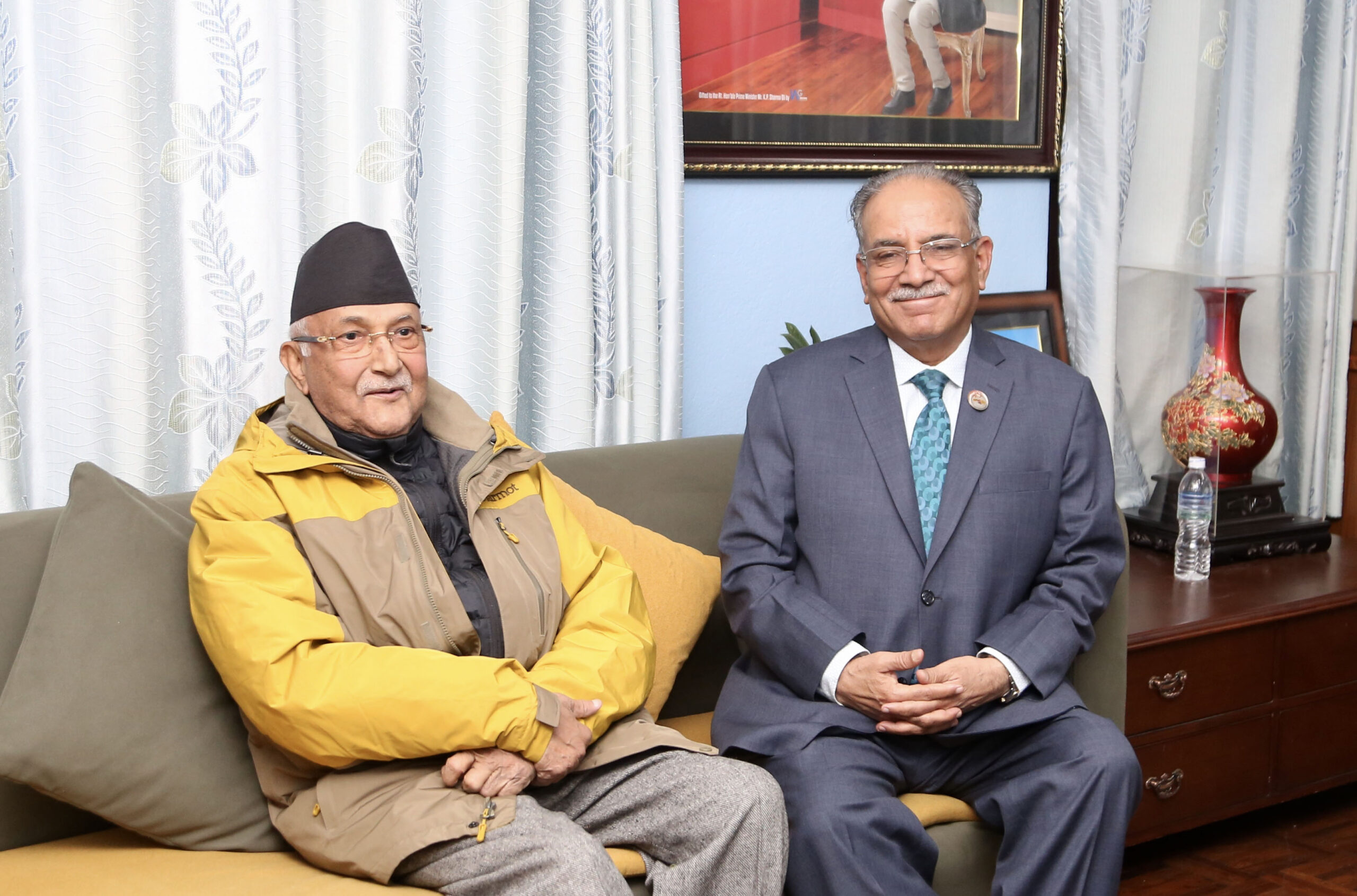
Despite the electoral setback, communist leaders have shown little willingness to adapt. Debates over leadership change have surfaced in UML, but party chairperson K.P. Sharma Oli has not indicated any intention to step down. Party Secretary Mahesh Basnet defended the current leadership, citing a recently held party general convention.
Similarly, Pushpa Kamal Dahal ‘Prachanda’ has not signaled any self-reflection or structural reform, celebrating his own victory in Rukum East even as the party faced a humiliating nationwide defeat. He also challenged rival parties by asserting his faction’s continuing strength.
Other traditional communist parties, such as the Nepal Workers and Peasants Party and Rastriya Janamorcha, show little sign of modernization or adaptation. Even the Maoist faction led by Netra Bikram Chand treated its electoral defeat as a minor setback rather than an opportunity for restructuring.
The latest results underscore a broader shift in public sentiment, rejecting traditional communist practices and leadership styles. If the incoming government capitalizes on the mandate for good governance and development, communist parties may find their historical influence increasingly confined to the margins of Nepali politics.





Comment