




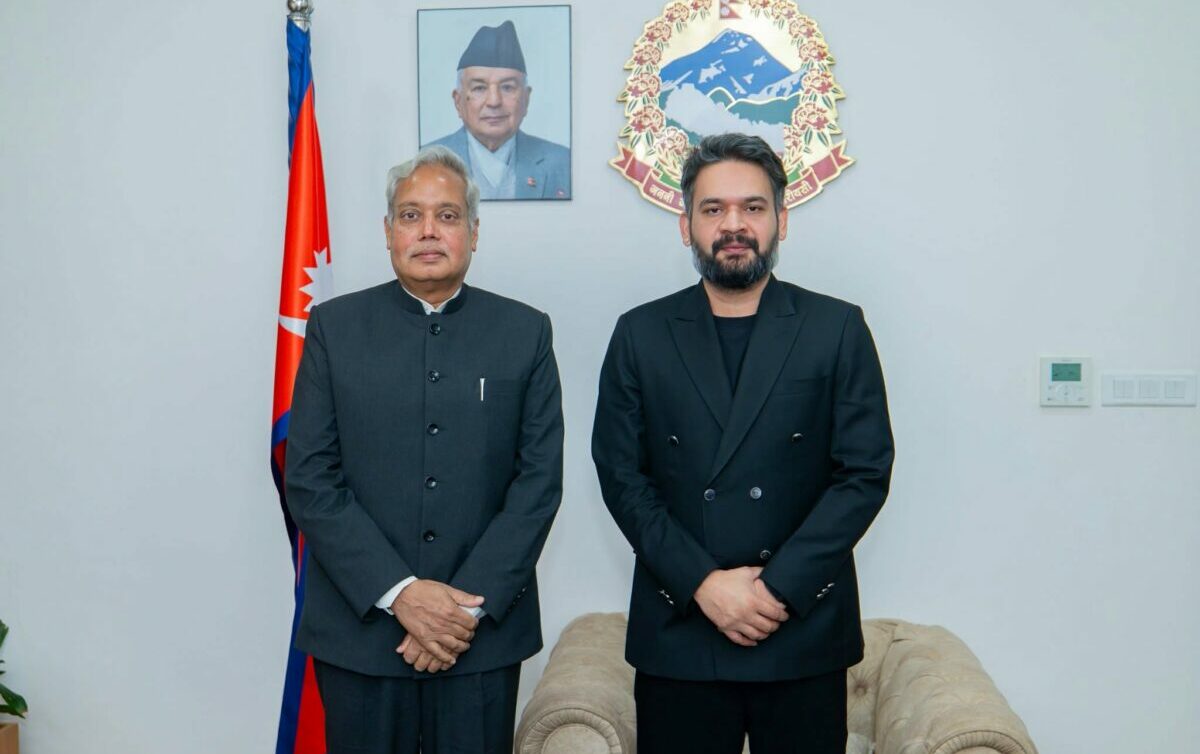
KATHMANDU: Four months after assuming office, Prime Minister Balendra Shah appears to be changing course on diplomatic engagement.
After initially maintaining that meetings with foreign ambassadors and visiting dignitaries did not fit his preferred protocol, Shah has now begun holding a series of direct meetings with representatives of Nepal’s key international partners.
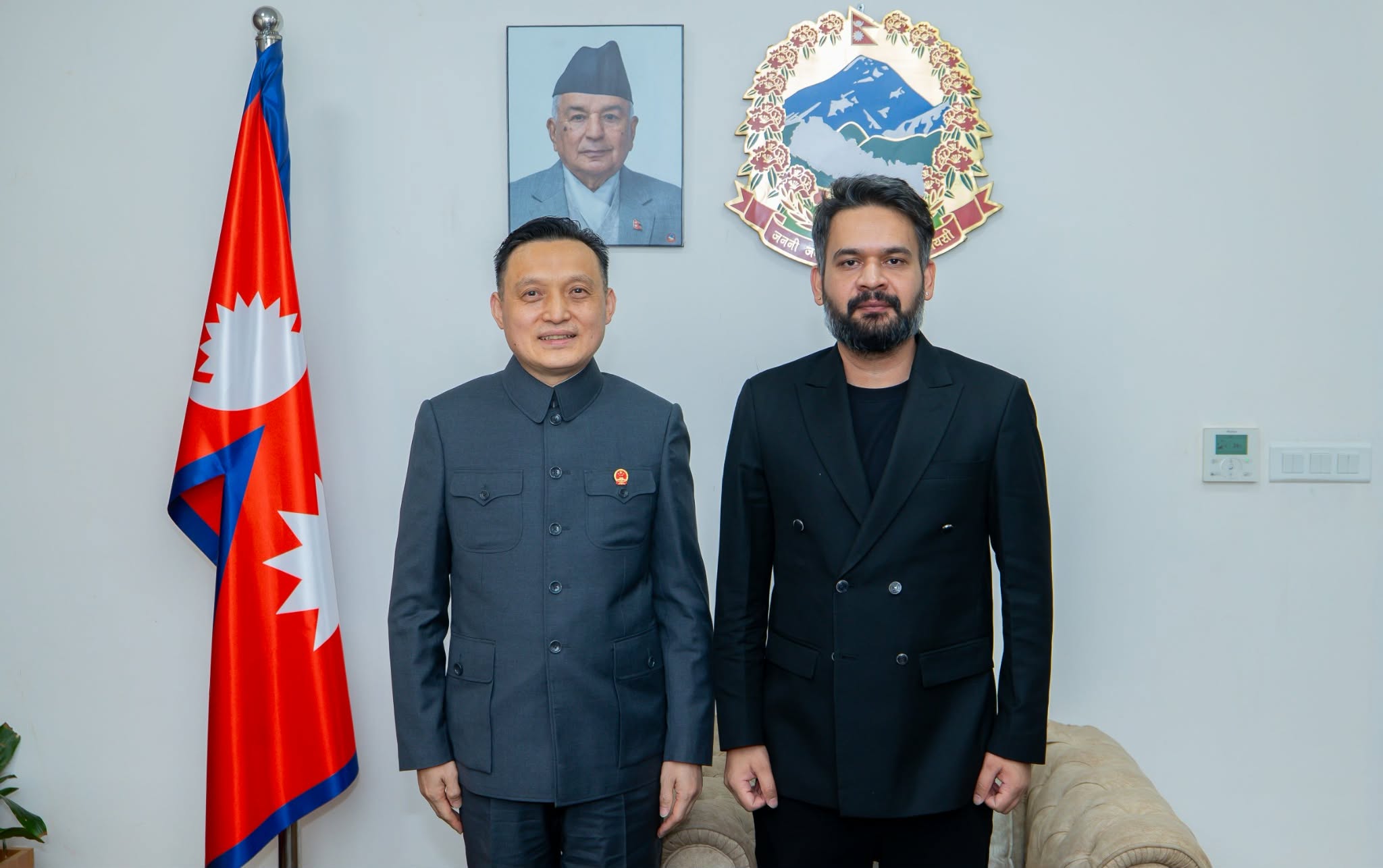
On Monday, Shah met Indian Ambassador to Nepal Naveen Srivastava at the Prime Minister’s Office in Singha Durbar. The meeting lasted around 45 minutes. Shah met Chinese Ambassador Zhang Maoming, while a meeting with US Chargé d’Affaires Scott Urbom has been scheduled for Tuesday, according to officials at the Ministry of Foreign Affairs.
What makes the shift notable is that Foreign Minister Shishir Khanal is not expected to participate in these meetings.
One foreign ministry official described the meetings as separate, one-on-one engagements. The official said India, China and the United States are among Nepal’s most important partners, making direct engagement with their representatives significant.
The change comes after Shah had earlier declined meetings with several foreign dignitaries.
He had reportedly refused to meet Indian Foreign Secretary Vikram Misri during his proposed visit to Nepal in May. Misri had been scheduled to visit Kathmandu for discussions with the new government and possible talks on a future visit by Shah to India, but the trip was postponed after the meeting with the prime minister could not be arranged.
Shah had also declined requests for meetings with US officials, including Assistant Secretary of State Samuel Paul Kapoor and US President Donald Trump’s special envoy for South and Central Asia, Sergio Gor.
Initially, Shah had instead opted for joint meetings involving officials from the Foreign Ministry, his secretariat and foreign diplomatic missions. He held such meetings with heads of foreign missions in Kathmandu shortly after becoming prime minister.
Now, the approach appears to have changed.
A more conventional diplomatic posture
The shift is significant not simply because Shah is meeting ambassadors, but because of the timing.
After more than 100 days in office, the prime minister appears to be moving toward a more conventional model of diplomatic engagement. His government is facing multiple political and administrative challenges at home, while maintaining productive relations with Nepal’s immediate neighbours remains essential.
The Foreign Ministry insists that no schedule has yet been finalised for Shah to visit India or China.
Officials say that even if such visits are planned, preparations would normally require at least two to three months, including the preparation of agreements and areas of cooperation.
For now, they say, the ambassadorial meetings should be understood primarily as discussions on bilateral relations rather than preparations for imminent foreign visits.
That distinction matters.
Diplomatic visits are rarely arranged overnight. They require political preparation, inter-ministerial coordination and agreement on issues that can produce concrete outcomes. If Shah is genuinely preparing for such a diplomatic phase, these ambassadorial meetings could be the beginning rather than the conclusion of that process.
The India meeting
Srivastava said Indian Prime Minister Narendra Modi had conveyed warm greetings to Shah.
According to the Indian Embassy, the two sides discussed ways to further strengthen the multifaceted and strong partnership between Nepal and India.
The Prime Minister’s Office said the discussions covered Nepal-India friendship, mutual interests, development partnership and various areas of cooperation.
The tone was therefore markedly different from the uncertainty that surrounded Shah’s early diplomatic engagements.
The question now is whether this new openness will develop into a sustained foreign-policy approach.
The Rabi factor
There is also political speculation surrounding Shah’s changing diplomatic posture.
Rastriya Swatantra Party chair Ravi Lamichhane has maintained his own international outreach. Lamichhane visited India in June at the invitation of India’s ruling Bharatiya Janata Party and reportedly met Indian Prime Minister Narendra Modi.
He is also expected to travel to China later this year.
Within political circles, some have interpreted Shah’s recent diplomatic activity as an attempt to ensure that the prime minister himself remains at the centre of Nepal’s engagement with its major external partners.
But that interpretation should be treated cautiously.
A prime minister meeting ambassadors is not, in itself, evidence of competition with another political leader. More importantly, Nepal’s relations with India, China and the United States are too consequential to be reduced to domestic political rivalry.
The real test is whether these meetings produce a coherent foreign policy.
The symbolism matters—but substance matters more
There has also been considerable attention to the visual symbolism surrounding Shah’s meeting with the Indian ambassador, including the arrangement of flags, official photographs and even the prime minister’s decision to remove his trademark dark glasses during the meeting.
Such details may generate political discussion, particularly in a political culture increasingly shaped by images and social media.
But diplomacy cannot be measured by photographs.
The more important question is what happens after the cameras are gone.
Does Nepal secure progress on trade and transit?
Can long-standing issues involving borders, energy and connectivity move forward?
Can development partnerships produce measurable results?
Can Nepal maintain balanced relations with India, China and other major partners without allowing one relationship to undermine another?
Those are the questions that will ultimately determine whether Shah’s diplomatic shift represents maturity or merely a change in presentation.
From refusal to engagement
Four months ago, Shah appeared determined to keep foreign dignitaries at a distance unless the protocol and circumstances suited his approach.
Today, he is actively meeting the ambassadors of Nepal’s most important partners.
That is a substantial change.
It may reflect political pressure. It may reflect the practical realities of governing. It may also simply indicate that Shah has concluded that the responsibilities of the prime minister require a more direct diplomatic role than he initially envisioned.
Whatever the reason, the change itself is welcome if it leads to more professional, institutional and transparent diplomacy.
Nepal does not need a prime minister who meets ambassadors merely for photographs.
Nor does it benefit from a prime minister who refuses to meet them on principle.
It needs a leader who can sit across the table from powerful neighbours, listen carefully, negotiate firmly and explain clearly what Nepal wants.
The real measure of Shah’s diplomatic awakening, therefore, will not be how many ambassadors he meets.
It will be what Nepal gains from those meetings.




Comment