




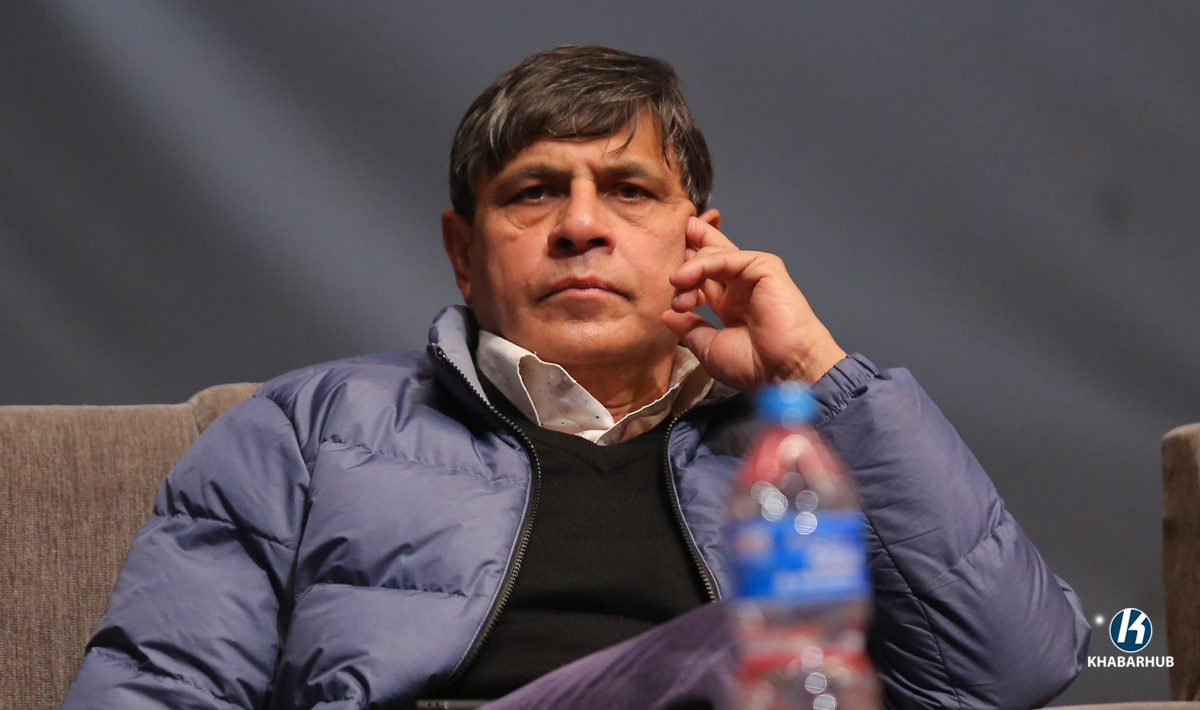
KATHMANDU: Acting Chair of CPN (United) Ghanashyam Bhusal has accused Nepal’s mainstream parties of being controlled by an inter-party political syndicate.
In a Facebook post, Bhusal said Nepali politics is no longer driven by ideology but by a nexus between senior leaders of the Nepali Congress and the communist parties, who, he claimed, jointly control power and resources.
He argued that while the Nepali Congress should belong to Congress leaders and communist parties to communists, the reality has been reversed. According to Bhusal, the Nepali Congress has long been run by the interests of communist leaders such as KP Sharma Oli and Pushpa Kamal Dahal ‘Prachanda’, while communist parties have increasingly fallen under the influence of Congress President Sher Bahadur Deuba and his faction.
Bhusal said the public disputes seen between these leaders are largely superficial. “At decisive moments, they all stand together to exploit state power,” he wrote, adding that such behaviour has continued for the past 25 years under what he described as “broker capitalism”.
He further claimed that leaders who show intolerance and hostility within their own parties have no difficulty sharing power with leaders of rival parties. Citing Harivansh Rai Bachchan’s famous poem Madhushala, Bhusal said broker capitalism has brought Congress and communist leaders under the same roof, neutralizing real ideological differences in Nepali politics.
Referring to the proposed special general convention of the Nepali Congress, being led by Gagan Thapa and Bishwa Prakash Sharma, Bhusal said it remains an internal matter of the Congress. However, he added that if the convention succeeds in dismantling this political “Madhushala”, it could play a crucial role in breaking the current political deadlock.
Bhusal concluded that if the Nepali Congress is returned to the hands of Congress leaders, communist parties will also be forced to return to their ideological roots. That, he said, would end the open “buying and selling of ideas” and lead to the collapse of what he termed the “joint office of broker capitalism” in Nepali politics.




Comment