




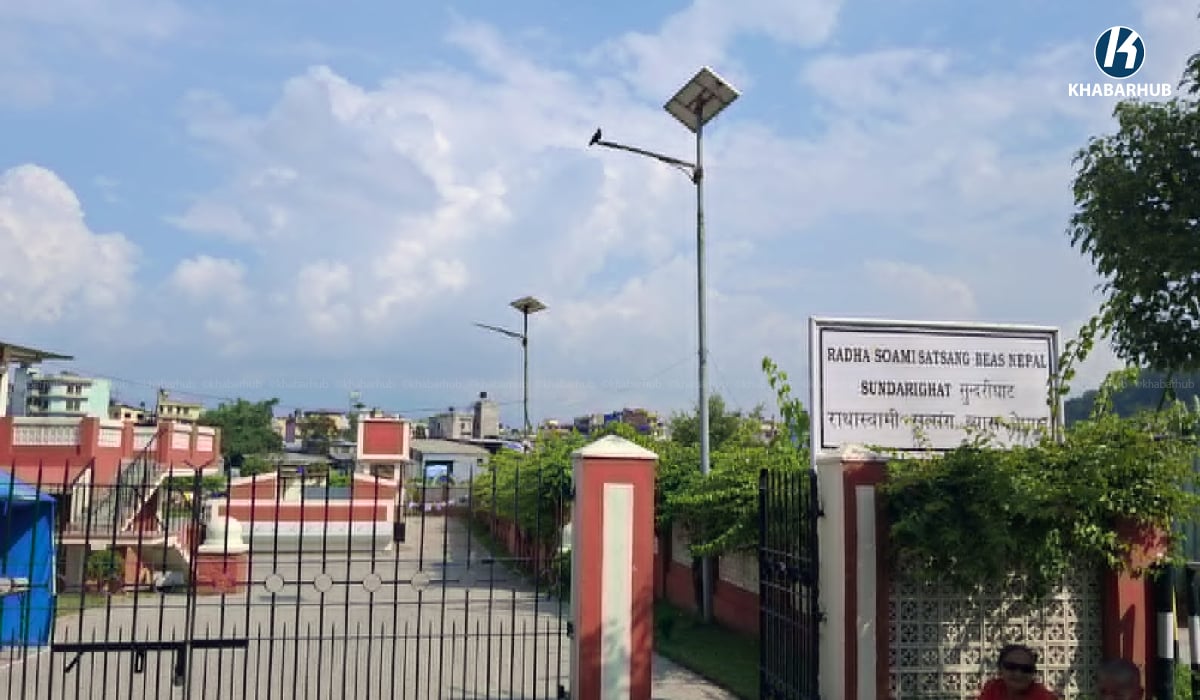
“Are you here to meet a relative?”
The security guard’s question came the moment I arrived at the Radhaswami Satsang Ashram in Kirtipur. The sprawling compound in Banshighat has been turned into a holding center for families displaced from informal settlements across the Kathmandu Valley.
Today, 277 people from 65 households are living here after their homes were demolished during anti-encroachment drives.
“You need to register your name first,” the guard said before adding another condition: “If you are here for reporting, leave your mobile phone and bag outside.”
I refused to leave my bag but had no choice but to surrender my phone. Only after entering the premises did it become clear that the restriction was about more than security. It also served to keep the outside world from seeing what life inside the camp really looks like.
As I walked in, a female municipal police officer was assigned to accompany me. Her presence appeared to have a clear purpose: ensuring residents did not openly criticize the management in front of journalists.
And it worked.
As long as she stood nearby, residents gave almost identical answers.
“Everything is fine.” “We receive food twice a day.” “We get medicines when needed.”
The responses sounded rehearsed, as though residents had memorized a script.
But the reality unfolding around them told a different story.
Under the blazing afternoon sun, children wandered around the metal-roofed shelters. Mothers carrying infants searched for shade. Elderly residents sat beneath trees trying to escape the heat, while young children tugged at their mothers’ clothes complaining of hunger.
The contrast between what people were saying and what I was seeing was impossible to ignore.
Eventually, after managing to speak with residents away from the watchful eyes of officials, a different picture began to emerge.
“The food was better before”
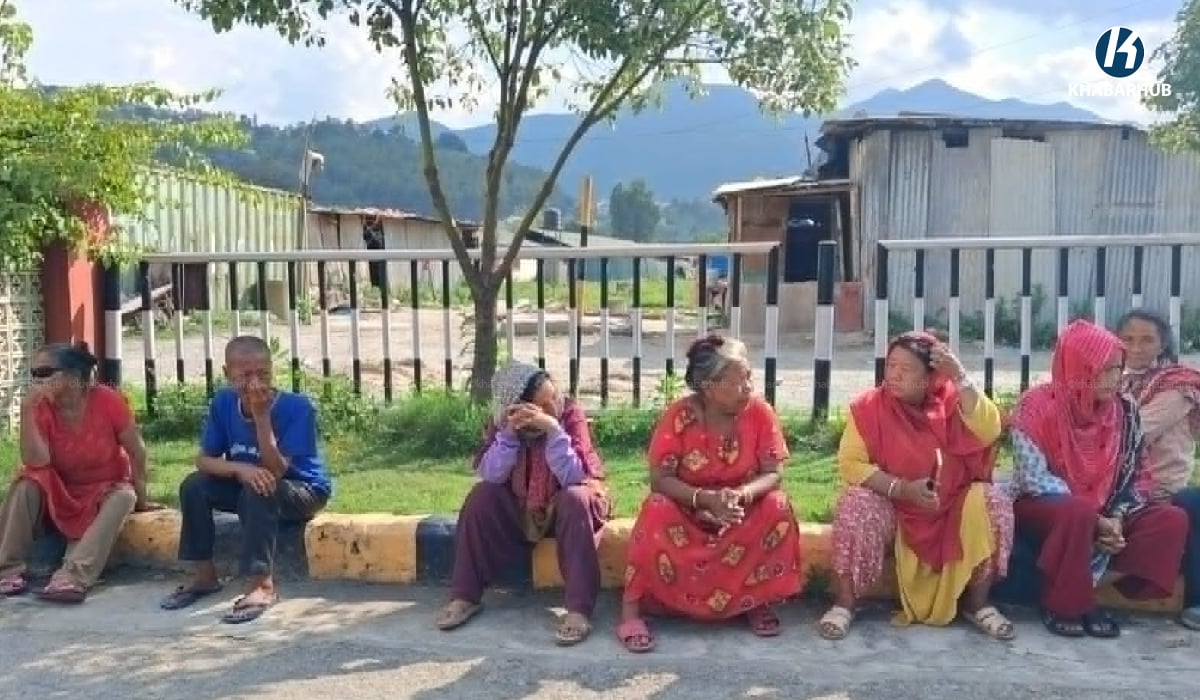
Sitting beneath a tree, elderly couple Hiralal and his wife were among the first to share their frustrations.
“When the ashram itself was providing food, it was much better,” Hiralal Paswan said.
“The rice was soft, and both children and elderly people could eat it comfortably. Since the Metropolitan City (KMC) took over, the food has become tasteless and difficult to eat.”
According to him, residents initially received tea and snacks in the morning, lunch, afternoon refreshments and dinner. Now, only two meals are provided daily, while afternoon snacks have been discontinued.
For Paswan, the problem is more serious than preference.
He suffers from high blood pressure and recently underwent eye surgery. At his age, proper nutrition is not a luxury but a necessity.
“Even swallowing the food is difficult sometimes,” he said.
Nearby, another resident, Dambar Tamang, complained that even the meals being served do not always reach everyone.
“People who leave early for daily wage work may miss meal distribution and end up going hungry,” he said.
Tamang lives at the center with his wife and two daughters. He suffers from a retinal condition that requires surgery, but he cannot afford treatment.
His wife recently underwent heart surgery and is unable to work.
“I can barely see, my wife is ill, and we have two daughters,” he said quietly. “How are we supposed to survive?”
Anger at the media too
The residents’ frustration is not directed solely at authorities. Many also expressed resentment toward the media. They said journalists often focus on sensational comments while ignoring the broader hardships people are facing.
Among them was Ranju Devi Sah, a mother raising two children alone.
Her husband disappeared while she was pregnant with their daughter. Fifteen years later, she still has no information about his whereabouts.
She survived by working in other people’s homes and raising her children in a small shack that was eventually demolished.
“When I spoke to the media, I jokingly said Balen was like my elder brother,” she recalled.
“They took that one line and made it viral. Nobody reported the real problems I talked about.”
Today, she says her children no longer want to attend school, while finding work has become increasingly difficult.
New mothers and children struggle

Officials managing the holding center insist that infant food, diapers and support for new mothers are being provided.
Residents tell a different story.
While babies have received some supplies, mothers say they have largely been left to fend for themselves.
One woman carrying her six-month-old child held up a packet of instant noodles.
“When I get very hungry, I cook something myself if I can,” she said.
Another resident explained that only one recently delivered mother had access to cooking facilities and additional food.
“They tell us to go there and cook if needed,” she said. “But how many times can you keep going to someone else’s room?”
School children face uncertainty
Education has become another source of anxiety.
Authorities have promised to help children attend school and even offered hostel arrangements for some students. Parents, however, claim many children face stigma because they come from former squatter settlements.
One mother recounted an incident involving a child sent to a hostel. Despite empty beds being available, she claimed the child was made to sleep near a toilet. Humiliated, the boy eventually ran away and returned to the holding center.
“Now he refuses to go anywhere,” she said.
‘Moved from one riverside to another’
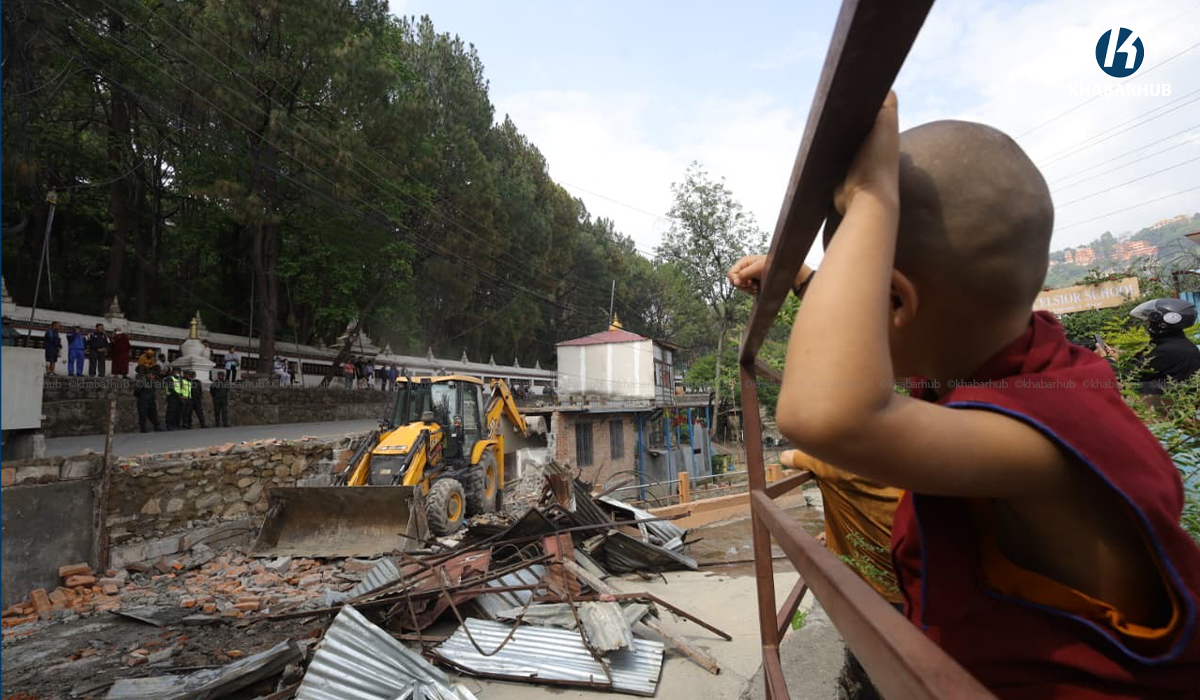
Perhaps the most common complaint concerned livelihoods. Many residents said work opportunities were easier to find when they lived in settlements such as Thapathali.
There, employers often came looking for laborers. In Kirtipur, they say even actively searching for work yields little success. One young man questioned the rationale behind the relocation itself.
“They brought us from one riverside and placed us beside another river,” he said. “If we were going to remain beside a river anyway, why destroy our old homes?”
According to him, residents have lost both their independence and their sense of security.
During heavy rain, water still enters many of the temporary tents.
“The risks haven’t disappeared,” he said. “They have only changed location.”
When the families were first relocated, they were reportedly told the arrangement would last around two weeks before permanent housing solutions were found.
Nearly two months later, there is still no clarity on where they will ultimately settle.
As monsoon clouds gather over Kathmandu, many residents say they are no longer asking for promises.
They simply want a permanent place to call home.





Comment