




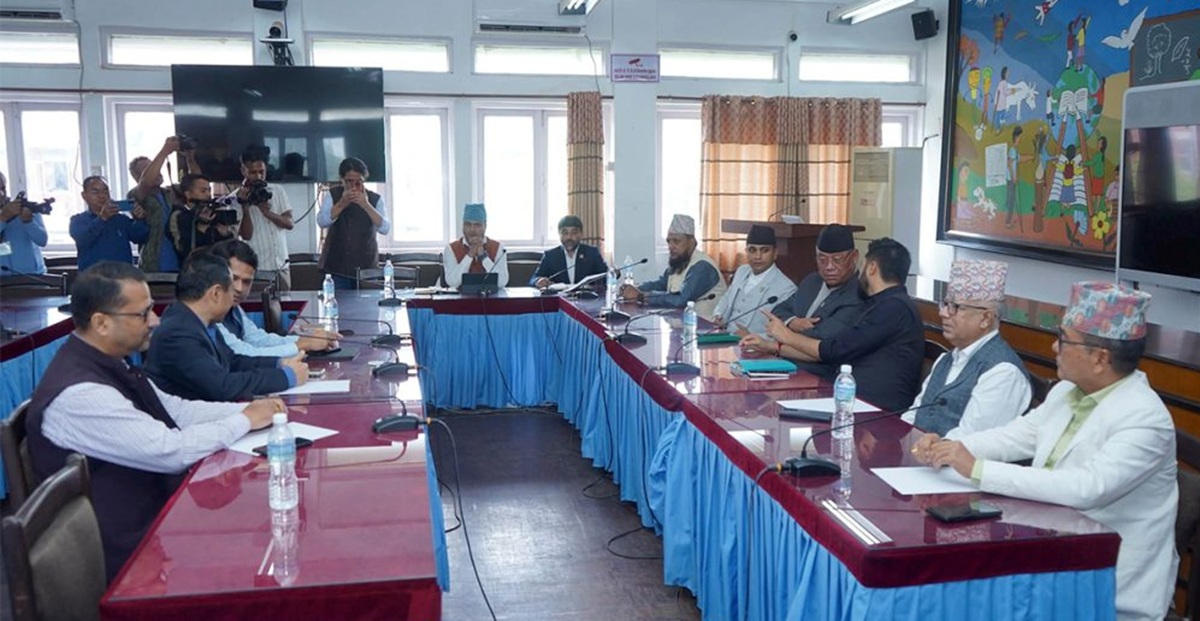
KATHMANDU: Opposition parties attending an all-party meeting called by the ruling Rastriya Swatantra Party (RSP) on Monday expressed serious concerns over the government’s functioning and parliamentary practices, while offering suggestions to address the ongoing deadlock in the Federal Parliament.
The meeting, convened by RSP Chair Rabi Lamichhane, was held to discuss ways to resolve disruptions in both houses of Parliament. It was the first all-party meeting since the formation of the new government following the latest elections.
According to participants, the RSP briefed leaders on the government’s recent activities, including its India visit, and sought feedback from opposition parties.
Speaking to journalists after the meeting, Rajendra Lingden described the meeting as a positive beginning but said such consultations should have taken place earlier.
“This is a good start, and we have taken it positively,” Lingden said. “However, we suggested that it would have been better if such a meeting had been held before the India visit.”
Opposition leaders also warned the government against acting unilaterally on constitutional bodies simply because the opposition lacks sufficient strength in Parliament.
“We have advised the government not to dismantle constitutional institutions on the assumption that opposition parties are currently weak and without alternatives,” Lingden said.
He further stressed that individuals holding responsible public positions should demonstrate maturity in their conduct and cautioned that mistakes made by the government could have consequences for the entire country.
The meeting also saw opposition leaders raise concerns over recent remarks related to Nepal’s border issues, including statements made by the prime minister and comments by Lamichhane during his India visit that Nepal would not “carry the burden of the past.”
Representatives from major political parties attended the discussion, although top party leaders were absent.
Participants included Nepali Congress Parliamentary Party leader Bhishmaraj Angdembe, CPN-UML Chief Whip Ain Bahadur Mahar, Nepali Communist Party co-coordinator Madhav Kumar Nepal and leader Barshaman Pun, and RPP Chairman Lingden.
While parliamentary parties had been invited to send their chairpersons or presidents along with another representative, major parties including the Nepali Congress, CPN-UML and Nepali Communist Party were represented by senior leaders rather than their top leadership.



Comment