




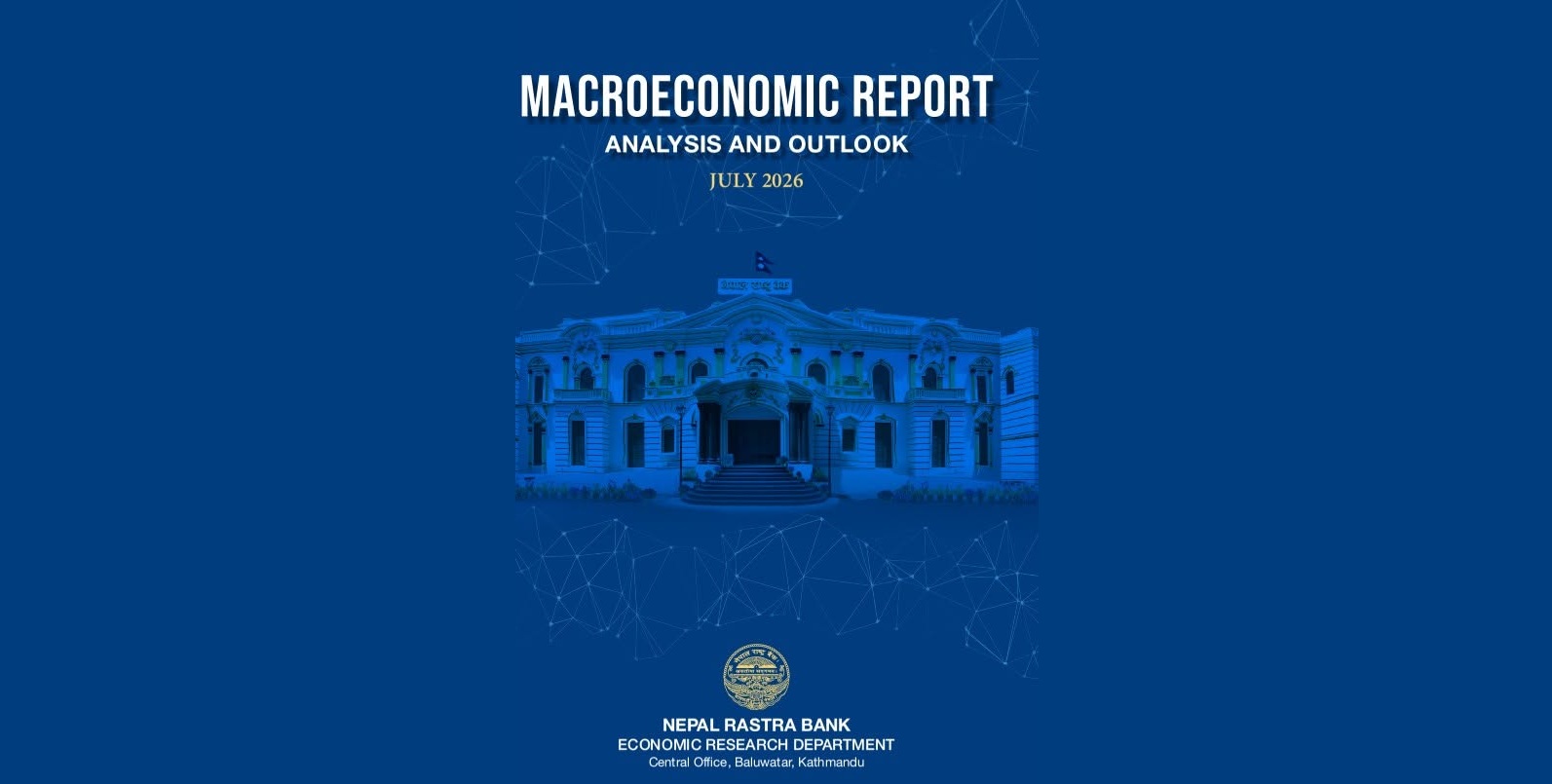
KATHMANDU: Nepal Rastra Bank (NRB) has projected that Nepal’s economy could expand by 7 percent in the fiscal year 2026/27, driven by policy reforms, improving private sector confidence, and stronger domestic consumption and investment demand.
According to the central bank’s latest Macroeconomic Report, these favorable conditions could support a significant acceleration in economic growth. However, the report estimates that economic growth in the current fiscal year 2025/26 will remain subdued at 3.85 percent.
The report states that while the services sector continues to be the main driver of the economy and private consumption remains strong, rising prices of energy and food have put upward pressure on inflation. As of May 2026, inflation had reached 5.04 percent.
NRB noted that continued growth in remittance inflows has maintained ample liquidity in the banking system, helping keep interest rates low. Despite the favorable liquidity conditions, credit expansion has yet to recover at the expected pace.
The report also highlights that although the overall financial sector remains stable, concerns persist over deteriorating asset quality in banks, pressure on capital buffers, and declining profitability.
Nepal’s external sector, however, remains robust. Both the current account and balance of payments continue to post surpluses, while foreign exchange reserves have reached a historic high.
Although rising tensions in West Asia have increased Nepal’s petroleum import bill, strong remittance growth has largely offset the impact, according to the central bank.
The report further notes that the Nepali rupee has depreciated significantly against the US dollar due to its peg with the Indian rupee.
On the fiscal front, NRB has pointed to several structural challenges. While government revenue has been sufficient to finance recurrent expenditure, capital spending remains well below target. A significant share of government borrowing is being used to repay the principal and interest on existing debt rather than financing development projects.
According to the report, this trend poses a challenge to mobilizing investment necessary for sustaining higher economic growth.
The central bank expects inflation to remain around 5.5 percent in the next fiscal year, assuming global crude oil prices remain stable and investor confidence continues to improve.






Comment