




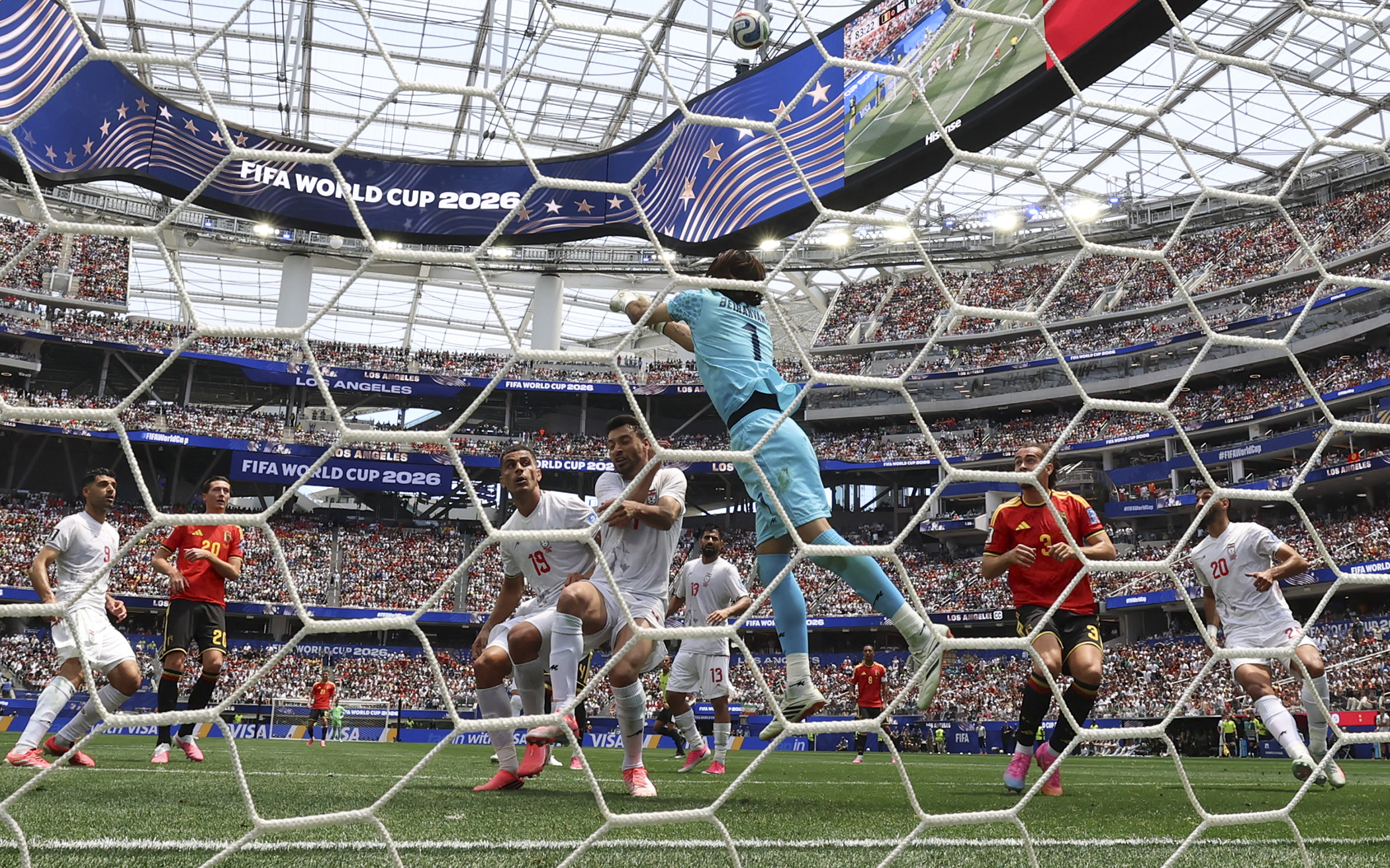
The pain. The penalties. The hairsplitting VAR decisions and astounding off-field politics. From ageing titans to miraculous goals, the FIFA World Cup brims with drama and athleticism.
Where to turn when it’s all over? Some fine authors have explored the complexity of the beautiful game, from Albert Camus to Karl Ove Knausgaard. We asked six football tragics to nominate their favourite books about soccer.
The Faber Book of Soccer, ed Ian Hamilton
The obvious choice in light of my generation, gender and origin is Nick Hornby’s autobiographical Fever Pitch, which spawned films in Britain and the United States (the latter repurposed for baseball).

However, I favour on grounds of greater scope and historical resonance author-poet Ian Hamilton’s self-described “panoramic football-fest” anthology. Published in the same year as Hornby’s book (1992), it coincided with the first season of the globally game-changing English Premier League.
In his introduction, Hamilton challenges the common wisdom that “‘Thinking’ books about soccer have no market because soccer fans don’t think”. His distinctly thought-filled collection encompasses chapters by heavyweight writer-intellectuals, revered sports journalists, managers, players, fans and ANONs.
The eye-catching contributions by celebrated literary figures like Albert Camus, Vladimir Nabokov, Martin Amis, George Orwell and Harold Pinter do most to unsettle the cultural snobbery surrounding soccer and popular culture in general.
The Faber Book of Soccer has all-too-apparent deficiencies, most conspicuously its total maleness and predominant Whiteness and Britishness. The editor concedes its “documentary aspect” is limited by his middle-aged perspective and cultural taste.
A work both of and ahead of its time, it can still be savoured by lovers of soccer, poetry, fiction, non-fiction and journalism. A rare, readerly treat indeed.
–David Rowe
Tales of South American Football: Passion, Revolution and Glory, by Jorge Knijnik
Jorge Knijnik’s Tales of South American Football (Fair Play Publishing) is not just a book about sport; it is a love letter written in the key of jogo bonito. Now an academic based in Australia, Knijnik’s yearning for the rhythms of his Brazilian home pulses through every chapter of this exquisitely researched non-fiction work.
Across 13 beautifully expressed chapters, Knijnik explores a continent where football isn’t merely a pastime, it behaves like a secular religion. He masterfully frames the beautiful game against a turbulent backdrop of volatile politics, crushing oppression and urgent social revolution. The book thrives on human vignettes, tracking how the sport holds the unique, contradictory power to ignite fierce domestic rivalries while simultaneously binding communities together.
Knijnik’s deep affection for his homeland shines brightly whether he is recalling the sheer elegance of icons such as Pelé or breaking vital new ground by documenting the grassroots development of women’s football in Bolivia.
This essential, fiercely passionate read captures the literal and political heat of South American society, proving that to truly understand the continent, you must first understand its football.
–Kylie A. Steel
Inverting the Pyramid: the History of Football Tactics by Jonathan Wilson
I really like sports history and learning how sport has changed over time, which is why Jonathan Wilson’s Inverting the Pyramid: The History of Football Tactics (Orion) stands out to me. It’s actually the book you see Coach Beard reading in Ted Lasso, so it’s not just me!
The book follows soccer from its chaotic, rule-less beginnings in 19th century England through to the global game of the 21st century. It provides a historical context for why the game looks the way it does.
I enjoyed reading the examples of coaches, players and teams who have changed the game, as they developed new tactics, formations and strategies to try and beat their opponents. Explanations of why some teams value dribbling over passing, while others value improvisation and creativity over keeping possession and a rigid structure were also interesting.
Overall, this book helped me see football in a completely different way. Not just as a game, but as something shaped by the unique cultures, politics and people involved in it around the world.
–Vaughan Cruickshank
The Matilda Effect by Fiona Crawford
Fiona Crawford is one of Australia’s best football writers, with a particular focus on our national women’s team, the Matildas. In The Matilda Effect (MUP), Crawford tells the story of women’s football in Australia in the lead-up to the 2023 FIFA Women’s World Cup.
She reflects on the sport’s history, giving recognition to the game’s trailblazers and showing how the success of the Matildas was not built in a day. Through Crawford’s academic expertise and experience on the ground as a football journalist, we get insights from key figures, analysis of issues surrounding the women’s sport movement and incredibly entertaining anecdotes that show the joy of women’s football and the vibrant community surrounding it.
My honorable mention is Home and Away: Writing the Beautiful Game by Karl Ove Knausgaard and Fredrik Ekelund. This unique book consists of eloquent letters between two prolific literary voices written during the 2014 men’s World Cup in Brazil. They are full of insightful observations, personal reflections and football passion.
–Kasey Symons
Soccer Madness by Janet Lever
I first fell in love with Brazilian soccer watching the 1982 and 1986 World Cups and through the brilliance of Socrates. He was not only an extraordinary player but also a public intellectual off the field, someone who used his platform to speak out on social and political issues. At a time when Australia was absent from World Cups, Brazil naturally became my team.
In 1987, I had the unforgettable experience of playing against the Brazilian national under-17 team at the FIFA U-17 World Cup in Canada. We managed a 1–0 win in the group stage and our team went on to reach the quarter-finals. That match remains one of those formative moments where my admiration for Brazilian football met lived experience on the pitch.
By the time I arrived at university in 1990, during the Italy World Cup, one of my lecturers encouraged me to give a presentation on Brazilian soccer. He handed me a copy of Janet Lever’s Soccer Madness: Brazil’s Passion for the World’s Most Popular Sport (University of Chicago Press), published in 1983.
Lever captured, with remarkable clarity, the deep passion Brazilians had for the game. What struck me most was that the book was not about tactics or famous players, but about how soccer reflected politics, class, race and culture. It remains, to this day, one of the most insightful studies of the game ever written.
Sadly, Brazil are now out of the 2026 World Cup. But Soccer Madness remains remarkably relevant. The themes Lever explored, (commercialisation, media influence, nationalism, inequality and the cultural significance of football) continue to shape the global game today.
–Steve Georgakis
Developing Game Intelligence in soccer by Horst Wein
When I started junior football coaching, Horst Wein’s Developing Game Intelligence in Soccer (Reedswain) became my “go to” book. Importantly, Wein’s book aligned football coaching with contemporary concepts of athlete-centred learning. At its core, the book explains the “why” and the “how” to develop the “thinking player” through practice, presenting game-related challenges. This type of coaching develops the player’s ability to make intelligent decisions on field.
Wein argues that football is a dynamic, problem-solving activity requiring players to read the play, anticipate the next move and respond. Drilling players to develop particular skills doesn’t develop this ability. The intelligent player is developed through games that are intentionally designed to focus on tactical understanding. Coaches should also ask questions to encourage players to reflect and refine their thinking about the play. The secret to good coaching, writes Wein is “stimulation through play”.
–Shane Pill
This article is republished from The Conversation under a Creative Commons license. Read the original article.






Comment