




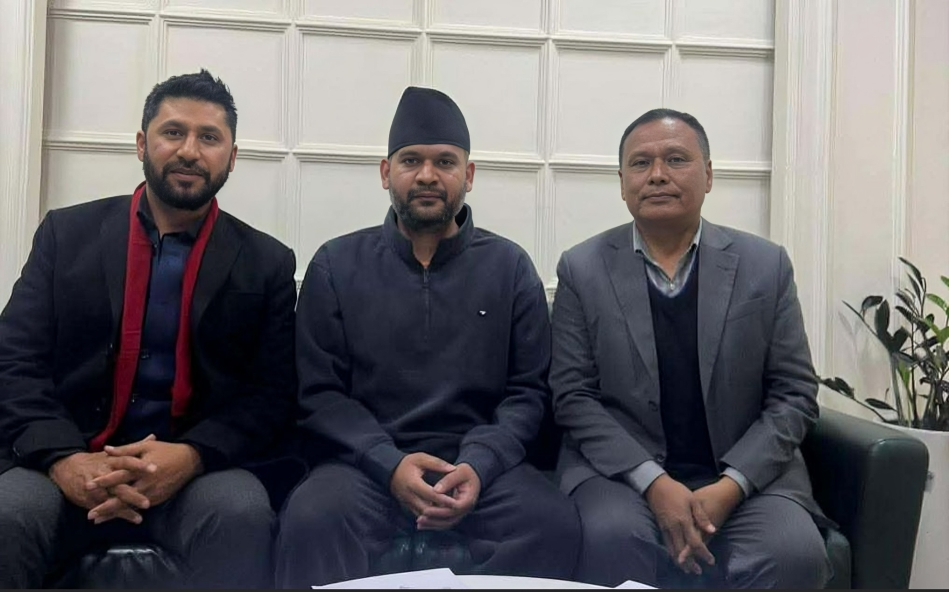
KATHMANDU: The newly emerged Rastriya Swatantra Party (RSP) has come under fire for failing to uphold inclusivity in its recently announced leadership team.
The party’s 11-member central team includes only one female office-bearer, sparking criticism from political observers and activists who question the party’s commitment to constitutional principles.
The leadership lineup includes party chair Rabi Lamichhane, senior leaders Balen Shah and Kulman Ghising, vice chair Dol Prasad Aryal and Dr. Swarnim Wagle, general secretaries Kabindra Burlakoti and Sunil Lamsal, co-general secretaries Bipin Kumar Acharya, Jitram Waiba, Bhupadev Shah, and, finally, treasurer Lima Adhikari, the sole woman in the team.
Critics argue that despite positioning themselves as alternatives to traditional parties, the new party’s leaders have overlooked the constitutional requirement of inclusive representation. Social media users, including Gen-Z activist Bhawana Rauat, have questioned why women are largely absent from decision-making positions, pointing out that the country’s population is predominantly female. Rauat stressed that the constitutional 33% minimum quota for women is only the baseline, and true inclusion must go beyond token representation.
Poet Chandrabir Tumbapo also criticized the party, calling the team a male warehouse, and questioned the party’s claim of being an alternative force while sidelining women from leadership.
Observers note that RSP’s failure mirrors patterns in older parties like Nepali Congress and CPN-UML, where leadership structures remain heavily male-dominated. In CPN-UML, only one woman holds a secretary position in the 19-member leadership team. Nepali Congress has also faced criticism for favoring elite and wealthy individuals in proportional representation lists, limiting opportunities for women and marginalized groups.
Proportional representation in Nepal is meant to ensure participation of all communities, including women, Dalits, Indigenous groups, Madhesis, Tharus, and Muslims, in governance. According to the 2021 census, women make up 51.04% of the population, underscoring the constitutional mandate to ensure their fair representation in elected bodies.
Despite RSP’s positioning as a progressive alternative to traditional parties, activists warn that its leadership choices reflect a failure to internalize the principles of inclusivity enshrined in the Constitution. The criticism underscores broader challenges in implementing proportional representation fairly and equitably in Nepali politics.




Comment