




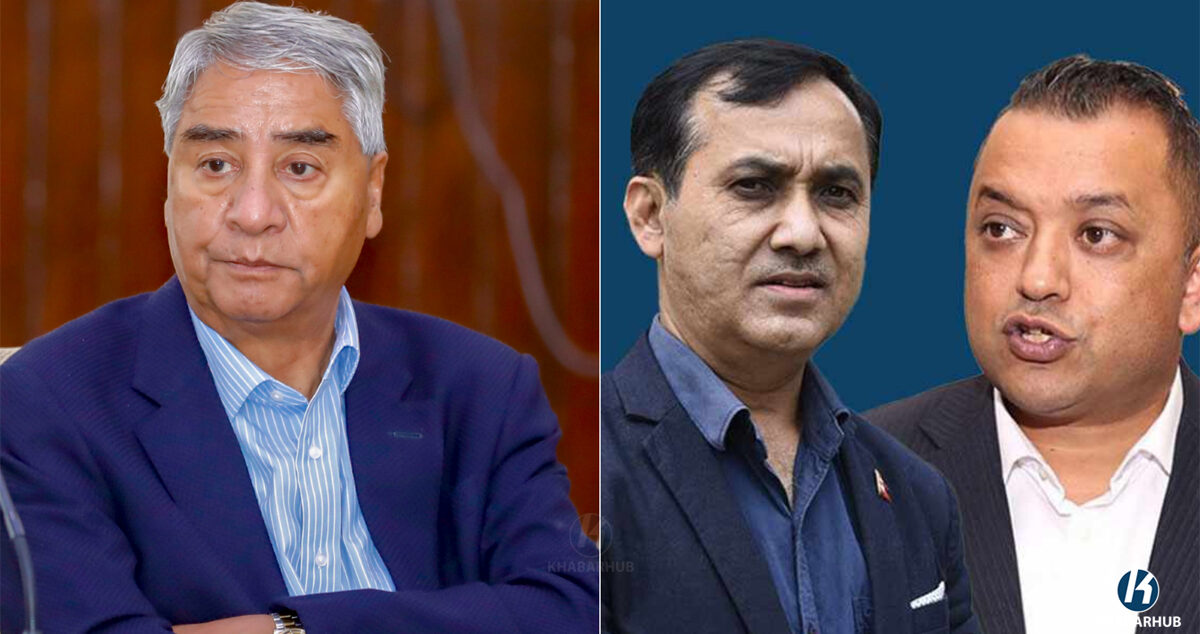
KATHMANDU: With only a few days left to convene a special general convention based on signatures collected by Nepali Congress (NC) General Secretaries Gagan Thapa and Bishwaprakash Sharma, the internal conflict within the party has intensified. Organizers backing the special convention have already booked venues at Bhrikutimandap for January 11 and 12.
However, the party’s Central Working Committee meeting held on January 2 decided to proceed with the regular 15th General Convention from May 11 to 14, declaring that the rationale for holding a special general convention has ended. This decision has also been formally circulated to the party’s subordinate committees.
As a result, the struggle between factions demanding a special general convention and those opposing it has deepened. Political observers warn that continued confrontation over the same issue could push the party toward a serious split.
Both sides entrenched
The Gen-Z–led movement of September 8 and 9, 2025 raised fundamental questions about traditional political leadership and intensified calls for generational change across political parties. In its aftermath, several parties, including the Maoist Centre and the Unified Socialist, underwent polarization and even held unity conventions.
The CPN-UML, too, was compelled to organize its 11th general convention, though none of these developments resulted in meaningful generational leadership transitions.
While some Madhesh-based parties experienced fragmentation during this period, similar shifts have not materialized within the Nepali Congress. Despite a strong push for a special general convention, proponents remain institutionally weak.
Supporters of the special convention have secured signatures from more than 54 percent of general convention delegates, exceeding the threshold required by the party statute. Yet, lacking a majority in the Central Working Committee and the Central Work Execution Committee, they have been unable to translate numerical support on paper into organizational action.
Conversely, if participation remains limited to a minority, the gathering is likely to be confined to formal discussions without decisive outcomes. In that case, the party’s internal deadlock would persist, prolonging uncertainty at a critical political moment.
Gagan Thapa, Bishwaprakash Sharma, and their supporters argue that the party has no alternative but to hold a special general convention, asserting that convention representatives possess a legal right to demand it.
“Now it is clear that the Nepali Congress has no option other than a special general convention. This is a legal right of the general convention representatives, not a matter of anyone’s discretion,” the group stated in a declaration.
They further questioned the party’s moral standing, asking, “If a democratic party like the Congress does not accept the binding provisions of its own statute, how can it credibly advocate for constitutionalism and the rule of law?”
Establishment pushback
The party establishment, led by President Sher Bahadur Deuba, has firmly rejected the demand. It argues that holding a special general convention is neither practical nor legitimate now that the country is preparing for the House of Representatives elections scheduled for March 5. The faction also claims that the convention delegates will not attend the special general convention.
Reinforcing this position, the Central Working Committee meeting on recently concluded that the justification for either holding the regular 15th General Convention on time or calling a special convention automatically lapsed.
A circular issued following that meeting emphasized that the entire party must now focus on the upcoming elections, noting that the party has already registered to contest the polls and submitted candidate nominations and proportional representation lists.
As the deadline approaches, the critical question remains whether the Thapa–Sharma camp can muster a decisive majority on the ground. A convention convened without broad institutional backing risks not only political isolation but also legal and organizational complications for the party.
What happens if a majority of representatives do not gather?
At the initiative of Nepali Congress General Secretaries Gagan Thapa and Bishwaprakash Sharma, party cadres across the country have intensified a “Let’s Go to Kathmandu” campaign on social media to mobilize support for a special general convention. In some districts, rallies are also being organized to build pressure in favor of the convention.
As the dispute between holding a regular general convention and a special general convention deepens, legal experts warn that the issue could eventually reach the courts and turn into a constitutional and legal question.
The General Secretaries, through a joint statement, postponed the regular general convention, while the Central Working Committee, declared that the justification for a special general convention had ended. These contradictory decisions have further complicated the situation.
Legal expert Prof. Dr. Nhrisingh Khatri says that while both issues could be legally adjudicated if taken to court, it would be inappropriate to seek judicial resolution for what is fundamentally an internal political matter. So far, no faction within the Nepali Congress has approached the court on the issue. Instead, discussions continue between party leaders and within the Central Working Committee.
However, the key question remains: what happens if internal talks fail and a majority of Mahasamiti or general convention representatives gather at the special general convention?
According to Prof. Dr. Khatri, if a majority participates, the special general convention could take sovereign decisions. “That could happen, and it could place moral pressure on the opposing faction,” he said. In such a scenario, the convention could even elect a new leadership and chart a new political course, particularly as the country is already in an election atmosphere.
Past experience, however, suggests a more complex outcome. In recent unity conventions of the Maoist Centre and the CPN-UML, leadership change was widely discussed but ultimately contained by establishment forces through organizational and procedural strategies. A similar approach could be adopted by the Nepali Congress establishment to limit participation in the special general convention.
Just as disputes over active membership delayed the regular general convention in several districts, there are indications that efforts are underway to physically reduce attendance at the special convention, even though 54 percent of delegates have formally demanded it. In such circumstances, Prof. Dr. Khatri cautions, the legitimacy of any decisions taken could be questioned.
“If less than 50 percent of the delegates participate, the legality of the decisions will be challenged,” he explained. “While the demand for a special general convention itself is legal, since it exceeds the 40 percent threshold, the legitimacy of resolutions passed without majority participation would remain doubtful.”
He emphasized that more than 50 percent participation is necessary for the convention to be sovereign. “If a clear majority attends, the convention can change leadership and take binding decisions. Those who boycott may face moral and political pressure, and a new leadership could emerge, potentially altering the party’s political direction.”
Conversely, if participation remains limited to a minority, the gathering is likely to be confined to formal discussions without decisive outcomes. In that case, the party’s internal deadlock would persist, prolonging uncertainty at a critical political moment.



Comment