




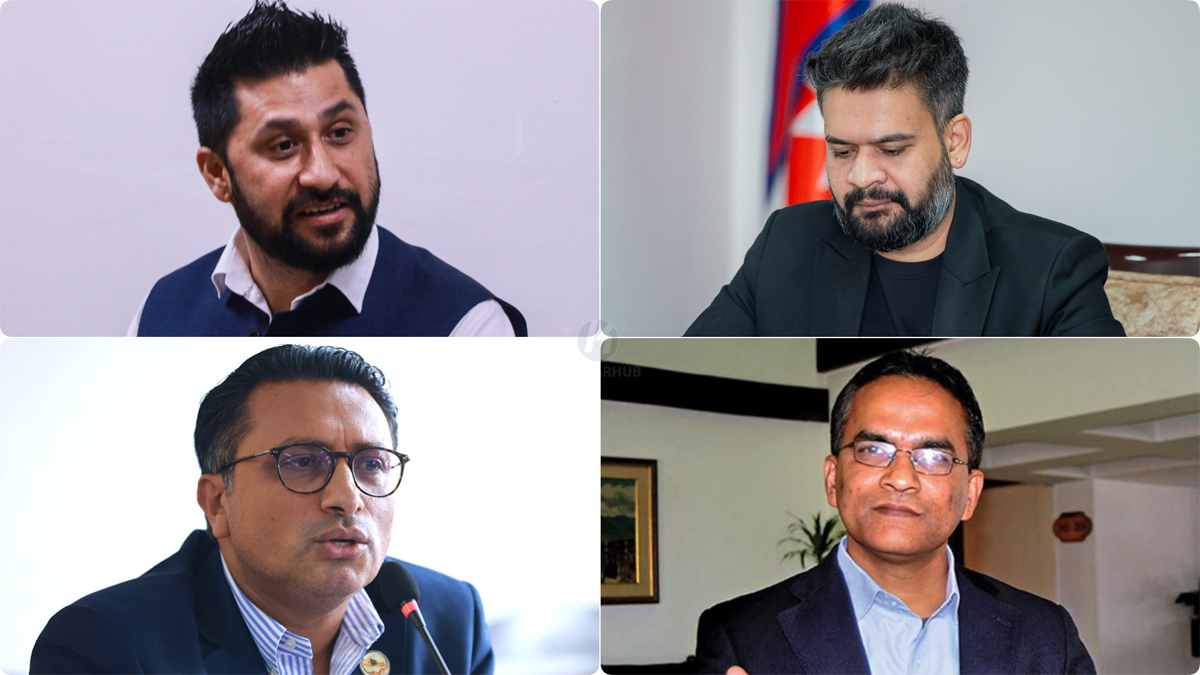
KATHMANDU: A series of separate meetings held by Prime Minister Balen Shah and Finance Minister Swarnim Wagle with financial regulators and private sector representatives has fuelled speculation of an internal power struggle within the Rastriya Swatantra Party (RSP).
Although both leaders have publicly denied any differences, recent engagements have drawn attention after key officials from related agencies were left out of discussions.
On Wednesday, Wagle held a meeting with officials of the Nepal Rastra Bank, excluding the governor and deputy governor. During the meeting, he urged central bank officials to go beyond their regulatory role and contribute to the country’s economic transformation.
The finance minister said the private sector was seeking policy clarity, stable regulations and faster decision-making rather than concessions. He also stressed the need to channel excess liquidity in the banking system into productive sectors, employment generation and industrial growth.
Wagle further called on the central bank to provide greater policy clarity to support digital finance, fintech and startup financing.
The meeting came a day after the finance minister held discussions with chief executive officers of commercial banks, again without the participation of Nepal Rastra Bank’s top leadership.
Earlier, on July 16, Prime Minister Balen met Nepal Rastra Bank Governor Biswo Poudel as part of a series of consultations with private sector representatives. Finance Minister Wagle was not present at that meeting.
Similarly, on July 20, the prime minister met officials from the Securities Board of Nepal and the Nepal Stock Exchange alongside private sector representatives without the finance minister’s participation.
The separate rounds of consultations have prompted questions over coordination within the government, as both leaders have announced similar commitments to improve the investment climate, identify policy bottlenecks and facilitate private sector growth.
Observers note that the absence of relevant ministries or regulatory agencies from several of these meetings has raised concerns over whether the engagements are aimed more at demonstrating influence than advancing policy coordination.
Political differences surface within RSP
Recent developments have also highlighted growing differences within the RSP leadership.
During the party’s Central Committee meeting on July 29, some leaders reportedly questioned proposed changes to the party statute concerning the authority of the party chair over the parliamentary party leader. According to party sources, Central Committee member Ganesh Karki called for an investigation into the matter.
Despite the concerns, party chair Rabi Lamichhane reportedly told the meeting that Balen would remain prime minister for the full five-year term and said he would be willing to support another five years if necessary.
Political observers have also pointed to changing public messaging within the party. Leaders previously seen as close to Lamichhane have become increasingly critical of the government over recent controversies, including unrest in the Madhesh region.
In a recent television interview, RSP General Secretary Bipin Acharya said responsibility for police firing on civilians should be borne by Prime Minister Balen and Home Minister Sudan Gurung.
The remarks have added to speculation that internal divisions within the ruling party are becoming increasingly visible, despite repeated assertions from senior leaders that the government remains united.






Comment