




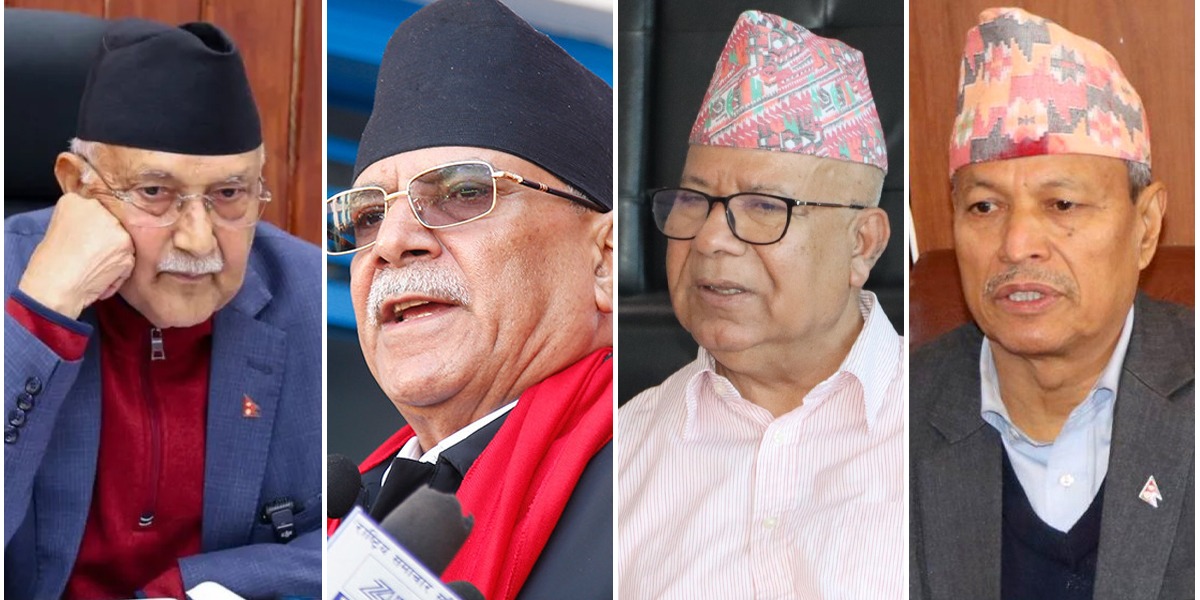
KATHMANDU: Eleven days after the CPN-UML and the Nepali Communist Party (NCP) signed a three-point agreement on provincial power-sharing, the deal remains unimplemented, with internal disputes in the UML emerging as the main obstacle.
According to leaders familiar with the negotiations, disagreements over the selection of chief ministers in Koshi and Bagmati provinces have delayed government formation, raising concerns over the future of the coalition arrangement.
Sources within the UML say party chair KP Sharma Oli is attempting to appoint leaders considered close to him in the provinces, a move that has drawn criticism from several senior leaders who have called for broader consultations before final decisions are made.
Pressure mounts within UML
Several UML leaders have reportedly urged Oli to finalise provincial leadership through discussions within the party’s Secretariat and office bearers rather than through unilateral decisions.
UML General Secretary Shankar Pokharel said the party is continuing internal consultations and that provincial leadership issues would be resolved soon.
“The UML is discussing provincial leadership. It will be settled within a few days. If necessary, the Secretariat meeting will also be convened,” Pokharel said.
However, he declined to comment on whether the delay has created tensions within the ruling alliance.
Vice-chair Raghuji Pant and senior leader Gokarna Bista are also said to favour decisions through formal party mechanisms.
Koshi, Bagmati remain flashpoints
The most significant disagreements have surfaced in Koshi and Bagmati provinces.
In Koshi, Chief Minister Hikmat Kumar Karki is reportedly unwilling to resign despite pressure from sections of the party leadership. Karki has maintained that any decision should come through official party channels rather than individual directives.
“My position has always been that decisions should be made by the party’s official meetings. The party should function according to its policies and principles, not individual preferences,” Karki said.
In Bagmati, differences have intensified over who should lead the provincial government. Sources claim efforts are underway to replace parliamentary party leader Jagannath Thapaliya, although no formal decision has been announced.
The disputes have complicated negotiations over provincial governments, with party insiders warning that prolonged delays could affect cooperation between the coalition partners.
Lumbini leadership likely to continue
Unlike Koshi and Bagmati, the leadership issue in Lumbini appears to have been settled.
Chief Minister Chet Narayan Acharya is expected to continue in office after discussions with the party leadership, although sources say a leadership change could be considered after about six weeks.
Acharya said preparations are underway to seek a vote of confidence before expanding the provincial cabinet.
NCP says no disagreement on its share
NCP leaders insist there are no disputes over the provinces allocated to their party under the agreement.
Under the July 24 power-sharing deal, the UML is to lead governments in Koshi, Bagmati and Lumbini, while the NCP is responsible for forming governments in Karnali and Sudurpashchim. Madhesh and Gandaki are to be decided through consultations with other parties.
NCP co-coordinator Madhav Kumar Nepal said discussions within the UML should not delay implementation of the broader agreement.
“We have no disagreements over Karnali and Sudurpashchim. We hope the UML resolves its internal issues quickly so the cooperation can move forward,” Nepal said.
Senior NCP leader Narayan Kaji Shrestha also said his party expects the UML to settle its internal differences soon, adding that no major obstacles exist on the NCP’s side.
Karnali government formed, Sudurpashchim awaits transition
The NCP has already formed a government in Karnali after parliamentary party leader Mangal Bahadur Shahi was appointed chief minister. Cabinet expansion, however, has yet to take place due to ongoing negotiations over ministerial portfolios.
In Sudurpashchim, NCP parliamentary party leader Khagraj Bhatt is expected to lead the next government once the transition process is completed.
Meanwhile, discussions on government formation in Madhesh and Gandaki have yet to begin in earnest, with coalition leaders saying priority is currently being given to resolving disputes over the remaining five provinces.






Comment