




KATHMANDU: The completion of 100 days by Prime Minister Balen Shah’s government on Saturday has been framed not merely as a routine milestone, but as a demonstration of an ambitious reform-driven agenda that seeks to redefine governance norms in Nepal.
The government’s progress report emphasizes systemic restructuring, anti-corruption enforcement, digital transformation, and administrative efficiency as the central pillars of its early tenure.
At the core of the administration’s narrative is the approval of a 100-point governance reform agenda adopted during the first Cabinet meeting on March 27, 2026 (Chaitra 13, 2082). This signals an intent to institutionalize reform rather than rely on ad-hoc policy adjustments.
The emphasis on administrative reform, service delivery, fiscal discipline, and infrastructure development reflects an attempt to position governance as performance-driven rather than politically negotiated.
A key institutional highlight is the formation of a high-level Asset Investigation Commission under the Commission of Inquiry Act. This body is mandated to investigate the assets of political office-bearers and senior officials since the 2006 People’s Movement period.
The introduction of multiple regulatory frameworks for disaster response, rehabilitation, and climate resilience indicates an effort to institutionalize emergency governance. Likewise, fast-track land acquisition mechanisms show an emphasis on accelerating infrastructure and recovery processes.
The collection of more than 11,000 asset declarations and complaints indicates both the scale of scrutiny and the political sensitivity of the exercise. In parallel, investigations into Bal Mandir land misuse, child transfer irregularities, and the Ncell share controversy suggest a broad targeting of legacy corruption cases.
Law enforcement agencies have also been mobilized more aggressively. The Department of Money Laundering Investigation has filed seven major cases involving 101 individuals and entities, with allegations amounting to Rs 118 billion.
The Central Investigation Bureau’s intensified focus on banking offences and securities violations reflects a coordinated crackdown on financial crimes, which is being presented as part of a wider integrity-building exercise.
Digital governance emerges as a defining feature of the administration’s early agenda. The proposed integrated digital asset registry linking bank accounts, digital wallets, and shareholdings reflects a move toward real-time financial transparency.
Simultaneously, the blocking of over 200,000 betting-related domains within 24 hours demonstrates a highly assertive cyber enforcement strategy. This combination of financial digitization and cyber control indicates a dual strategy of modernization and surveillance.
Public order enforcement has also expanded significantly. The detention of 466 middlemen involved in bureaucratic irregularities and over 13,000 individuals accused of robbery and violent offences reflects a strong policing approach.
While the government presents this as restoration of law and order, it also raises questions about procedural safeguards and proportionality, especially given the large scale of detentions and rapid case filings.
Institutional reform is another major theme. The abolition of 31 financially burdensome agencies, merger of institutions, and recovery of 672 misused government vehicles indicate an effort to reduce state redundancy and reclaim public assets.
At Tribhuvan University alone, Rs 132.6 million has been recovered from faculty members who failed to return from study leave, reflecting a push toward administrative accountability in public institutions.
Fiscal recovery measures extend to industrial regulation, where over Rs 434.8 million has been collected from industrial estates and 33 industries have faced electricity disconnection for non-payment. These actions highlight an enforcement-heavy approach to revenue leakage and compliance.
Administrative restructuring has been particularly notable in the reduction of federal ministries from 22 to 18, alongside a leaner 17-member Cabinet. The government claims this will generate annual savings of Rs 20 billion.
The abolition of politically affiliated trade unions further signals an attempt to depoliticize bureaucratic structures, though it may also generate resistance from established institutional actors.
Recruitment reforms have also been introduced, with merit-based appointments in institutions such as the National Planning Commission, universities, and the Securities Board. The planned introduction of open competition for ambassadorial appointments marks a significant departure from traditional political appointments and suggests a shift toward technocratic governance.
Service delivery reforms are among the most visible changes for citizens. The home delivery of citizenship certificates and passports in 75 districts, expansion of driving licence delivery in selected districts, and extended customs operating hours reflect efforts to reduce bureaucratic friction. Decentralization of land administration and digitization of mortgage services further align with the broader e-governance agenda.
The upgraded Hello Sarkar platform, now connected to over 3,700 offices, represents a major expansion in grievance redressal infrastructure. A 600 percent rise in complaints over 100 days, with 60 percent resolved, suggests both increased public trust in reporting mechanisms and heightened administrative responsiveness.
The introduction of a 24-hour citizen assistance system reinforces this shift toward continuous governance engagement. Meanwhile, land governance reforms also form a major pillar of the report. Implementation of the Rawal Commission recommendations, clearance of encroachments around Phewa Lake, and updating of government land records indicate a renewed focus on territorial integrity of public assets.
The clearance of riverbank settlements in Kathmandu for parks and public spaces reflects a long-term urban restructuring agenda, though it also raises social displacement concerns.
The scale of landless settlement management is particularly significant, with over 1.2 million applications collected for GIS-based mapping. While land ownership distribution has begun in Bardiya, relocation of riverbank settlers into holding centres with financial and social support indicates a large-scale resettlement policy. The provision of grants and monthly assistance reflects an attempt to balance enforcement with welfare.
In the cooperative sector, Rs 250 million has been allocated for refunding small savers affected by financial instability, highlighting the government’s attempt to restore public confidence in cooperative institutions.
Overall, the first 100 days reflect a governance model heavily focused on enforcement, digitization, institutional restructuring, and rapid administrative action. However, the breadth and intensity of interventions also raise questions about institutional capacity, legal robustness, and long-term sustainability of such accelerated reforms.
Govt claims annual savings of Rs 20 billion after reducing ministries
The government’s claim of saving Rs 20 billion annually through ministry reduction is presented as a flagship achievement of fiscal discipline and administrative streamlining. The reduction of federal ministries from 25 to 18, along with a 17-member Cabinet structure, reflects an effort to present governance as leaner and more cost-efficient.
However, while the numerical reduction suggests efficiency gains, the long-term fiscal impact will depend on whether institutional duplication has truly been eliminated or merely redistributed across agencies. The creation of a new Ministry of Science, Technology and Innovation also indicates selective expansion despite overall contraction.
The government’s decision to abolish trade unions is one of the most politically sensitive reforms in this period. While framed as bureaucratic depoliticization, it may significantly alter labor relations within the civil service, potentially creating institutional friction.
Relief package for Gen-Z movement victims
The government’s relief package for victims of the Gen-Z movement reflects an attempt to combine political legitimacy with welfare responsiveness. The creation of a Gen-Z Welfare Council institutionalizes support mechanisms for injured protesters and bereaved families, signaling recognition of the political significance of the movement.
Monthly allowances differentiated by severity of injury—Rs 18,000, Rs 9,000, and Rs 4,000—indicate a structured compensation framework. However, the scale of beneficiaries and long-term sustainability of such payments remain key administrative challenges.
The policy emerged after dealers disrupted supply anticipating price changes, revealing tensions between regulatory authorities and private fuel distributors.
Simultaneously, reforms in citizenship services, immigration digitization, and disaster preparedness suggest a broad expansion of state capacity. The allocation of Rs 90.23 million for disaster preparedness, establishment of a disaster command post, and integration of helipad data into a national portal reflect improved coordination mechanisms.
The introduction of multiple regulatory frameworks for disaster response, rehabilitation, and climate resilience indicates an effort to institutionalize emergency governance. Likewise, fast-track land acquisition mechanisms show an emphasis on accelerating infrastructure and recovery processes.
The expansion of citizenship systems, land recovery actions, and digital grievance mechanisms reflects a broader administrative modernization effort. Meanwhile, the transfer of confiscated land to the state’s asset management body underscores continued anti-corruption enforcement.
In security governance, the establishment of national hotlines and grievance systems reflects increased centralization of citizen response mechanisms. The revision of military regulations, including reforms in recruitment and benefits, indicates institutional restructuring extending into defense governance.
Finance Bill, 2083
The passage of the Finance Bill, 2083 reflects continuity in fiscal governance under the current administration, with Finance Minister Dr. Swarnim Wagle emphasizing budget implementation and structural tax reform.
The government’s focus on addressing low capital expenditure highlights a long-standing weakness in Nepal’s fiscal system. Commitments to improve implementation and rely on internal resources indicate cautious fiscal management.
The formation of a committee to study multiple VAT rates suggests a move toward tax rationalization. At the same time, efforts to bring ride-sharing services into the tax net reflect attempts to broaden the tax base in emerging digital sectors.
The legislative process also showed typical parliamentary contestation, with amendments being withdrawn, rejected, and accepted, reflecting ongoing negotiation between policy ambition and legislative reality.
Visa fee for Nepali workers heading to South Korea increased
The increase in visa fees for Nepali workers heading to South Korea under the Employment Permit System reflects external policy adjustments rather than domestic fiscal policy. While the Rs 600 increase may appear marginal, it affects a large number of labor migrants, making it economically significant at the household level.
The procedural requirement of in-person submission and strict anti-duplication measures reflects administrative tightening, but also adds procedural burden on applicants.
Prof Dr Bhola Thapa appointed VC of Tribhuvan University
The appointment of Prof. Dr. Bhola Thapa as Vice Chancellor of Tribhuvan University marks a continuation of merit-based academic leadership selection. His background as an engineer and previous leadership at Kathmandu University suggests an emphasis on technocratic academic governance.
Constitutional Council recommends Karki as Chief Election Commissioner
The recommendation of Man Bahadur Karki as Chief Election Commissioner, along with other appointments, reflects ongoing institutional renewal in constitutional bodies. These appointments are crucial for maintaining electoral integrity and administrative continuity in democratic processes.
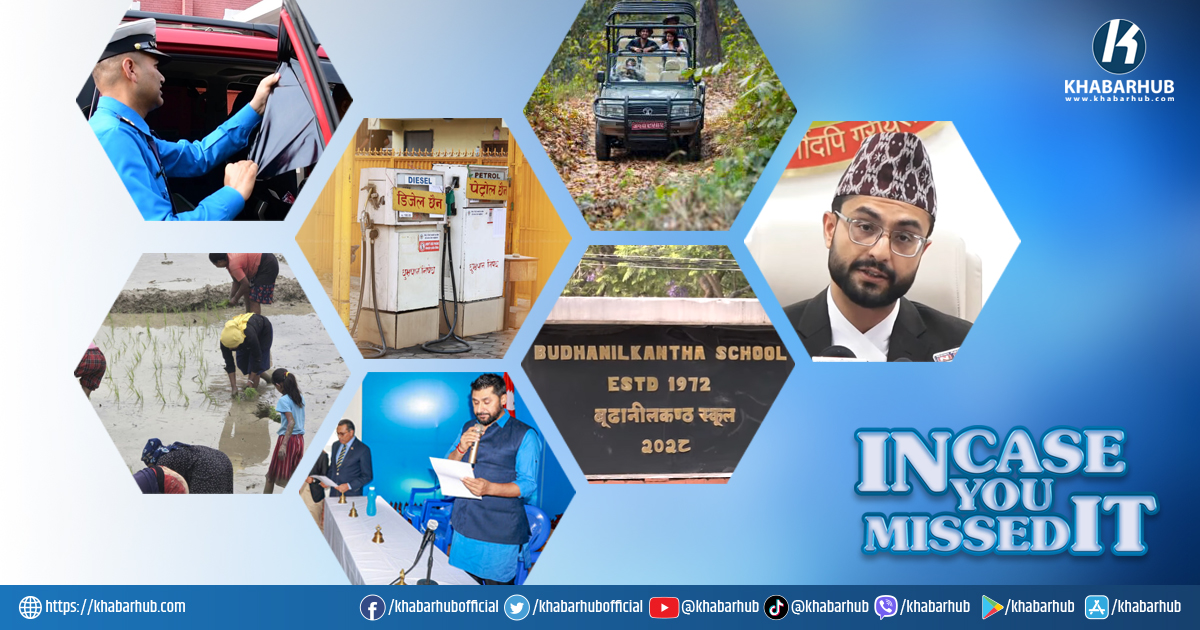
NOC cuts fuel and LPG prices
The reduction in fuel and LPG prices by Nepal Oil Corporation reflects alignment with global petroleum market trends and automatic pricing mechanisms. The significant cuts across petrol, diesel, aviation fuel, and LPG provide immediate relief to consumers and transport operators.
The variation across categories of pricing zones also highlights Nepal’s geographically differentiated fuel distribution system.
Meanwhile, the introduction of strict penalties for fuel station closures represents a regulatory response to supply disruptions. The escalation of fines up to Rs 1 million indicates a strong deterrence-based policy approach.
The policy emerged after dealers disrupted supply anticipating price changes, revealing tensions between regulatory authorities and private fuel distributors.
Former UML lawmaker Laxmi Mahato Koiri arrested
The arrest of former lawmaker Laxmi Mahato Koiri following a High Court reversal underscores the evolving nature of judicial accountability. The case highlights the tension between lower court acquittals and appellate court convictions in politically sensitive cases.
TUTH resumes health insurance services
The resumption of health insurance services at Tribhuvan University Teaching Hospital after a prolonged suspension illustrates the financial interdependence between public hospitals and state insurance systems. The clearance of outstanding dues demonstrates the importance of timely reimbursement mechanisms.
Newly elected RSP office bearers and central members take oath
The oath-taking of newly elected RSP office bearers reflects internal consolidation within the party following its general convention. The absence of the Prime Minister from the ceremony may indicate internal political signaling or scheduling divergence.
German Embassy’s refusal
The German Embassy’s clarification on ‘misleading’ reports on passport procurement case underscores the importance of diplomatic precision in reporting sensitive international issues. Its emphasis on judicial independence and denial of warnings reflects a cautious diplomatic stance.
Removal of tinted windows
The enforcement action against tinted vehicles used by senior officials signals symbolic compliance with traffic laws. It also demonstrates an attempt to reinforce rule of law by applying regulations even to high-ranking officials.
On the other hand, the suspension of jeep safaris in Chitwan National Park reflects seasonal ecological management practices, balancing tourism with wildlife protection during monsoon breeding seasons.
Meanwhile, the National Paddy Day highlights the structural importance of rice cultivation in Nepal’s agricultural economy. Despite productivity gains, the persistent annual deficit of about 1 million metric tons underscores ongoing food security challenges. The government’s focus on climate-resilient rice varieties reflects adaptation to increasing climate variability, particularly droughts and floods affecting agricultural output.






Comment