




KATHMANDU: Historical records suggest that rap music emerged centuries ago, though pinpointing an exact date remains difficult. What is clear, however, is that rap was first used as a voice of resistance and revolution.
In the 1970s, marginalized African American communities in the United States used rap to raise their voices against social and economic discrimination imposed by white-dominated systems. From there, rap began to flourish. Over time, white artists also entered the genre, linking it to commercial markets and broader cultural platforms. Rap eventually established itself as a powerful and mainstream musical form.
At its core, rap remains closely associated with revolution and change. It carries a legacy of resistance. Today, like other musical genres, rap is globally accepted as a form of entertainment, but its political roots have never fully faded.
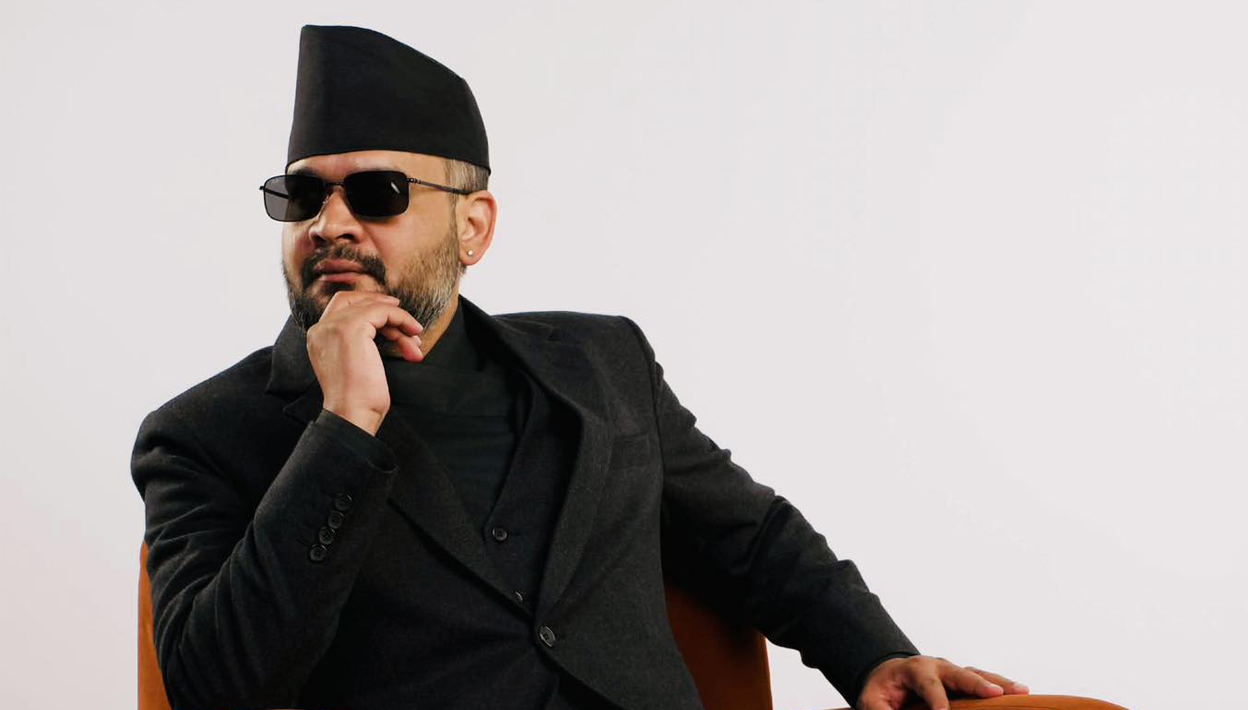
Former Kathmandu Mayor Balendra Shah ‘Balen’ is one such figure who entered politics from a rap background. While his rap songs were not overtly revolutionary, he did perform a few tracks infused with social and political consciousness.
Balen’s entry into politics is widely viewed as an attempt at change. As part of a strategy to challenge what it calls the power syndicate of traditional parties, the Rastriya Swatantra Party (RSP) has projected Balen as a future prime ministerial candidate.
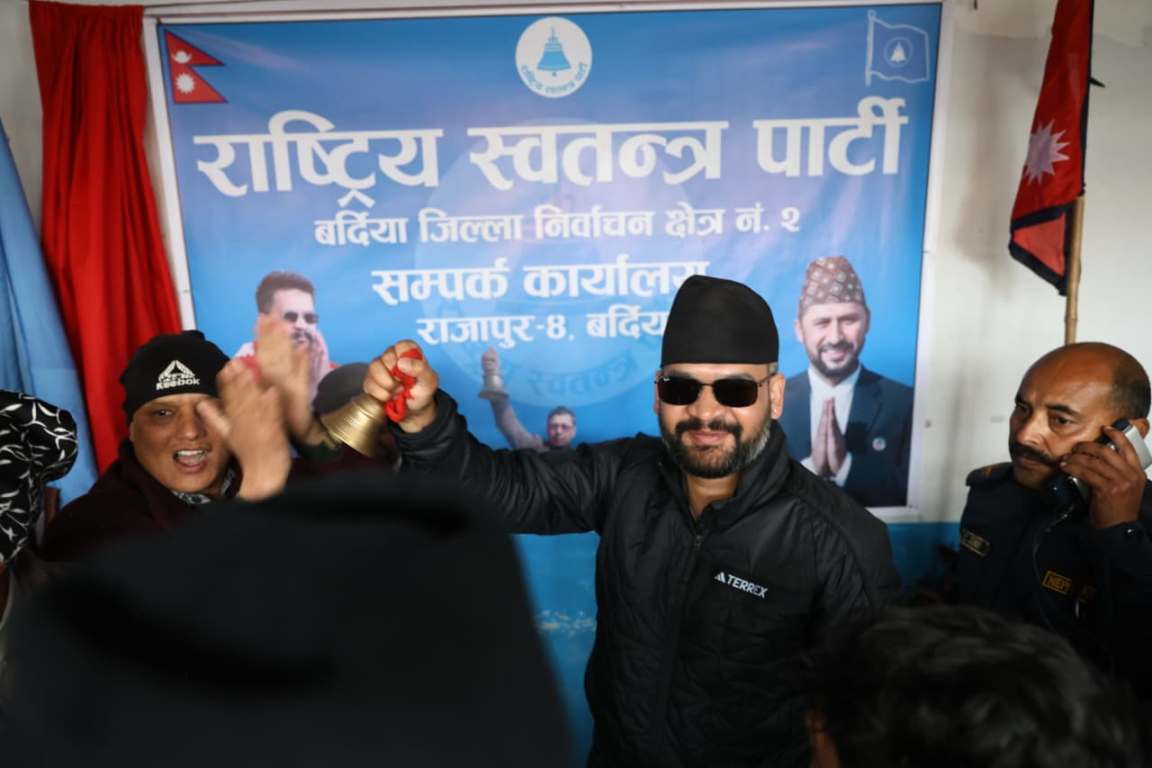
Balen has filed his candidacy from Jhapa-5 under the RSP banner, directly challenging UML Chair KP Sharma Oli, who has remained in power politics for decades. The objective behind Balen’s candidacy is explicit, to prevent Oli from becoming prime minister for a fourth time.
Balen commands a strong nationwide support base. His supporters believe he represents hope for change and can displace leaders who, in their view, have failed to deliver development despite enjoying prolonged access to power. They believe Balen can lead a development revolution in the country.
In that sense, a significant section of the public has already declared Balen as a symbol of hope. He is being portrayed as the alternative, the embodiment of aspirations for systemic change.
Nepal envisions transformation through democratic means. Sovereign power rests with the people, and political parties must rely on public mandate to reach power. Voters are free to exercise their franchise based on conscience.
Advocates of change often view music as an effective tool to amplify their voices. This is why some political parties have even formed dedicated music and cultural departments. In politics, music often becomes a weapon.
The trend of artists composing election-centric songs in support of specific parties or individuals has been growing. In Balen’s case too, several songs, especially rap tracks carrying the legacy of the voice of change, have been released in his support.
Which rappers have sung in support of Balen?

Among mainstream rappers, VYOMA appears to be the only prominent artist to have released rap songs openly backing Balen. During the previous local elections as well, VYOMA had produced a rap song in Balen’s support. In the ongoing House of Representatives election, he has once again aligned himself with Balen.
VYOMA recently released a rap song titled ‘Jhapa-5’, portraying Balen as a leader capable of representing the aspirations of the new generation, carrying a vision for development, and embodying the sentiments of the poor, the marginalized, and martyrs. The song urges voters of Jhapa-5 to vote for Balen, arguing that the nation needs him. It also explicitly calls for votes in favor of Balen’s party, RSP.
By rapping in favor of the change sought by ordinary Nepalis, the song can be considered revolutionary in intent. However, the change envisioned is firmly anchored to Balen and RSP. How audiences interpret this remains a matter of personal discretion.
Underground rapper Ayux has also released a rap track titled ‘Vote for Balen’. The song frames Balen as essential for amplifying the voice of the youth, ending political distortions, and driving development in the country.
Another rapper, Sukraj Khadka, has highlighted Balen’s election slogan ‘Abaki Baar Balen Sarkar’ through his song, while also promoting RSP’s election symbol, the bell.
Similarly, rapper BG Bir Gorkhali has released a rap song titled ‘Jhapa-5’, urging voters to support Balen on the belief that the country will develop if he comes to power.
In essence, these rappers have used rap as a weapon to amplify the voice of change. However, their approach remains clearly centered on a specific individual and party.
Their inability to directly challenge the political system, root causes of problems, and entrenched political culture can be seen as a limitation. Idolizing a single party or individual in artistic creation does not align with the image of an independent artist, especially since artists are considered representatives of all people.
This raises natural questions: Would it not have been enough to focus on critiquing systemic problems and outdated politics? Was it necessary to idolize an individual or party? Is highlighting a party slogan truly the role of a rapper?
Another notable trend is the widespread use of artificial intelligence in producing rap songs in support of Balen. Dozens of AI-generated songs supporting him can be found on YouTube.

And not just rap, there is a flood of songs across genres.
Songs supporting Balen have also been released in Maithili and Bhojpuri. However, many of these appear to be AI-generated.
A Maithili song titled ‘Ghanti Wa Mohar Lagaidiha Na’, voiced by Laxmita Thakur, has been released in Balen’s support.
Singer Surya Khadka’s folk song ‘Ghanti Tinini’, which supports RSP, has crossed over one million views. The song was originally released two years ago, at a time when Balen was not part of RSP. A month ago, Khadka re-uploaded the song, this time adding Balen’s image to the thumbnail.
The song features now-popular singer Arjun Sapkota, who was not well-known at the time of its original release.
Dozens of lesser-known singers have also produced songs supporting Balen, alongside numerous AI-generated tracks.
These songs largely depict old political leaders as corrupt, argue that leaders like Rabi Lamichhane and Balen Shah should come to power, and openly praise both the individuals and their party.
A song sung by popular singer Shantishree Pariyar in support of Rabi Lamichhane has gone viral ahead of the election. However, she did not produce the song as part of an election campaign.
Six years ago, when Rabi Lamichhane was embroiled in a journalist suicide case, Shantishree had released a song titled ‘Hami Mari Bachaunchhau Rabi Dai’. At the time, Lamichhane was neither involved in cooperative fraud cases nor active in politics.






Comment