




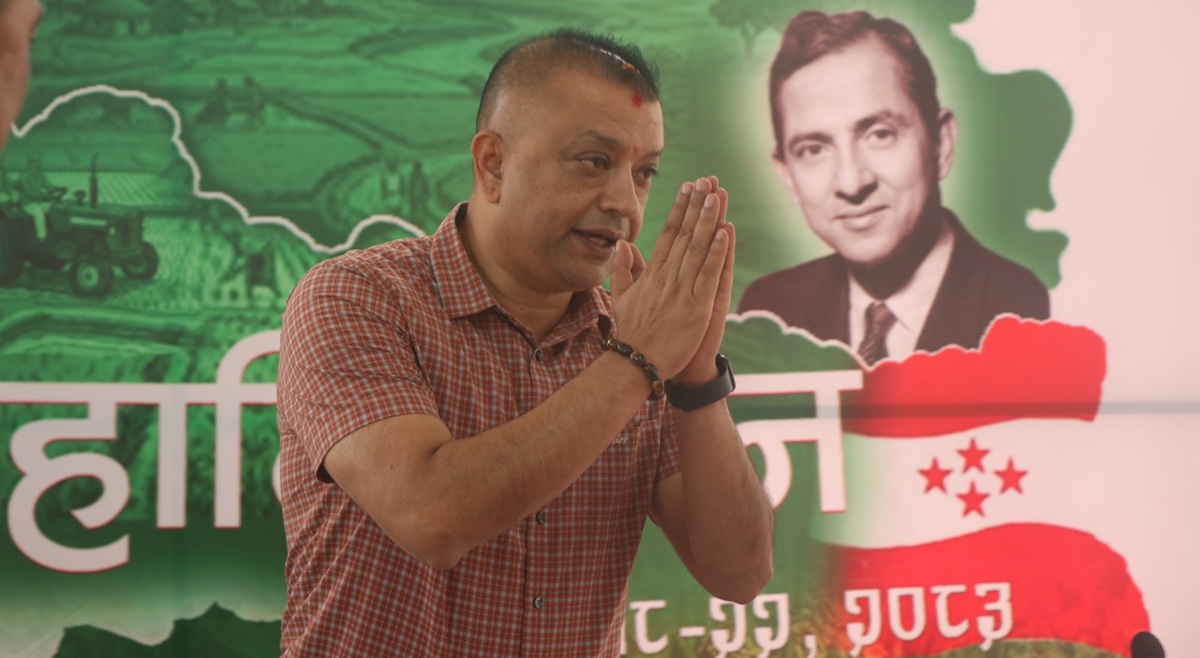
KATHMANDU: The Central Working Committee of the Nepali Congress has approved the political report that party President Gagan Thapa will present during the closed session of the 15th General Convention.
The report outlines the political, ideological, organizational and economic direction of the Congress for the next four years. It covers a wide range of issues, including a review of the party’s past performance, the government’s role and accountability, a policy of not forming pre-election alliances, party restructuring, cooperation with the private sector, youth participation and the vision of a “Prosperous Nepal, Respected Nepalis.”
In the report, Thapa acknowledges that the party has prioritized positions and power over its core objectives over the past two decades. He states that coalition politics, internal divisions, factionalism and transactional politics have weakened the party’s moral foundation, while the tendency to protect party-aligned individuals in cases of corruption and irregularities has undermined the autonomy of public institutions.
The report also states that the Congress has become increasingly disconnected from the younger generation and has failed to adequately understand changing public expectations. It proposes reforming the party and seeking forgiveness from the people through the second special general convention.
The report covers the historical contribution and self-evaluation of the Nepali Congress, the September 8-9, 2025 public uprising and the party’s electoral defeat, the role of the opposition, and new policies on elections and alliances.
It also proposes ideological renewal of the Congress, the “Prosperous Nepal, Respected Nepalis” vision, a five-question accountability system for major government and public decisions, and a digital platform through which citizens can access information on development projects, budget expenditures and responsible officials.
Other issues covered in the report include the economy and private sector, predistributive justice, employment, migration and population, agriculture, industry and production, climate change and green development, technology and artificial intelligence, the social sector, federalism and the Constitution, transitional justice, national independence and the changing global environment.
The report also addresses a new concept of national reconciliation, organizational reform and leadership transition across five generations, corruption control and internal party discipline, public commitments on “what we will not do,” a two-term limit for the prime minister, electoral reform, a revolving fund for martyrs, injured and displaced people, special arrangements for youth, and a timeline for implementing “Samunnati.”





Comment