




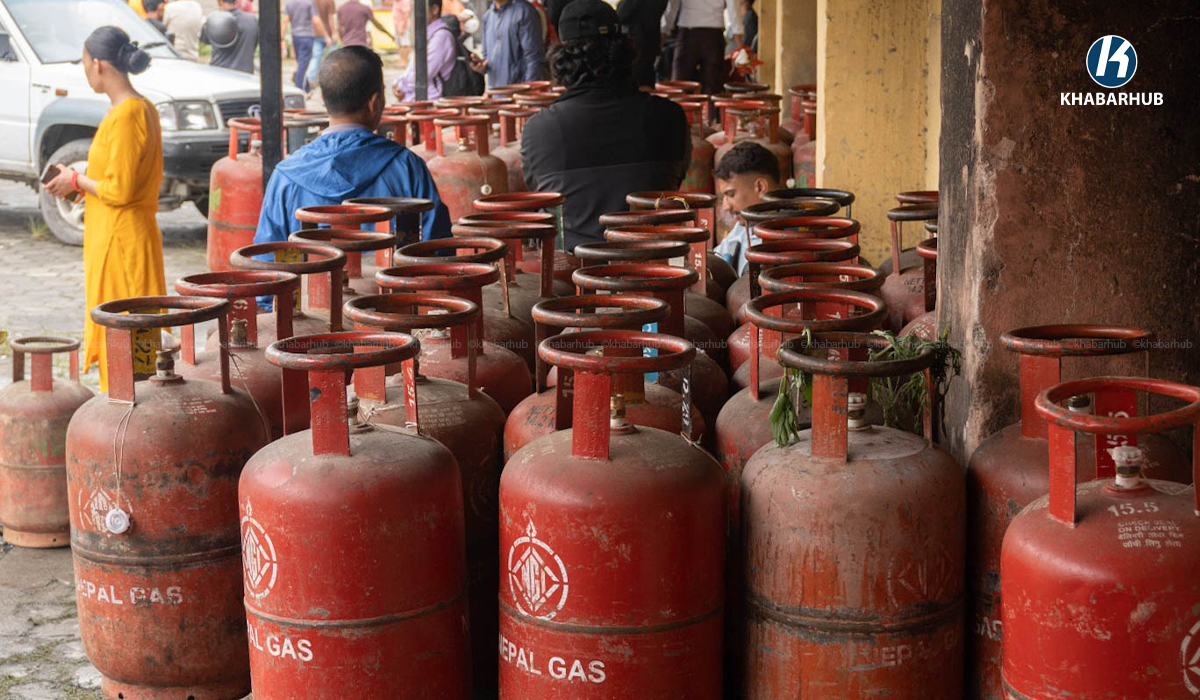
CHITWAN: Gas companies have stepped up efforts to prevent a shortage of liquefied petroleum gas (LPG) in Kathmandu Valley after the Prithvi Highway was disrupted at Krishnabhir, Dhading.
Following permission from Nepal Oil Corporation (NOC) to bottle LPG cylinders outside the Kathmandu Valley, gas industries have begun transporting empty cylinders to plants outside the valley, filling them and sending the filled cylinders back to Kathmandu through alternative routes.
Nepal LP Gas Industry Association President Diwan Chand, outgoing president Shiva Ghimire, former president Gokul Bhandari, association member Bimal Kalakheti and others have been coordinating with transport entrepreneurs in Makawanpur to facilitate the movement of LPG cylinders.
According to former association president Bhandari, industries outside Kathmandu have a limited supply of empty cylinders. As a result, empty cylinders from Kathmandu need to be transported to plants outside the valley, where they are filled before being brought back. This arrangement requires trucks to make separate trips to transport empty and filled cylinders.
Bhandari, who also operates Nepal Gas, said his company has started bottling its cylinders at Nepal Gas Gandaki in Chitwan. However, limited availability of empty cylinders has prevented the company from meeting the full demand. Nepal Gas currently supplies around 11,000 cylinders a day in Kathmandu Valley and plans to increase deliveries to between 8,000 and 10,000 cylinders daily through the new arrangement within the next few days.
Association member Kalakheti said other gas companies have also begun transporting empty cylinders outside the valley for bottling. However, transportation has been delayed because vehicles are not allowed to operate on the Kanti Lokpath at night, affecting the movement of trucks carrying empty cylinders.
Several companies have begun using plants outside Kathmandu to bottle and transport LPG to the valley. Baba Gas has sent Shree Gas cylinders to Kathmandu after bottling them, while Sai Baba Gas has sent its own cylinders. Shree Ram Gas of Naubise has sent cylinders to Janaki Gas in Gaindakot, while Kathmandu-based Everest and Sugam Gas cylinders have been filled at Sahara Gas in Hetauda.
Sagarmatha Gas of Banepa, Chandi Gas of Nawalparasi, Lokra Gas of Banepa, Super Gas, Tara Gas and other companies have also started bottling their cylinders at gas plants outside the capital and transporting them to Kathmandu via the Tribhuvan Highway. According to the association, there are 16 gas industries in Kathmandu Valley and surrounding districts involved in the supply chain.
Association President Chand said Kathmandu Valley normally consumes around 40,000 LPG cylinders a day, but demand has currently surged to around 100,000 cylinders a day due to concerns over supply disruptions.
He said coordinated arrangements for bottling and transportation are expected to ease the situation within a few days. Chand also urged consumers not to stockpile LPG and to exchange cylinders only when necessary.
A gas bullet tanker carries around 450 cylinders’ worth of LPG, while a large truck can transport around 500 filled cylinders or approximately 600 empty cylinders. Around 40 percent of the LPG supplied by Nepal’s 58 gas industries is consumed in Kathmandu Valley.
Gas industries located near the capital have also started operating in two shifts to increase supply. Chand said 60,200 metric tonnes of LPG were imported from India last month, the highest monthly volume recorded so far, and that there is currently no shortage of LPG at the import stage.
Salt Trading also adopts alternative LPG supply arrangement
Salt Trading Corporation Limited has also begun filling LPG in its ‘STC’ cylinders in cooperation with private gas companies to maintain a regular supply of cooking gas in Kathmandu.
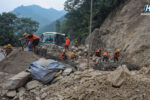
After the Trishuli River damaged the Prithvi Highway at Krishnabhir in Dhading last Sunday, the corporation decided to have LPG bottled in its STC cylinders at private gas plants located at accessible locations and transport the filled cylinders to Kathmandu through alternative routes.
The highway disruption has also affected the corporation’s LPG plant at Jugekhola in Dhading. As gas tankers have been unable to reach the plant, the corporation has coordinated with private-sector plants, including Manoj Gas, to fill its empty STC cylinders and transport them to the valley.
The corporation said the arrangement was introduced to prevent a potential LPG shortage during the current disaster situation.
Although Nepal Oil Corporation has allocated the corporation a limited quota through purchase orders (PDOs), Salt Trading has been unable to sell LPG according to demand. The corporation has an agreement with Indian Oil Corporation for 325 gas tankers, but only around 2 percent, or 53 tankers, have been allocated to it, according to the corporation.
Salt Trading currently consumes around 55,000 to 60,000 STC cylinders per month.
While private-sector gas companies have faced supply and transportation challenges due to the Gulf crisis and the disruption of the Prithvi Highway, among other factors, Salt Trading said it has continued to facilitate LPG sales and distribution through a coupon-based system.




Comment