




KATHMANDU: The government has begun preparations to resolve the long-standing dispute over unpaid telecommunication service charges, royalties, and contributions to the Rural Telecommunication Development Fund (RTDF) owed by internet service providers (ISPs).
The Ministry of Information and Communications has intensified consultations with stakeholders to address issues related to arrears, tax assessments, and license renewals that have remained unresolved for years.
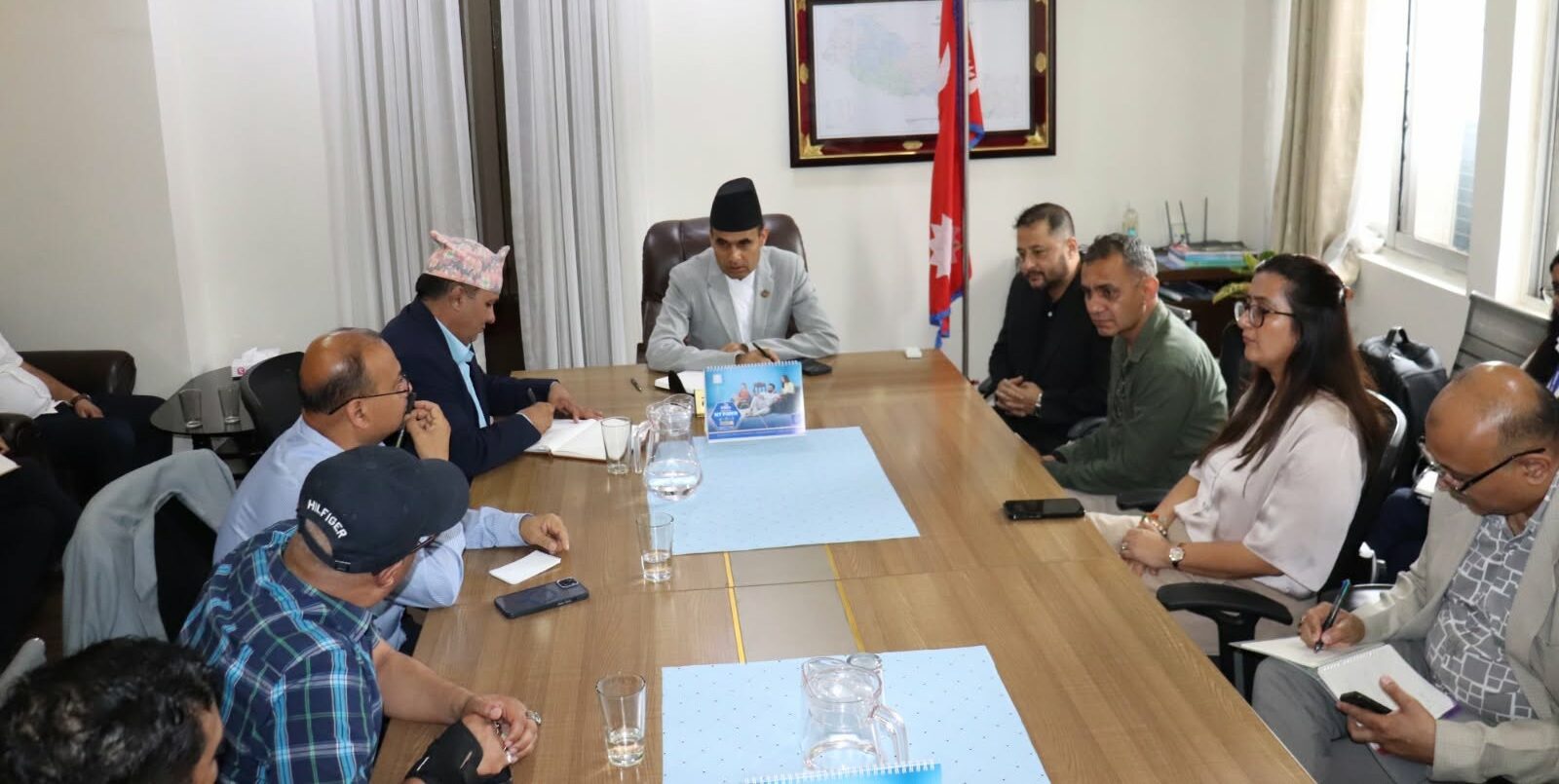
During a meeting with officials of the Internet Service Providers’ Association Nepal (ISPAN) on Wednesday, Minister for Information and Communications Dr. Bikram Timilsina clarified that taxes and fees legally due to the government would be recovered under any circumstances.
“If taxes or fees have been determined in a manner that is inconsistent with existing laws and unfair to internet service providers, the government can review them,” he said. “However, amounts that are legally due cannot remain pending indefinitely. If there is a genuine problem, the government will address it; otherwise, the recovery process will move ahead.”
Dr. Timilsina said the government is treating the current fiscal year as a period of reform for the telecommunications sector and intends to resolve policy and administrative problems that have persisted for years.
He also urged ISPAN to submit written suggestions clearly outlining the problems faced by service providers, the support expected from the government, and the areas requiring improvement.
The Nepal Telecommunications Authority (NTA) has maintained that the licenses of ISPs cannot be renewed until outstanding dues are paid. During the discussion, the minister reiterated that service operation and license renewal cannot be expected without paying the amounts required by law.
He further noted that Nepal has a large number of internet and telecommunications service providers, creating challenges for effective regulation and monitoring. He suggested that mergers and acquisitions among service providers could be considered.
According to the minister, a smaller number of capable and financially strong service providers would be more beneficial for both consumers and regulators than having many financially weak companies.
During the meeting, ISPAN requested the government to allow payment of outstanding dues in installments, arguing that service providers are under severe financial pressure and cannot pay five years of dues at once. The association specifically sought installment facilities for royalty payments and contributions to the RTDF.
ISPAN also said that many service providers have faced additional difficulties after the NTA decided not to renew the licenses of companies with unpaid dues. According to the association, the suspension of license renewals has affected service expansion, banking transactions, and overall business operations.
The association further demanded a review of the method used to determine the Telecommunication Service Charge (TSC). It also sought an opportunity for reassessment of tax determinations made by the Large Taxpayer Office. Service providers argued that they are being required to pay taxes on amounts that have not yet been collected from customers.
At present, most ISPs are required to pay, in addition to taxes owed to the Inland Revenue Office, four percent of their total income as royalty to the Ministry of Information and Communications and two percent to the RTDF through the Nepal Telecommunications Authority.
Despite repeated directives from the NTA requiring service providers to deposit these amounts, along with additional fees based on audited financial statements in accordance with prevailing laws, many companies have not complied.
The Office of the Auditor General has repeatedly highlighted in its annual reports that unpaid royalties, RTDF contributions, and other fees owed by service providers remain unrecovered and should be collected by the government.




Comment