




KATHMANDU: The Nepali Congress (NC) has scheduled its 15th general convention for October 2–5. Since the announcement, reports have emerged that leaders aligned with former party president Sher Bahadur Deuba have become active in opening liaison offices and holding separate meetings, fuelling speculation about internal divisions and a possible split within the party.
However, leaders close to former acting president Purna Bahadur Khadka say there is no consensus among Deuba loyalists on breaking away from the party.
Although uncertainty remains over whether all factions will participate unitedly in the 15th general convention, some leaders have alleged that Deuba, who is currently undergoing medical treatment abroad, has instructed his supporters not to cooperate with the leadership that emerged from the special general convention.
Leaders backing the special convention, however, insist the party will remain united during the upcoming convention.
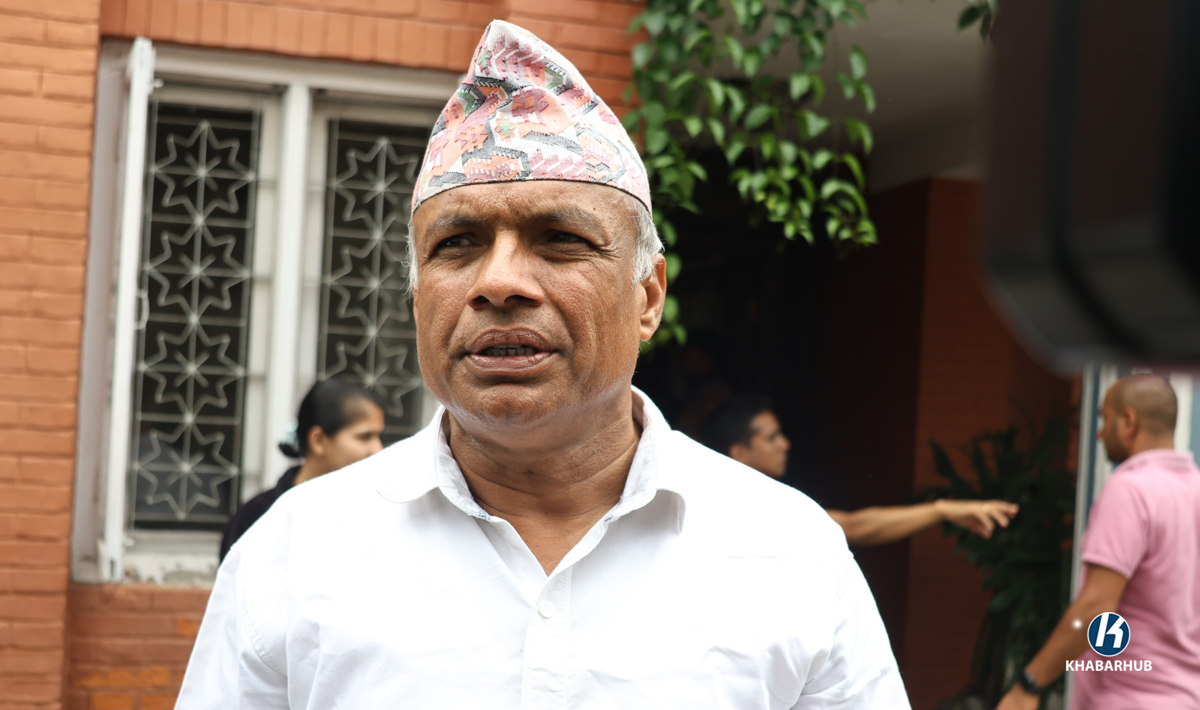
Gururaj Ghimire, who was elected general secretary through the special general convention, is currently in Simara as part of the party’s expansion campaign. In an interview, he spoke about internal disputes, preparations for the 15th general convention, youth participation and the latest political developments. Excerpts:
There is speculation that the Nepali Congress is heading towards a split. Is the party on the verge of breaking apart?
The Nepali Congress has not split, and it will not split. There may be differences of opinion within the party, but there is also common ground that binds us together. I do not believe the party will split in the future either.
The special general convention elected Gagan Thapa as president and you as general secretary. However, the rival faction dismissed it as illegitimate. How do you respond?
The Election Commission has already recognised the special general convention as lawful and conducted in accordance with due process. The Supreme Court has also upheld its legality. Therefore, allegations questioning its legitimacy are baseless. Those making such accusations should reflect on their own conscience. Such remarks are neither justified nor constructive.
Our objective was not merely to assume leadership but to reform and strengthen the party from within. To prepare the Nepali Congress for future challenges, we must transform not only its leadership but also its internal culture, policies and organisational structure. The special general convention was held with that objective, and there should be no dispute over its legitimacy.
The establishment faction is holding separate meetings and opening liaison offices. How do you view these developments?
There is nothing wrong with opening a liaison office or holding meetings. Party leaders have every right to meet, discuss and prepare for the 15th general convention. However, such activities should not be aimed at weakening the party or creating unnecessary divisions.
The practice of maintaining liaison offices is not new within the Nepali Congress. What matters is that all party members—whether they are in the Central Committee, serving in organisational responsibilities or outside formal positions—should work together to ensure a successful general convention, compete democratically and accept the outcome. There is no alternative to that path.
Has there been dialogue between the two sides?
Yes. During our discussions, they acknowledged the legitimacy granted by both the Supreme Court and the Election Commission. They should not say one thing in private discussions and do something different publicly.
They have, in effect, accepted our leadership. It appears they are also preparing to participate in the 15th general convention while recognising leaders elected through the special general convention. We have never been opposed to dialogue.
However, discussions must be consistent and conducted in good faith. Even if there are disagreements, everyone should abide by the party’s constitution, rules and policies. The party president and all of us are serious about this, and if necessary, we are ready to resume dialogue.
Do you see the recent activities of leaders outside the establishment as normal?
Yes. We do not consider such activities abnormal. They did not agree with the decision to hold the special general convention, so it is natural for them to organise separately.
However, now that the questions surrounding the leadership and the special general convention have largely been settled, our shared priority should be to organise the 15th regular general convention in a united manner. This has also been reflected in our discussions with them. Dialogue has continued, although its scope and effectiveness remain matters for both sides to consider.
What preparations are underway for the 15th regular general convention of the Nepali Congress?
We have already fixed the dates for the 15th general convention, which will be held from October 16 to 19, and preparations are in full swing. The election schedule has also been announced. All activities, from the primary elections to the central general convention, will be carried out according to the published timetable. We are committed to holding the general convention within the scheduled timeframe.
All party members will be invited to participate. We want the convention to be inclusive and united. Those who have disagreements will also take part. We are committed to respecting their sentiments, giving them appropriate space and ensuring their meaningful participation in the process.
What should the Nepali Congress do to ensure the general convention is successful and brings the party together?
The Nepali Congress has spent eight decades fighting for the rule of law and democracy. During that time, we helped establish constitutional governance, restore democracy and eventually institutionalise the republic. Today, both the country and the party must be governed by the rule of law.
Within the party, everyone should respect the party constitution. The current leadership emerged through the procedures laid down in the party statute, and that process should be accepted without controversy.
Once the leadership is accepted, the party’s constitutional processes and decisions should also be respected. We are prepared to fulfil our responsibilities, provide space to all leaders where necessary and listen to their concerns.
We are willing to address legitimate issues as much as possible. However, everyone must accept the supremacy of the party statute and the rule of law. That is the only way to avoid unnecessary disputes.
In the past, the Nepali Congress and other parties have failed to hold their general conventions on time. What assurance can you give that this one will not be delayed?
We have not changed the schedule or postponed the convention so far. The party constitution provides only limited flexibility, allowing a delay of one or two months if absolutely necessary. At most, the convention could be extended until November if unforeseen circumstances arise.
However, our intention is to hold it on the scheduled dates. If everyone follows the rules and procedures, there should be no difficulty in completing the convention on time. The 15th general convention of the Nepali Congress will certainly take place, and there should be no doubt about that.
Are you confident that the Nepali Congress will enter the 15th general convention as a united party?
The Nepali Congress remains one party. There are differences of opinion, but diversity of views is natural in a democratic organisation.
Factional politics has existed since the party’s founding. Leaders with similar views have always worked together, while those with differing views have formed separate groups. Such competition is part of the party’s democratic tradition.
What matters is that the competition remains healthy. We should compete through our work, strengthen the party organisation, expand the party’s support base, improve its public image and create greater opportunities for the younger generation.
Unhealthy factionalism should be discouraged. Factions cannot be eliminated altogether, but they must function in a constructive and democratic manner.
Former party president Sher Bahadur Deuba is said to be running the Nepali Congress from abroad. Does that mean the leadership elected through the special general convention is merely symbolic?
Democracy does not recognise the supremacy of any individual. What it recognises is the supremacy of the party statute and its rules. Whether it is Sher Bahadur Deuba or any other leader, the party should not function under the shadow of an individual. It must operate as an institution, and all its processes should be institutionalised rather than driven by personalities.
The claim that one person is running the party from abroad is baseless and merely a rumour. It is neither true nor practically possible. The party should remain free from the personal influence of any leader, whether Sher Bahadur Deuba or anyone else.
Will Gagan Thapa again be your candidate for party president at the 15th general convention?
Gagan Thapa became party president through the special general convention. It is only natural that he would seek the presidency again at the 15th general convention. Whether he is elected, however, depends entirely on the decision of the general convention delegates.
Given the changing political landscape, how likely is it that the third generation of leaders will take over the party?
A large number of young leaders are already entering leadership positions. As for the top leadership, that will ultimately depend on the mandate of the general convention delegates. The party statute allows any eligible candidate to contest.
Young people are assuming leadership roles from the ward level to the central committee. If the party fails to become more youthful and provide greater opportunities to young leaders, it will struggle to meet the challenges of the present era. Strengthening youth participation and promoting young leadership are no longer optional—they are essential.
If younger leaders perform better than your generation, would you be willing to step aside?
Certainly. If younger leaders prove to be more capable than us, we should make way for them. We should never become an obstacle to the next generation. If they are more competent and better prepared to lead, we must willingly step aside.
I am not in the Nepali Congress for a position. My commitment is to ensuring that the party functions according to its constitution, principles and policies. I have no personal ambition for office. My focus is on strengthening the party by upholding the values it stands for.
You have been travelling across districts and provinces. What kind of feedback are you receiving from party supporters?
Many people believe it is time for new faces to take leadership. Some say the senior generation should move into an advisory or respected role and allow younger leaders to come forward.
Others argue that leadership should pass to the second generation rather than directly to the youngest generation. There are also those who believe the electoral setbacks faced by the major parties are largely the responsibility of the older leadership.
So, there are diverse opinions. However, only a small number of people fundamentally disagree with the current leadership. We are continuing to gain new supporters and engage with party members across the country.
Some people openly tell us where they think we have gone wrong, and we welcome that feedback. We listen carefully and take their suggestions seriously. Both senior and younger generations continue to join and support the party. Naturally, some people are dissatisfied, but that is part of democratic politics.



Comment