




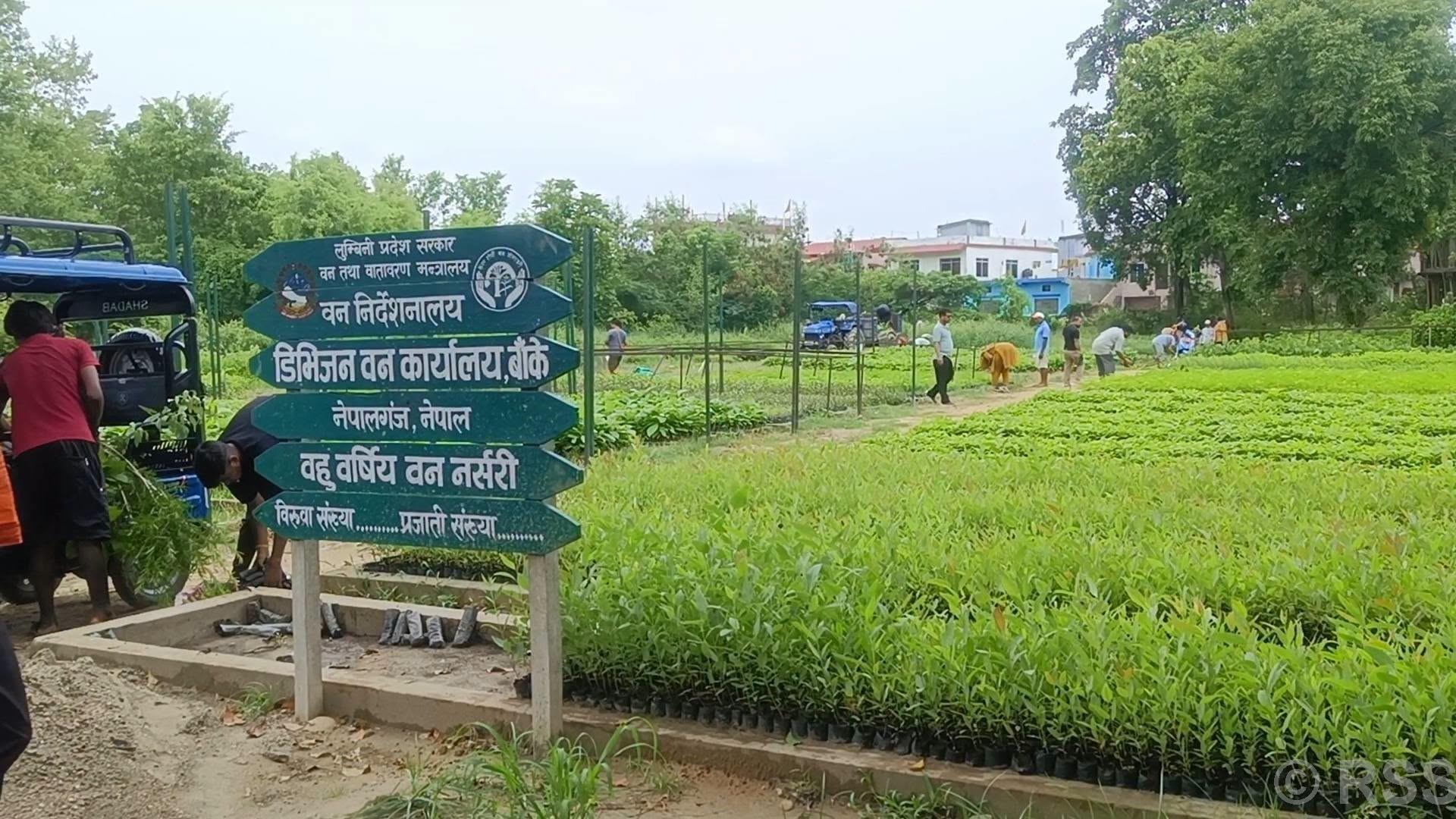
BANKE: The Divisional Forest Office, Banke, has begun distributing 6 lakh saplings of various species free of cost to farmers in a bid to promote greenery in the district.
According to Senior Divisional Forest Officer Shankar Prasad Gupta, a total of 678,172 saplings have been produced and distributed in the current fiscal year.
He said 588,872 seasonal saplings and 89,300 perennial saplings have been prepared this year, with distribution to farmers beginning from yesterday.
Species grown in large numbers include teak, clove, chinaberry (Persian lilac), eucalyptus, royal poinciana (flame tree), cinnamon, catechu (cutch tree), shisham (Indian rosewood), mango, white siris, silk cotton tree (kapok tree), birendraphool (ornamental canna), schima (Schima wallichii) and acacia.
Other species available in the nursery include Indian gooseberry, java plum (black plum), night-flowering jasmine (coral jasmine), sal tree, black siris, lemon, sandalwood, golden champa, golden shower tree (Cassia fistula), arjuna tree (Terminalia arjuna), Himalayan cypress (juniper), soapnut tree, camphor tree, kusum (Schleichera oleosa) and neelamphool (blue-flowering ornamental species).
The office said the saplings being distributed free of cost include timber, non-timber, fruit-bearing and ornamental species.






Comment