




A recent remark made in the House of Representatives by Prime Minister Balendra Shah, suggesting that Nepal has also encroached on Indian territory, has sparked political debate and criticism, particularly over its accuracy and diplomatic implications. The statement quickly drew attention as it touched on one of the most sensitive aspects of Nepal–India relations—longstanding border disputes that have historically required careful political and diplomatic handling.
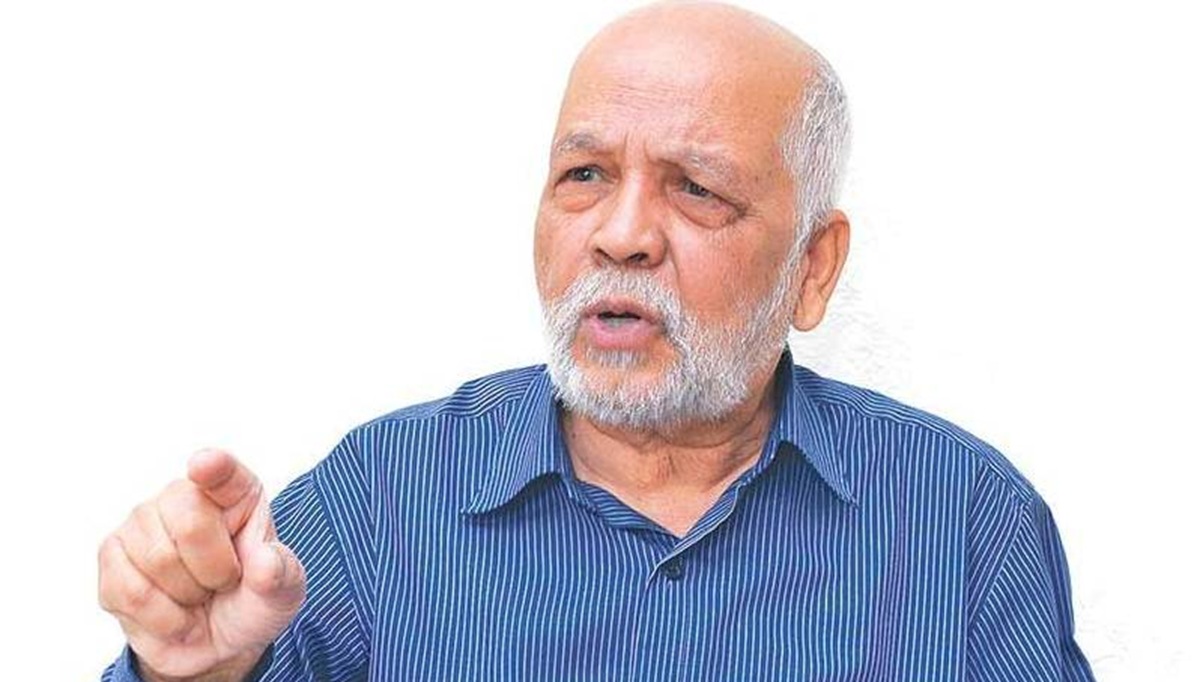
Amid this controversy, former Nepal ambassador to India Nilambar Acharya has strongly objected to the Prime Minister’s claim, calling it immature and based on incorrect information. Acharya, who has closely engaged with Nepal–India border issues and served as a member of the Nepal–India Eminent Persons’ Group (EPG), maintains that the vast majority of border disputes between the two countries—around 97 to 98 percent—have already been resolved through mutual understanding.
He further argues that there has been no official communication from India suggesting any Nepalese encroachment on its territory, making the Prime Minister’s statement factually unsupported. In this context, Acharya emphasizes the need for clarity, accountability, and diplomatic responsibility in such sensitive matters. In an interview with Khabarhub, he elaborates on the controversy surrounding the Prime Minister’s remarks, the state of Nepal–India border issues, and the broader implications for national interest.
Excerpts:
The Prime Minister, during Sunday’s House of Representatives meeting, stated that Nepal has also encroached on India’s border. What do you have to say about this?
The Prime Minister spoke incorrectly. Nepal has neither encroached upon nor occupied any Indian territory. His statement is contrary to the facts. India has never claimed that Nepal has encroached on or occupied its land, nor has it asked Nepal to withdraw from any territory.
It is our territory that has been occupied by India. What the Prime Minister said was inappropriate, unacceptable, and not befitting the office he holds. No prime minister of any country should make such a statement in parliament. One cannot stand in parliament and say that one’s country has occupied another country’s territory. Moreover, Nepal has not occupied any Indian land.
Despite widespread criticism, the Prime Minister has not felt it necessary to correct his statement. What do you think?
This is very unfortunate. Why this happened is something he himself must explain. The Prime Minister should clarify why he made an incorrect statement and why he was mistaken. Only he and his team can address that issue. Even the clarification issued by the Ministry of Foreign Affairs makes it clear that the Prime Minister said something he should not have said.
The Prime Minister himself must correct the matter. When a mistake is made, one should admit it and say, “I made a mistake,” and explain the reasons behind it. The Prime Minister must handle the situation himself. Such remarks damage both his reputation and the country’s dignity. Therefore, this issue should be addressed as quickly as possible. He should acknowledge the mistake and apologize. That is how one should move forward.
He has not apologized so far. What kind of impact could that have?
There is no reason why he cannot correct himself. If he refuses to do so, then it may not make much sense for him to remain in office. Where are our forces stationed in Indian territory? Just as India has occupied Kalapani, where has Nepal occupied Indian land?
Regarding border disputes, 97–98 percent of the issues between the two countries have already been resolved. Only Kalapani and Susta remain disputed. The dispute exists because our territory is under Indian occupation.
There may be issues concerning the no-man’s land and border pillars in various places. Those are border management issues and are a separate matter. By comparing those issues with Kalapani, the Prime Minister has weakened Nepal’s claim over Kalapani. He presented the matter in an overly simplistic manner. This cannot be accepted.
After the Prime Minister’s controversial statement, the opposition has continuously obstructed parliamentary proceedings. Why do you think the Prime Minister is refusing to apologize?
The Prime Minister needs to show a little more resolve. His personality may not allow for that. In politics, one must be able to listen to criticism and opposition, apologize when necessary, and engage in self-criticism after making mistakes. Perhaps he will learn these things over time. But he should be flexible and apologize for what he said on this issue.
I repeat: this is not a minor matter at all. He should come to parliament, bow his head, and apologize to the Nepali people and the opposition.
Is there any reason at this point to question the Prime Minister’s intentions?
I do not know. Until we hear an explanation directly from him about why he said it and how the statement came about, I do not think there is sufficient reason to question his intentions.
If he says that he deliberately made the statement and genuinely believes Nepal has encroached on India’s border, then we can assess it differently. If, however, he says he made the statement because of incorrect reporting or information and apologizes to the Nepali people, then that is a different matter.
Therefore, without hearing his explanation, there is no basis to question his intentions. The fact remains that he spoke incorrectly. He should not have made that statement. It has harmed Nepal’s national interest and undermined the country’s position.
Could he have been referring to situations where rivers change course and land shifts from one side to the other?
No. As I mentioned, 97–98 percent of the border issues between Nepal and India have already been settled through mutual understanding. Agreements have even been signed by the relevant government agencies of both countries.
If problems arise in such areas, they are not issues of border disputes or encroachment. They are problems faced by local residents, and we have adopted various measures to address them.
Even when rivers change course, we recognize the boundary as it existed when the maps were drawn. We follow the principle that a river changing its course does not alter the border. Based on that principle, the border has already been determined. Therefore, there is no issue of encroachment.
Nepal has not occupied any territory or crossed the border. Some people may have built houses in the no-man’s land, and some may have courtyards extending into it. That is why the no-man’s land should remain clear and preserved between the two countries.
Some houses may indeed be located right on the border. But that is a border management issue; it is not a case of the state deploying forces and occupying another country’s territory.
Therefore, the Prime Minister’s statement that Nepal has occupied Indian territory is simply not true. If Nepal had actually occupied Indian territory, India would certainly have protested. Have you heard any such protest anywhere? Even while we continue to submit diplomatic notes, India has never formally accused Nepal of occupying its land.
India has never responded to our diplomatic notes by saying, “You have also occupied our territory.” Yet the Prime Minister stood in parliament and made what I consider an embarrassing and immature statement.
Having worked in embassies for many years and having continued to follow this field, I have never seen any such situation. No country should make statements without facts. India claims Kalapani as its own, and we have explained that it belongs to Nepal. India claims Susta, and we continue to present our position. How the Prime Minister suddenly came to know otherwise is something that genuinely surprises me.
You have participated in various meetings on the Nepal–India border dispute and worked on efforts to resolve it. Has India ever expressed suspicion toward Nepal on this issue?
No. Why would it? We have never done anything of that sort. In fact, we recently sent another protest note. Even after the formation of the new government, a protest note has already been delivered to India. Every government has continued to send such notes on our behalf. Nothing comparable has ever come from the Indian side.
Is there any record anywhere of India sending a letter of protest accusing Nepal of occupying its territory? If such a record exists, the Prime Minister should show it to us.
The Prime Minister made a very immature statement. He must answer for it in parliament. He should go to parliament, apologize, provide clarification, explain himself, and engage in self-criticism immediately.
The Prime Minister should do whatever is appropriate to rectify the situation. By now, he must have realized that he said something in parliament that should never have been said.
What should be done now to correct the situation?
He should apologize in parliament and state clearly that Nepal has not occupied or encroached upon any Indian territory, that his statement was incorrect, and that he spoke on the basis of wrong information.
He should withdraw his earlier remarks and acknowledge that what he said was inaccurate. Standing before parliament, he should apologize to everyone.
At present, Rastriya Swatantra Party Chair Rabi Lamichhane is on a visit to India. Could the Prime Minister’s statement create difficulties for him?
Nepal and India share extensive fraternal relations. The Rastriya Swatantra Party is the country’s leading political party. Lamichhane has traveled to India at the invitation of the ruling party there, the Bharatiya Janata Party. Visiting India and making efforts to improve Nepal–India relations is a positive thing.
Meetings and dialogue should take place. Such engagements help improve relations between Nepal and India and strengthen mutual goodwill and understanding. Political leaders should meet both when there are problems between the two countries and when relations are good. That is natural.
We meet our own friends repeatedly as well. Nepal and India share many different kinds of relationships. Therefore, dialogue is always necessary.



Comment