




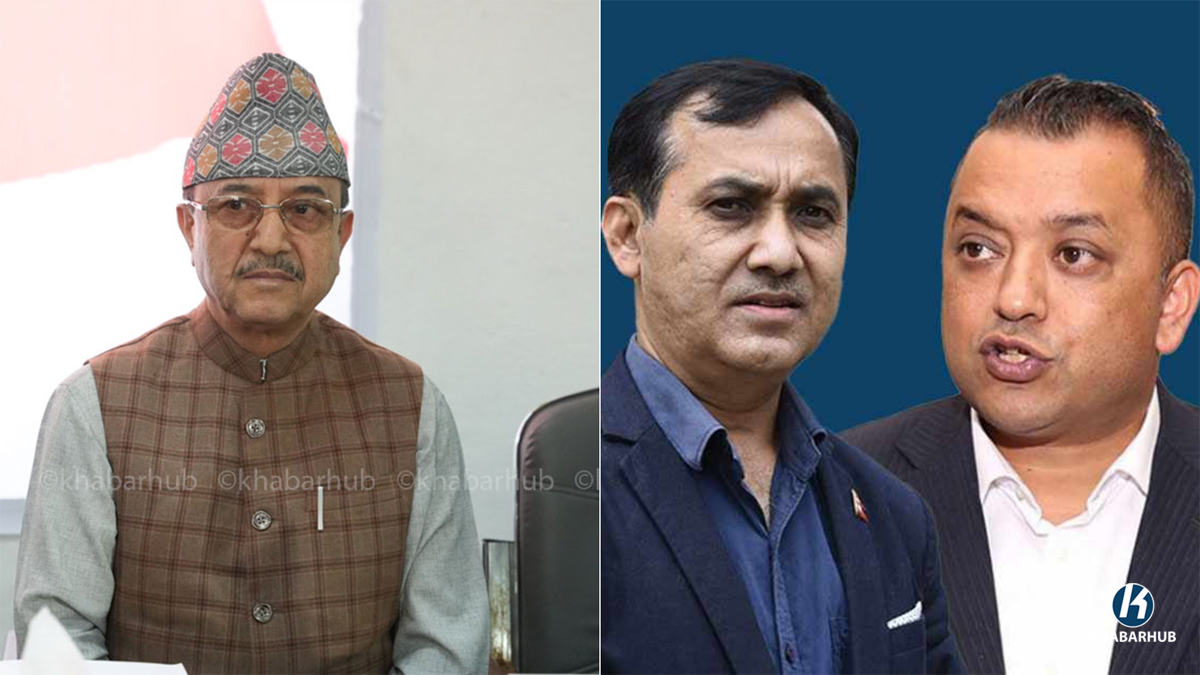
KATHMANDU: Internal tensions within the Nepali Congress (NC) continue to simmer months after the party’s leadership changed through the second special general convention held in January.
Following the convention, Gagan Kumar Thapa was elected party president with the backing of 54 percent of the delegates, replacing the old leadership. After the Election Commission formally recognized the new committee, Thapa led the party into the subsequent elections with official authority.
However, leaders aligned with the establishment faction, including Sher Bahadur Deuba and Purna Bahadur Khadka, challenged the legitimacy of the convention and the new leadership in the Supreme Court. While the case was under consideration, several senior leaders, including Dr. Shekhar Koirala, contested the March 5 elections.
Khadka himself remained publicly silent during the campaign but fielded his brother, Bishnu Khadka, from his constituency, where he emerged victorious.
The elections delivered a disappointing outcome for the Congress. All top office-bearers, including President Thapa, were defeated, and the party secured only 38 seats through the direct and proportional electoral systems. The results triggered accusations of internal sabotage and lack of cooperation among rival factions.
The power struggle did not end with the election. Competing groups continued parallel political activities until the Supreme Court, on April 17, ruled in favor of Thapa’s leadership, affirming him as the legitimate party president.
Following the verdict, Khadka publicly stated that the party should move forward in unity, while emphasizing that President Thapa needed to create a conducive environment for reconciliation. According to senior leader Min Bishwakarma, this position was discussed during a meeting at Khadka’s residence in Golfutar on April 18.
The first meeting between Thapa and Khadka took place the following day. Subsequently, Khadka’s faction held separate consultations in Dhumbarahi and adopted what leaders described as a “wait-and-see” strategy.
Khadka continued consultations with leaders close to him, including central committee members elected during the 14th General Convention, district presidents, and regional leaders from the Kathmandu Valley. On May 2, Thapa and Vice-President Bishwaprakash Sharma met Khadka again, although the talks did not produce any concrete breakthrough.
Since then, both camps have continued separate provincial-level meetings and discussions, with no further direct engagement between the two leaders.
Although Khadka has repeatedly stated that he accepts the Supreme Court’s decision recognizing Thapa as party president, he has continued to publicly criticize party decisions in his capacity as the outgoing acting president and former deputy prime minister, home minister, and defense minister.
The latest flashpoint emerged over the issue of active party membership. In a statement issued on June 1, Khadka argued that the active membership list finalized under the leadership of then General Secretaries Gagan Thapa and Bishwaprakash Sharma on December 25, 2025, should remain the basis for the party’s upcoming 15th General Convention.
“We are committed to ensuring that the active memberships finalized by December 25, 2025, and subsequently renewed and distributed, are retained and allowed to participate in the first general convention,” Khadka said in the statement.
His remarks came on the same day that the party announced a fresh active membership drive. Since April 14, the Nepali Congress has also been implementing its grassroots campaign as part of a digital membership update initiative.
The dispute over active membership has once again highlighted lingering factional divisions within the party, suggesting that despite the Supreme Court’s verdict, efforts to fully unify the Nepali Congress under Thapa’s leadership remain a work in progress.
Party spokesperson Devraj Chalise, however, defended the digital membership campaign and criticized attempts to undermine the initiative.
“Some individuals are making inappropriate remarks about the party’s effort to embrace digitalization in line with the times. If they choose not to participate in the process, it will be understood that they are encouraging the next generation to take the lead. They will continue to receive our respect,” Chalise said.
The Nepali Congress has decided to continue its digital active membership update campaign until June 4.
As Khadka continues to issue statements challenging party decisions despite publicly accepting the current leadership, the party’s Central Disciplinary Committee has begun reviewing the matter.
Committee coordinator Taraman Gurung said preparations were underway to convene a meeting on Thursday to discuss the issue.
“We are holding a meeting today (Wednesday) or the day after (Thursday) and take the necessary decisions.”
By the time this report was prepared, the party had already called a disciplinary committee meeting for Thursday.
Gurung said the committee was examining Khadka’s use of official party letterhead while issuing statements in the capacity of acting president, despite the Supreme Court having settled the party leadership dispute.
“Given the special circumstances following the Supreme Court verdict, the committee has not yet taken a decision on complaints regarding the issuance of statements using the party’s official letterhead as acting president. The matter remains under review, and a decision will be made after broader consultations within the party,” he said.
Committee secretary Dinesh Thapa Magar also clarified that the party statute does not provide former office-bearers with the authority to issue statements or decisions on behalf of the party after leaving office.
“The party statute does not grant any exemption allowing individuals to act contrary to decisions of the Central Working Committee based on a previous position. Such actions are considered a violation of party discipline,” Thapa Magar said.



Comment