





KATHMANDU: Economic Digest presents a brief yet comprehensive roundup of major business developments in Nepal, delivered in clear and accessible summaries.
Nepal’s economic landscape presents a mixed picture, combining market weakness, infrastructure vulnerabilities, institutional reforms and emerging opportunities. The Nepal Stock Exchange (NEPSE) declined modestly by 4.82 points to 2,598.89, while Rs 4.76 billion in turnover indicates continued investor activity despite broader market pressure. Rising gold and silver prices point to stronger demand for traditional safe-haven assets.
Infrastructure and supply risks remain significant. Bhote Koshi and Trishuli floods have disrupted 430 MW of generation capacity and could require up to Rs 390 billion for reconstruction, while damage to border crossings is disrupting trade and delaying goods worth an estimated Rs 5 billion. LPG shortages caused by highway disruptions further demonstrate Nepal’s dependence on vulnerable transport networks.
Nepal Airlines’ Rs 56 billion liabilities and urgent maintenance needs highlight persistent weaknesses in state-owned enterprises. Similarly, Gautam Buddha International Airport’s limited international connectivity reflects challenges in converting major infrastructure investment into economic returns.
At the institutional level, regulatory modernization is gaining momentum, with SEBON pursuing NEPSE reforms and the Insurance Authority introducing automated surveyor allocation. Meanwhile, initiatives such as the Founders Hub and skills-employment fair indicate efforts to strengthen entrepreneurship and domestic employment.
Overall, the reports suggest that Nepal’s immediate economic priorities center on resilience, infrastructure protection, institutional reform, and improving the effectiveness of existing investments.
NEPSE declines 4.82 points as turnover reaches Rs 4.76 billion
Nepal’s stock market recorded a modest decline on Wednesday, with the Nepal Stock Exchange (NEPSE) benchmark index falling 4.82 points to close at 2,598.89 points. The sensitive index, which measures the performance of large-cap companies, decreased 2.02 points to 464.63 points. The float index also dropped 0.43 points to 179.02, while the sensitive float index declined 0.65 points to 156.78 points. A total of 12,655,374 shares changed hands during the session, generating a turnover of Rs 4.76 billion. The total transaction value was recorded at Rs 4,765,127,885. Of the 13 sub-indices, three posted gains while 10 ended lower. Shares of 109 companies advanced, whereas 157 companies recorded losses. The prices of 13 companies remained unchanged.
Gold rises to Rs 293,300 per tola, silver reaches Rs 4,425
Gold and silver prices increased in Nepal’s domestic market on Wednesday. According to the Federation of Nepal Gold and Silver Dealers’ Association, the price of hallmark gold climbed Rs 2,800 per tola, with one tola equivalent to 11.66 grams, to reach Rs 293,300. Gold had traded at Rs 290,500 per tola on Tuesday. Silver also became more expensive, rising Rs 30 per tola to Rs 4,425. The precious metal was priced at Rs 4,395 per tola on Tuesday.
Finance minister elected vice chair of Asian Infrastructure Investment Bank
Finance Minister Swarnim Wagle returned to Nepal on Wednesday, September 30, after participating in the Annual Meeting of the Asian Infrastructure Investment Bank (AIIB) in Doha, Qatar. Wagle was elected vice chair of the bank for the 2026–2027 term. During the meeting, Wagle called for greater concessional investment in productive infrastructure, including roads, electricity and telecommunications. He also held bilateral discussions with the AIIB president and finance ministers from Qatar, India, Bangladesh, Armenia and Georgia on economic cooperation and support for post-disaster reconstruction. Meanwhile, adverse weather conditions have resulted in the closure of all border points between India and China.
LPG supply in Kathmandu Valley expected to normalize within a week
The Nepal Oil Corporation expects liquefied petroleum gas (LPG) supplies in the Kathmandu Valley to return to normal within a week, provided highway connectivity remains uninterrupted. LPG distribution was significantly affected for three to four days after continuous heavy rainfall caused major blockages along the Prithvi Highway. Nepal Oil Corporation Executive Director Nagendra Shah said gas-carrying tankers resumed movement after the highway reopened on September 28. According to Shah, around 100,000 gas cylinders have already been delivered to the Kathmandu Valley, while another 150,000 cylinders are currently on their way. Authorities said temporary supply shortages and distribution bottlenecks emerged after transportation remained halted for four consecutive days.
SEBON to begin NEPSE restructuring process following ministry directive
The Securities Board of Nepal (SEBON) is set to hold discussions with the Nepal Stock Exchange (NEPSE) board next week as it moves to begin a comprehensive restructuring of the country’s sole stock exchange. The planned overhaul will cover secondary market operations, trading systems and information technology infrastructure. Speaking at a Finance Committee meeting of the House of Representatives at Singha Durbar on Wednesday, SEBON Chairman Gopal Prasad Bhatta said the Ministry of Finance had instructed the board to implement recommendations made by a study committee headed by Prakash Jung Thapa. Bhatta said reforming NEPSE is important for strengthening the secondary market and acknowledged that regulatory oversight had been inadequate in the past. SEBON has prepared 31 to 32 new regulations covering areas such as trading mechanisms, order management, cybersecurity and information technology policy. These measures will be introduced in phases. Under a separate 21-point directive issued by the Ministry of Finance, SEBON will also prioritize improvements to the IT infrastructure of CDS and Clearing Ltd. (CDSC), with the aim of strengthening post-trade processing and operational efficiency.
Government prepares alternative power arrangements after Bhote Koshi floods
The government has begun preparing alternative electricity supply arrangements after severe flooding in the Bhote Koshi River damaged several hydropower projects and removed 430 megawatts of electricity from the national grid. The damage has disrupted electricity transmission through the Trishuli Corridor toward Kathmandu’s Balaju and Chapali areas, increasing pressure on alternative transmission lines serving those locations. In response, the Ministry of Energy, Water Resources, and Irrigation has started preparations to establish alternative supply infrastructure. Ministry spokesperson Mohan Kumar Shakya said the Nepal Electricity Authority (NEA) has formed a dedicated task force to oversee electricity supply in Kathmandu. Shakya said the ministry is also carrying out preparatory work to ensure alternative power arrangements are in place to meet peak demand during the coming winter. The ministry held discussions on Tuesday with the Department of Roads and Kathmandu Metropolitan City on constructing additional underground power networks and improving the reliability of existing underground distribution systems.
Bhote Koshi and Trishuli floods projected to cause Rs 390 billion in damage
The cost of rebuilding energy infrastructure damaged by recent floods in the Bhote Koshi and Trishuli river systems could reach Rs 390 billion, according to preliminary estimates. The floods have disrupted power projects with a combined generation capacity of 430 megawatts, equivalent to around 10 percent of Nepal’s total installed capacity of 3,300 megawatts. Projects with another 759 megawatts of capacity that are currently under construction have also been affected. Officials have linked the growing severity of extreme weather events to climate change, warning of increasing risks to Nepal’s water and energy infrastructure. The latest disaster follows other major events, including the Thame glacial lake outburst in 2024 and the Bhote Koshi floods in 2025. Authorities have identified 47 high-risk glacial lakes in the region, including 21 in Nepal, 25 in China’s Tibet region and one in India. Heavy rainfall between September 24 and 27 triggered 304 landslides and 87 floods, leaving 27 people dead and 1,082 injured.
Insurance Authority prepares automated system for surveyor assignments
The Nepal Insurance Authority is preparing to introduce an automated system for assigning surveyors to insurance claims, with initial trials of the platform beginning on the evening of September 28. The system is designed to automatically select suitable loss assessors using criteria such as technical expertise, geographic location, seniority and existing workload. The initiative aims to address longstanding concerns over uneven distribution of assignments and perceived favoritism. The platform currently contains profiles of 680 registered surveyors, including 88 institutional surveyors. Under the new system, individual surveyors will be permitted to handle a maximum of five active assignments at a time, while institutional surveyors can take up to 10 assignments. Online orientation sessions for 36 heads of information technology and claims departments from non-life insurance companies were scheduled for September 29 before the system is introduced more broadly across the industry.
Skills and employment fair highlights need to turn training into jobs
The immediate conversion of technical skills into employment opportunities is essential for strengthening Nepal’s economic foundation, speakers said at the opening of a skills and employment fair in Itahari on Wednesday. Organizers emphasized the need to develop young people into productive innovators and job creators rather than limiting them to the role of job seekers. They also pointed to the mismatch between the skills demanded by Nepal’s domestic labor market and those possessed by workers as a factor contributing to increasing labor migration. The five-day fair, scheduled from October 2 to October 6, seeks to bring job seekers, employers and training providers together across 10 thematic sectors. The program includes skill profiling, career counseling and practical training. The event also features cultural performances and panel discussions on youth entrepreneurship under the theme “Today’s Youth, Tomorrow’s Entrepreneur,” along with sessions focused on trainee selection and career guidance.
Three China border crossings remain closed, disrupting Nepal-China trade
Three major road crossings between Nepal and China remain disrupted after floods and landslides damaged roads, bridges and other infrastructure, affecting bilateral trade ahead of the Dashain, Tihar and Chhath festivals. The Rasuwagadhi-Kerung crossing suffered extensive damage from the Bhote Koshi flood on August 26, while the Tatopani crossing has also remained disrupted. The Korala crossing in Mustang was later affected by continuous rainfall and landslides between September 24 and 27. Ram Chandra Parajuli, general secretary of the Nepal Himalayan Transborder Commerce Association, said more than 700 containers carrying goods destined for Nepal are stranded in China. Goods valued at approximately Rs 5 billion are reportedly being held up. Association representatives have called on the government to step up diplomatic efforts to restore operations at the affected crossings.
Nepal Airlines faces financial and technical strain as liabilities reach Rs 56 billion
Nepal’s national flag carrier, Nepal Airlines Corporation, is facing serious financial and technical challenges, with its long-term liabilities reaching Rs 56 billion. The airline needs approximately Rs 10 billion within the next four to five months to meet the cost of major engine overhauls required for its widebody aircraft. To help maintain operational stability, the management has formally sought Rs 5 billion in equity investment from the government. A significant portion of the airline’s debt originated from loans obtained from the Citizen Investment Trust and the Employees Provident Fund in 2017 to finance aircraft purchases. The liabilities have since increased substantially because of accumulated penalty interest. Technical problems and aircraft groundings have also disrupted international services to 11 destinations. As a result, around 2,000 passengers each week have reportedly been affected, requiring the airline to arrange alternative flights through other carriers or provide refunds.
Stakeholders call for restoration of regular international flights at Gautam Buddha Airport
Businesspeople and tourism stakeholders in Rupandehi have renewed calls for regular international flights at Gautam Buddha International Airport, expressing concern over its commercial prospects after operating largely without scheduled international services for nearly four and a half years. Local entrepreneurs say they have made substantial investments in hotels, transportation and tourism-related infrastructure, with their combined investment reportedly exceeding the government’s Rs 35 billion expenditure on the airport. However, the absence of consistent international connectivity has made it difficult for businesses in the region to achieve expected returns. Airport statistics show that the facility has handled 69,377 international passengers through 1,222 scheduled and charter flights since it came into operation. Of these, 31,932 were inbound passengers and 37,445 were outbound travelers. Thai AirAsia operated a flight in March 2026, but no further international services have been confirmed so far. Business representatives hope recent developments involving international connectivity at Pokhara Regional International Airport will encourage the government to establish regular flights from Bhairahawa.
Nepal seeks removal of registered manpower agencies from Malaysia’s foreign worker system
The Nepal government has asked Malaysia to remove Nepal’s registered manpower agencies from its Foreign Worker Centralized Management System following requests from 25 principal agencies and 250 affiliated companies. The Ministry of Labor, Employment and Social Security initiated diplomatic communication through the Ministry of Foreign Affairs after the agencies expressed reservations about joining the system. Ministry spokesperson Mira Acharya said discussions through diplomatic channels are progressing. The issue was also raised during discussions involving the prime minister and later talks between Labor Minister Ramji Yadav and Malaysia’s Human Resources Minister Rahman Ramakrishnan. Malaysia maintains that the centralized system is intended to limit intermediaries and strengthen regulatory oversight. Nepal, however, has objected to the system’s restriction to 25 principal and 250 subsidiary agencies, arguing that the arrangement conflicts with the country’s foreign employment regulations.
Historic Mahakali suspension bridge closed after midsection collapses
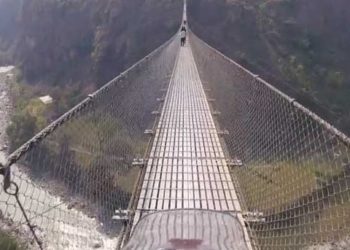
Pedestrian movement across the Mahakali River has been completely halted after the central section of the historic Dodhara-Chandani suspension bridge collapsed into the river on Wednesday. Local residents said they noticed unusual deformation in the bridge’s steel deck during the morning before a structural pillar failed, causing a major section of the bridge to fall. Preliminary engineering assessments indicate that the collapse occurred between the sixth pillar on the Bheemdutt Municipality-13 side and the third pillar on the Dodhara-Chandani side. The closure has disrupted daily travel for residents and other users who depend on the bridge as a key connection across the river. Authorities have imposed immediate restrictions on movement while assessing the safety and structural condition of the bridge.
SEBON advances reforms aimed at improving transparency in the share market
The Securities Board of Nepal (SEBON) is moving ahead with legal and regulatory reforms intended to make the country’s share market more transparent and investor-focused, board officials said during a parliamentary committee meeting on Wednesday. Officials said the reforms include standardized checklists for initial public offerings (IPOs) designed to protect investors and strengthen governance in the capital market. The meeting also addressed priorities such as updating existing legislation, clarifying the relationship between brokers and investors, and resolving technical problems affecting clearing and depository services. Representatives of market-related associations stressed the importance of bringing Nepal’s regulatory framework in line with international capital market practices to support long-term market stability and investor confidence.
Herbal company workers continue indefinite protest over benefits and court ruling
Daily-wage employees of the state-owned Herbal Production and Processing Company have continued their protest for 20 consecutive days, demanding social security coverage, festival allowances and implementation of a labor court ruling. Production at the company has remained suspended since September 6, while around 30 workers have continued daily sit-ins outside the administrative offices. The employees say management has repeatedly failed to comply with legal directives. The dispute dates back several years, after workers filed complaints with the Kathmandu labor office in 2022. The Bhaktapur Labor Court ruled in their favor in 2024, directing the company to comply with minimum wage provisions and provide provident fund enrollment and medical leave benefits. Workers say the ruling has still not been implemented, prompting them to intensify their protest ahead of the major festival season.
European study finds EV charging costs less than half of diesel fuel
Charging an electric vehicle (EV) in Europe costs, on average, less than half as much as fueling a diesel-powered vehicle, according to an analysis by Brussels-based environmental organization Transport and Environment. The study argues that efforts to accelerate the shift toward zero-emission transport should focus on targeted assistance for lower-income households rather than broad reductions in fuel taxes. According to the analysis, filling a 50-liter diesel tank now costs around EUR 32 more than it did at the beginning of the year, largely because of rising refinery profit margins. European Central Bank data shows that diesel refining margins increased from around EUR 0.10 per liter in February to approximately EUR 0.41 per liter around September 15. The comparison was based on diesel vehicles consuming 6.9 liters of fuel per 100 kilometers and battery-powered electric vehicles using 20.2 kilowatt-hours over the same distance. The calculation used an average electricity price of EUR 0.343 per kilowatt-hour.
Virat Agrotech appoints NIC Asia Capital to manage proposed IPO
Virat Agrotech has appointed NIC Asia Capital as the issue and sales manager for its planned initial public offering (IPO) to the general public. The company, based in Itahari-13, Sunsari, operates commercial agriculture and aquaculture activities across more than 100 hectares of reservoir areas, using around 150 fish ponds in Morang and Sunsari districts. It also operates a modern fish-feed manufacturing facility in the Kharana Industrial Area, with a production capacity of 25 metric tons per day. The funds raised through the proposed IPO will be used to expand production capacity, acquire modern processing equipment and strengthen the company’s supply chain. Planned investments include processing facilities for pangasius fillets and cold-storage infrastructure.
FNCCI president Anjan Shrestha faces growing internal disagreements
Federation of Nepalese Chambers of Commerce and Industry (FNCCI) President Anjan Shrestha is facing internal disagreements among business representatives less than six months after taking office on May 7 following the organization’s 60th annual general meeting. Some members have criticized the leadership, alleging that it has prioritized factional interests and has not done enough to lobby the government amid continuing economic challenges. The disagreement had emerged even before the leadership transition, particularly over proposals to grant membership and voting rights to 18 sectoral associations following recommendations made by the membership committee in March 2026. Opposing groups have also alleged that the leadership bypassed constitutional provisions concerning voting rights within the executive body. The dispute has led to legal challenges filed by dissenting factions at the Patan High Court, adding to concerns over the organization’s internal stability.
CNIYEF and The Startup Network Nepal join hands to launch Founders Hub
The Confederation of Nepalese Industries Young Entrepreneurs Forum (CNIYEF) and The Startup Network Nepal have signed an agreement to jointly operate the Founders Hub incubation and acceleration program. The initiative is designed to strengthen Nepal’s startup ecosystem by supporting 100 startups each year through business development assistance, mentorship, networking opportunities and connections with potential investors. The agreement was signed by outgoing CNIYEF President Manish Shrestha and The Startup Network Nepal Chief Operating Officer Saugat Ojha. The program will initially be based in Kathmandu before expanding to entrepreneurship hubs in other parts of the country. CNIYEF will also help develop corporate partnerships and sponsorship arrangements to broaden access to the program for emerging entrepreneurs nationwide.





Comment