




KATHMANDU: Nepal’s northern trade routes with China have come under further pressure after China announced the closure of the Tatopani border point in Sindhupalchok, following the indefinite closure of the Rasuwa border point after last Wednesday’s Bhotekoshi flood.
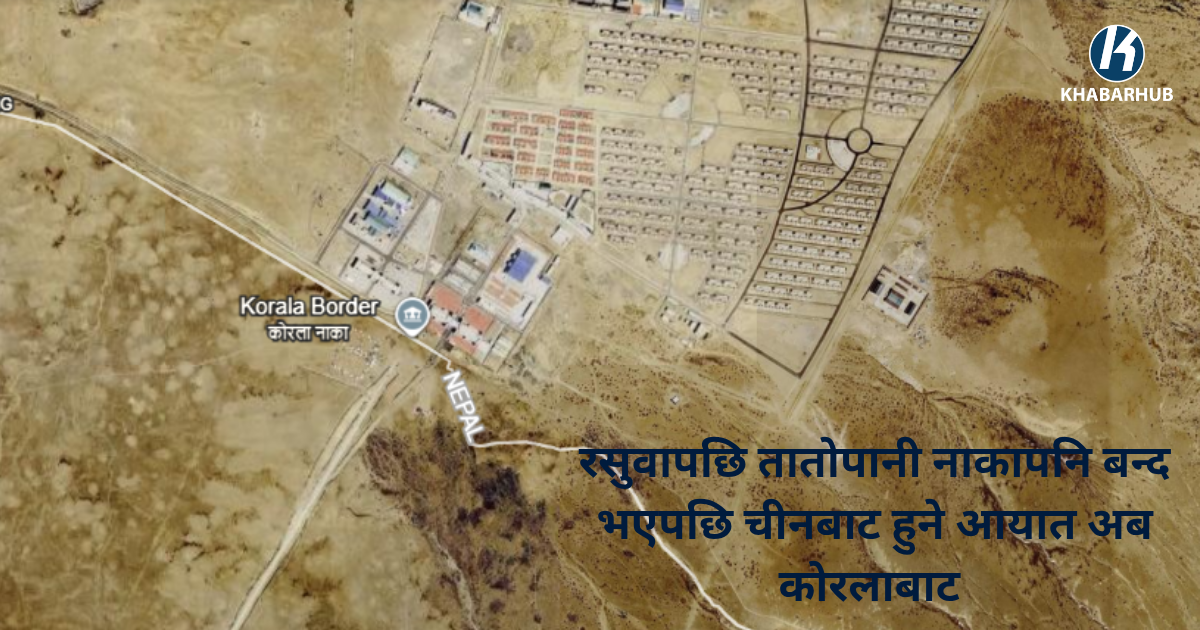
With both Rasuwa and Tatopani affected, traders importing goods from China will now have to rely more heavily on the Korala border point in Mustang.
However, traders say transporting goods from Korala to Kathmandu takes nearly twice as long as through the Rasuwa and Tatopani routes. Parts of the road on the Nepali side are also in poor condition, making transportation more difficult.
According to Department of Customs data, Nepal imported goods worth Rs 2.096 trillion during the last fiscal year, including goods worth Rs 425.24 billion from China. Chinese imports accounted for 20.28 percent of Nepal’s total imports.
Of the imports through Nepal’s three northern border points, goods worth Rs 14.41 billion entered through Mustang Customs, Rs 45.74 billion through Rasuwa and Rs 47.49 billion through Tatopani during the last fiscal year. Combined, imports through the three border points amounted to Rs 107.63 billion.
Rasuwa closure could disrupt import supply chain
The road leading to the Tatopani border was also affected by last year’s floods and has yet to be fully reconstructed. Disruptions to transportation have already reduced imports through Tatopani while imports through Rasuwa increased during the first month of the current fiscal year.
According to customs data, goods worth Rs 5.68 billion were imported through the Rasuwa border in the first month of the current fiscal year, accounting for 3.03 percent of total imports during the period.
Imports through Tatopani, meanwhile, fell to just 0.07 percent during the same period.
With Rasuwa now closed indefinitely and Tatopani also shut, traders fear further disruption to Nepal’s import supply chain.
Korala route faces infrastructure challenges
Tejaswi Sharma, senior engineer and chief of the Kaligandaki Corridor (Beni-Jomsom-Korala) Road Project, said the road leading to the Korala border is currently in good condition and vehicles can travel relatively easily.
However, he said three Bailey bridges along the route have a carrying capacity of only 18 tonnes, meaning vehicles carrying heavier loads cannot use those bridges.
Trader Bharat Koirala, who has been importing goods from China for years, said transporting goods through Korala instead of Rasuwa or Tatopani would take around 15 additional hours.
He said around 30 kilometres of road in the upper Mustang area remain unpaved and in poor condition. Improving that section would make the route more practical for traders, he said.
“The road on the Chinese side is very good, while around four hours of the journey on the Nepali side is on an unpaved road,” Koirala said. “The government does not need to provide additional concessions; if it fills the potholes and improves the road on time, we can transport the goods.”
According to Koirala, transporting goods from Guangzhou by sea takes more than 35 days, while goods can reach Nepal through the Tibetan border routes in around 14 to 15 days. He said improving roads on the northern routes would therefore make them a more viable option for imports from China.
However, the landslide at Krishnabhir along the Prithvi Highway has completely blocked the highway since Monday. Until the highway is fully reopened, cargo vehicles travelling from Korala may have to use the route through Muglin, Narayangadh and Hetauda, adding further complications to the supply route.






Comment