




KATHMANDU: A new bill to amend Nepal’s Land Act, tabled in the House of Representatives, is currently under parliamentary committee review.
The controversy it has sparked is not new. A nearly identical version had previously been introduced as an ordinance by the Oli-led government but was withdrawn due to opposition from Upendra Yadav’s party.
Now, rebranded and slightly edited, the bill returns in legislative form, drawing fierce criticism and no fewer than 99 proposed amendments.
At the heart of this legislative storm is a fundamental question: whom does this bill serve? Is it a serious attempt to resolve the longstanding plight of landless squatters across the country? Or does it, as its critics argue, cater primarily to the interests of landowners and land brokers, most notably in the controversial Giribandhu Tea Estate case?
The government’s justification has remained largely the same, that landless Dalits, squatters, and informal settlers must be regularized in accordance with Nepal’s constitutional commitments. But embedded within the bill are clauses that raise significant concern.
For instance, provisions previously rejected by the Supreme Court, such as allowing land in excess of legal ceilings to be sold or exchanged, have returned in slightly altered form. These very amendments were once designed to legitimize land holdings like those of Giribandhu, which were previously deemed illegal.
The origins of the controversy trace back to 2018 and 2019, when the then Nepal Communist Party government, also led by KP Oli, amended the 1964 Land Act twice.
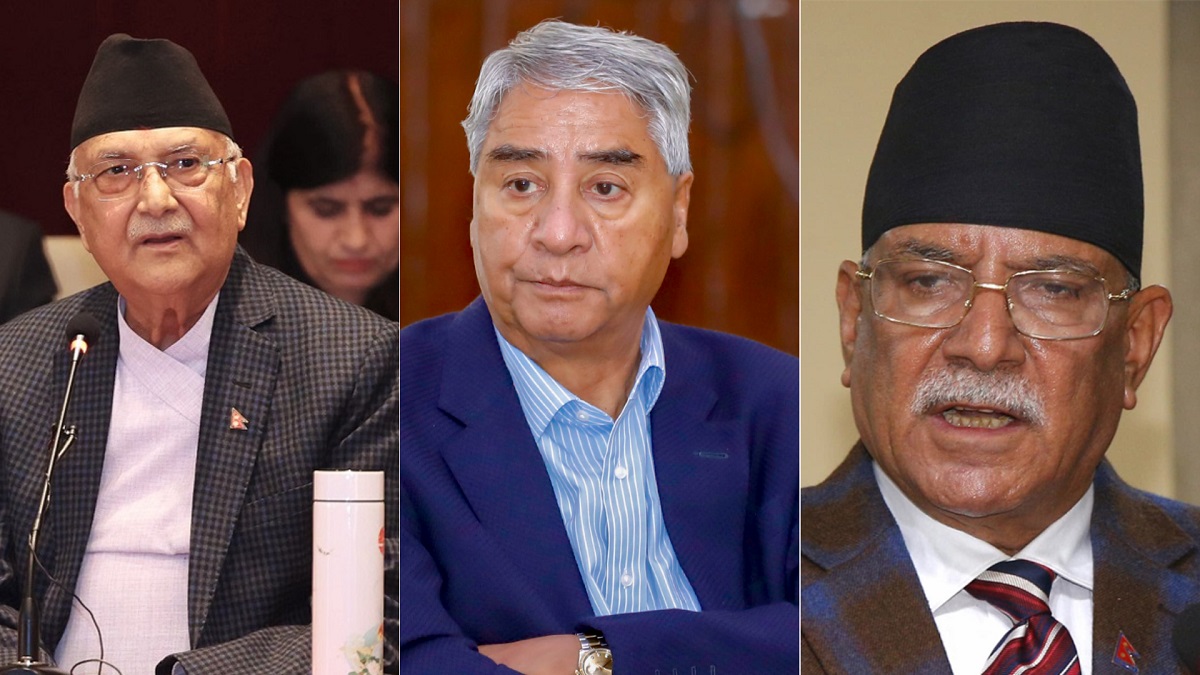
On the surface, the amendments appeared progressive, aiming to settle issues of landlessness. But simultaneously, the revisions quietly inserted clauses that allowed industrial enterprises and institutions to sell land held in excess of legal limits. These changes directly benefited large landowners and real estate actors.
Following these amendments, the government in 2021 approved a Cabinet decision that allowed the transfer and swapping of land owned by the Giribandhu Tea Estate in Jhapa, land that exceeded legal holding limits. This maneuver was challenged in the Supreme Court, which ruled unequivocally that land beyond the prescribed ceiling belonged to the state. That decision dealt a severe blow to the land-owning elite, prompting them to regroup and strategize.
In 2024, the Prachanda-led government brought an ordinance under the pretext of easing investment, but in practice, it introduced a provision enabling the sale of land exceeding ceiling limits.
The ordinance, which lacked parliamentary legitimacy, was withdrawn after opposition from the Janata Samajbadi Party. However, the same provision has now resurfaced in the new bill, this time with even broader implications.
Critics argue that the bill not only enables private development of ceiling-excess land but also opens the door to reallocating land from national parks, conservation zones, and forest areas to so-called “landless” populations. These provisions, they warn, risk legalizing encroachment and legitimizing commercial interests under the guise of social justice.
The bill thus finds itself at the intersection of constitutional rights and political expediency. On one side are the landless poor, whose right to land and housing is enshrined in Nepal’s Constitution. Article 40 guarantees that landless Dalits must receive land once in their lifetime, and the state must provide them with housing.
Article 37 further prohibits the eviction of any citizen from their place of residence without due legal process. Yet, nearly a decade since the Constitution’s promulgation, these rights remain unfulfilled. Not a single nationwide program has succeeded in delivering land titles or housing to the vast majority of Nepal’s landless Dalits and squatters.
Instead, attention has often been diverted elsewhere. The Land Commission, originally conceived as a solution to this enduring problem, has become deeply politicized. Appointments have been marred by political favoritism, corruption, and even reports of bribery, undermining its credibility and effectiveness. Far from empowering the landless, the state has repeatedly amended the Land Act in ways that ultimately favor landowners.
This betrayal has not gone unnoticed. Critics say the government, regardless of who leads it, be it Oli, Prachanda, or others, has consistently chosen to serve the interests of the landed elite over the dispossessed. The Giribandhu case, which continues to dominate headlines, is emblematic of this broader failure.
And yet, the law, as currently written, does contain pathways for legitimate and just reform—if only the political will existed to follow them. The 2019 eighth amendment to the Land Act contains clear provisions for identifying and allocating land to landless Dalits, squatters, and informal settlers.
It allows local governments, not central agencies or ministers, to manage this process transparently. Land titles are to be distributed based on surveys, field assessments, and digital records maintained by local wards, eliminating the need for central government interference.
But these mechanisms have never been allowed to function as intended. Politicians continue to use land distribution for symbolic handouts, replicating feudal and Panchayat-era attitudes.
Mayors and ministers have handed out land ownership certificates with pomp, even though the law assigns this responsibility to local bodies. Meanwhile, political parties have packed the Land Commission with loyalists, compromising its integrity.
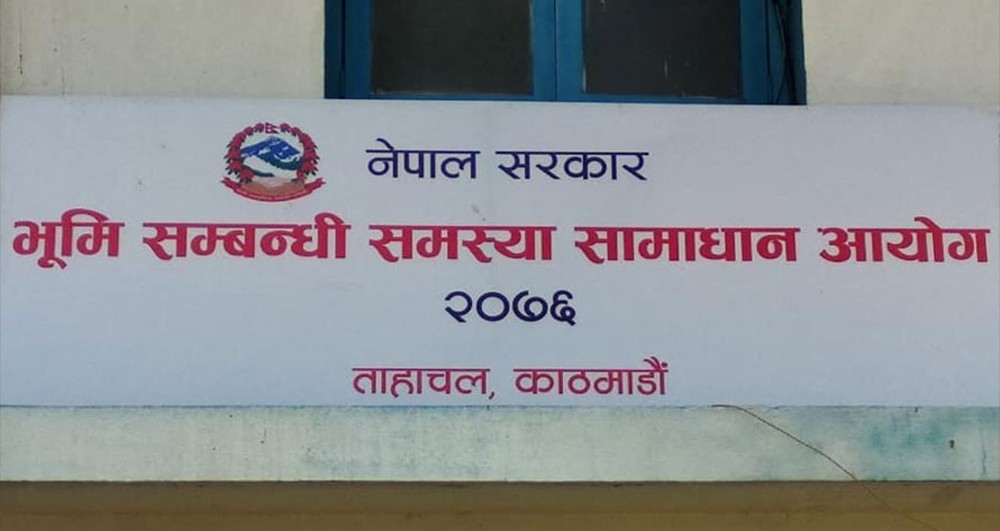
In Kathmandu, Mayor Balen Shah signed a formal agreement with the Land Commission to initiate land regularization. But in practice, his administration has attempted to evict squatters through force, in contradiction to both the spirit of the agreement and the Constitution.
The lack of consistency and coordination, highlighted by the Kathmandu Valley Development Authority’s conflicting order to vacate settlements within 35 days, is symptomatic of a broader institutional failure.
The Constitution does not allow squatters in cities like Kathmandu to claim land where they currently reside. Instead, the law mandates their relocation to state-designated areas. But previous attempts to do so, such as the construction of resettlement housing in Ichangunarayan under Baburam Bhattarai’s premiership, have failed. The housing remains empty; squatters refused to move, citing remoteness and inconvenience.
This impasse is not only a reflection of government negligence but also of policy incoherence. While the Constitution and amended laws provide a framework to resolve landlessness fairly, the state has neither enforced these provisions nor empowered local governments to act decisively.
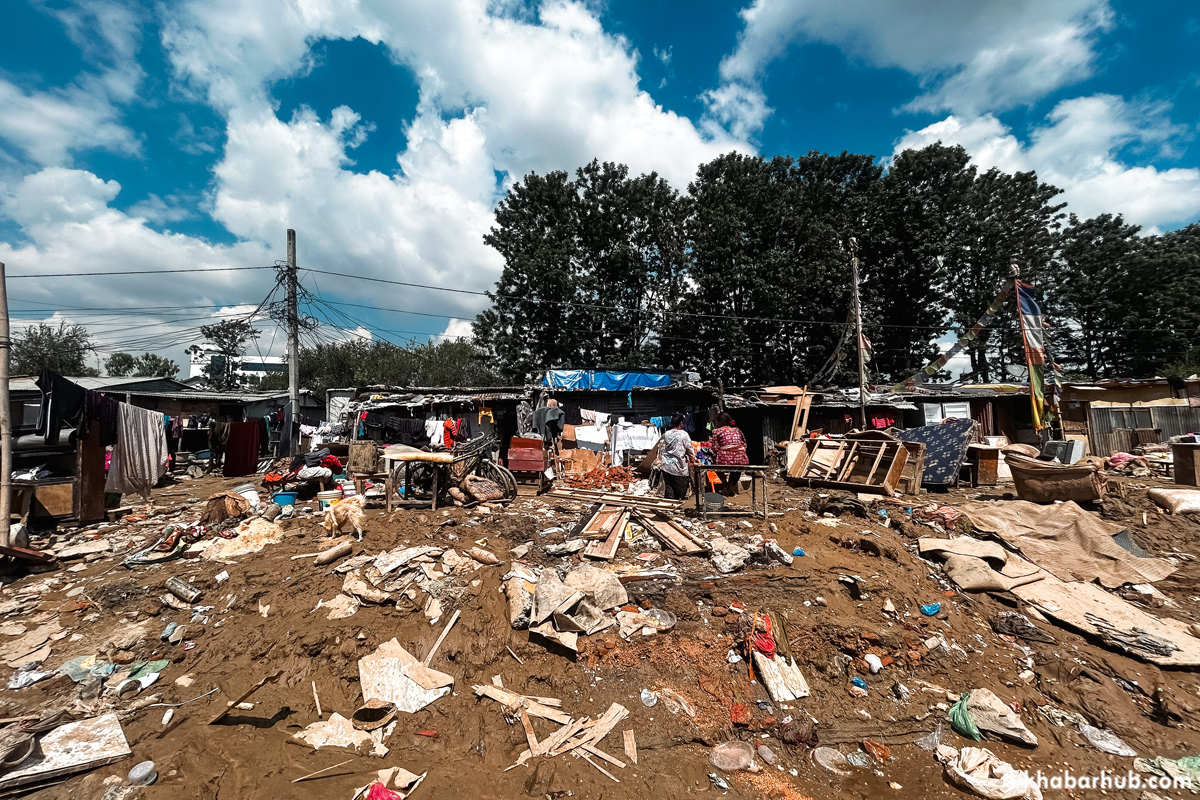
In truth, many informal settlements, such as those in Bhairahawa, Kohalpur, and Letang, have existed for decades. Residents have built homes, hotels, and entire neighborhoods on land still recorded as forest or public property.
These structures cannot be mortgaged or legally transferred because the underlying land is undocumented or off-limits. The intent of the Land Act’s eighth amendment was to resolve such ambiguities, enabling municipalities to grant ownership titles in situ or relocate settlers with dignity.
Yet this original intent has been hijacked. Instead of using the law to empower the landless, the government has repurposed it to reward real estate interests under the guise of social reform. By extending its reach into conservation zones and allowing the sale of surplus land, the current bill stretches legal and ethical boundaries.
As things stand, the landless remain landless. Their constitutional rights are ignored, their claims politicized, and their voices drowned out by the clamor of elite interests. If the government is truly serious about solving Nepal’s land crisis, it must abandon this bill, restructure the Land Commission, remove partisan influence, and return to the core mission: securing justice for those who have lived for generations without land, without title, and without security.
Until then, the promise of land reform remains a mirage, dangling just out of reach for the very people it was supposed to uplift.






Comment