




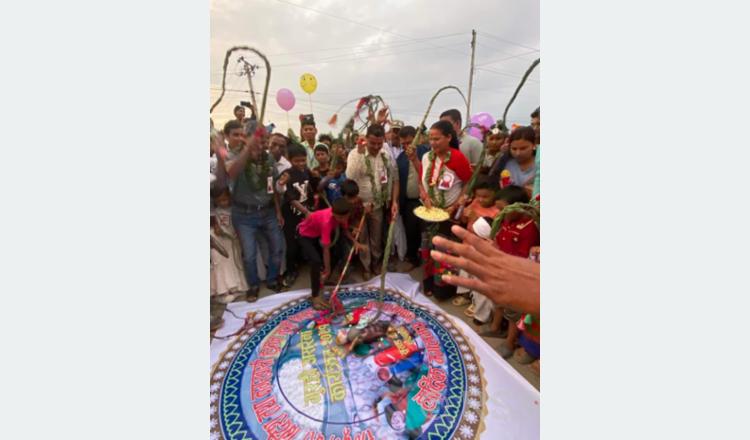
KAILALI: The Tharu community is joyfully celebrating ‘Gurahi,’ their original and oldest festival, today. Various programs have been organized throughout Kailali and other Tharu-inhabited areas to mark the occasion.
The Gurahi festival holds a unique cultural significance for the Tharu people, especially those living in Kailali, Kanchanpur, and other districts of western Nepal.
Gurahi is celebrated on Shravan Shukla Panchami, which coincides with Nag Panchami. While the wider Nepalese population worships snakes on Nag Panchami, the Tharu community honors Gurahi, according to Budhram Chaudhary, Chairman of the Ghodaghodi Nagar Bhalmansa Working Committee.
He explained that worshipping Gurahi is believed to protect homes from poisonous snakes, lightning strikes, fires, and epidemics.
To celebrate, the community organizes various cultural programs. This year, the Ghodaghodi Nagar Bhalmansa Working Committee is hosting the Gurahi Asraina event, featuring traditional dances and songs, said Aman Chaudhary, Secretary of the committee. Local authorities in Kailali have also declared a public holiday to observe Gurahi Puja.
The Gurahi festival is traditionally associated with children, although people of all ages now participate. The festival takes place on Nag Panchami.
Tharu leader Pancharam Chaudhary explained that the name ‘Gurahi’ refers to a singing insect that pollutes the environment and serves as food for mosquitoes. The festival is named after this insect and involves making a cloth ‘Gurahi’ (butterfly) as its symbol.
A few days before the festival, the Tharu community cleans their homes and yards. On the day itself, people bathe and purify themselves in the morning. Women create ‘gurahi’ dolls from colorful cloth pieces, while boys make sticks (korra) from bamboo or jute.
In the evening, villagers—especially children and girls—dress in new clothes and gather in the village square or crossroads, carrying arms, corn, peas, gram, and cloth gurahi on a dhakiya (a kind of basket). The village leader (Bhalmasa) begins the puja by tying a knot in the dubo (a sacred grass). The girls’ gurahi dolls are then placed together and worshipped.
Gurahi is celebrated as a symbol of sibling love: sisters throw the gurahi dolls, and on the Bhalmasa’s command, brothers strike them with sticks, and both sides enjoy the playful ritual.
During the event, they chant slogans like “Deu Ghughri” and “Leu Ghughri.” This ritual, called ‘Gurahi Asraina,’ is believed to drive away diseases and evil spirits from the village, said Chairman Budharam Chaudhary.
After the beating ceremony, the girls distribute grains like ‘bhuja’, gram, and corn as prasad to all participants.
Finally, the ‘Gurahi’ dolls are cremated in a river or canal. It is believed that by releasing them into flowing water, diseases and misfortunes will leave the village, bringing happiness.
Some villagers also tie pieces of cloth to their doorways, which is believed to ward off sorrows, troubles, snakes, and scorpions from the home, added Chairman Chaudhary.





Comment